Dearest Rachel –
For all our familiarity with certain Jewish traditions – and ever more so, now that Logan is living with us (although he cheerfully agrees with my assessment of him as a ‘cheeseburger Jew,’ which is to say, rather loose with regard to the strictures of his religion) – Israel proper takes what we know of them, and cranks it up to eleven. It’s part of why this day has been so rushed, as we need to get everything we can in and done before sundown. Sooner than that, in fact; since everyone needs to be home before then, places close about an hour earlier, around three o’clock – and that goes for the national parks, as well.
As we leave Megiddo, Yael points out several fields that we’re driving past that are simply lying fallow. Even in this northern part of Israel, away from the more orthodox folks we’ll find in Jerusalem, it seems that there are plenty of folks who observe ‘shmita’, or ‘release’. It refers to the sabbatical year applied to agriculture, where the farmers simply let the land rest every seventh year. Interestingly, since Rosh Hashanah just passed, the sabbatical year is over, and they can begin to replant those fields again (although, of course, we wouldn’t be seeing results this soon thereafter). So, while the weekly Shabbat may be beginning, the Sabbath for the crops has just wrapped up.
Anyway, our final stop for the day is at Zippori, the larger (at least, during Jesus’ day) city next to Nazareth. It’s believed that this is where Joseph spent most of his working days, in construction of homes and the like. We tend to think of carpenters as woodworkers, but these days, it seems to have been established that he was as likely to work in stone (which was plentiful as a building material) as opposed to wood (which was not, apart from olive wood – and while moderately reasonable for small furnishings, it would be prohibitively expensive for a house)
I briefly found myself thinking that this place seemed unfamiliar; that we never got to see this place together on our trips. Although…
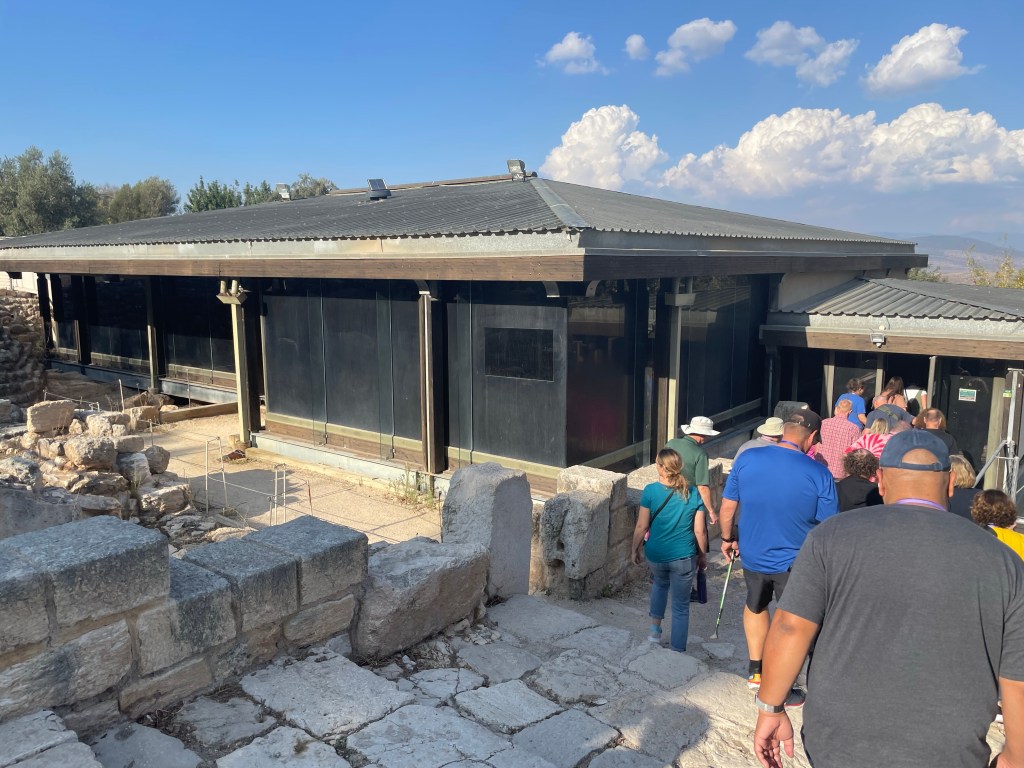
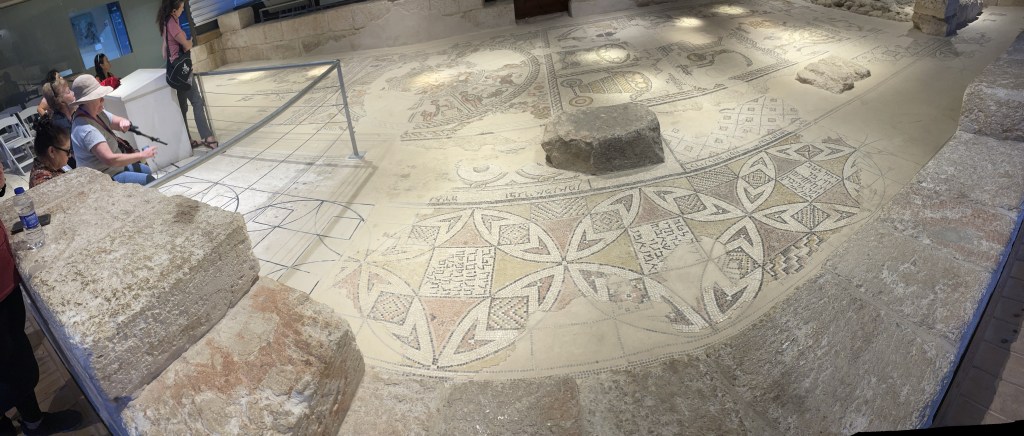
This is what comes of not having gone through my notes from 2018. But what’s to be done, when I couldn’t find them in the house?
So, it turns out we have been here before (to which you would generally quote that line from Baker-era Doctor Who: “or are we yet to come?” No, honey, you’ve been and gone at this point). This is a Byzantine-era synagogue, so it’s not pointed toward Jerusalem, like one would be in Jesus’ time. By the sixth century A.D., Zippori was built up to such a point that this one could only have been built where it was, and hope that direction didn’t matter all that much.
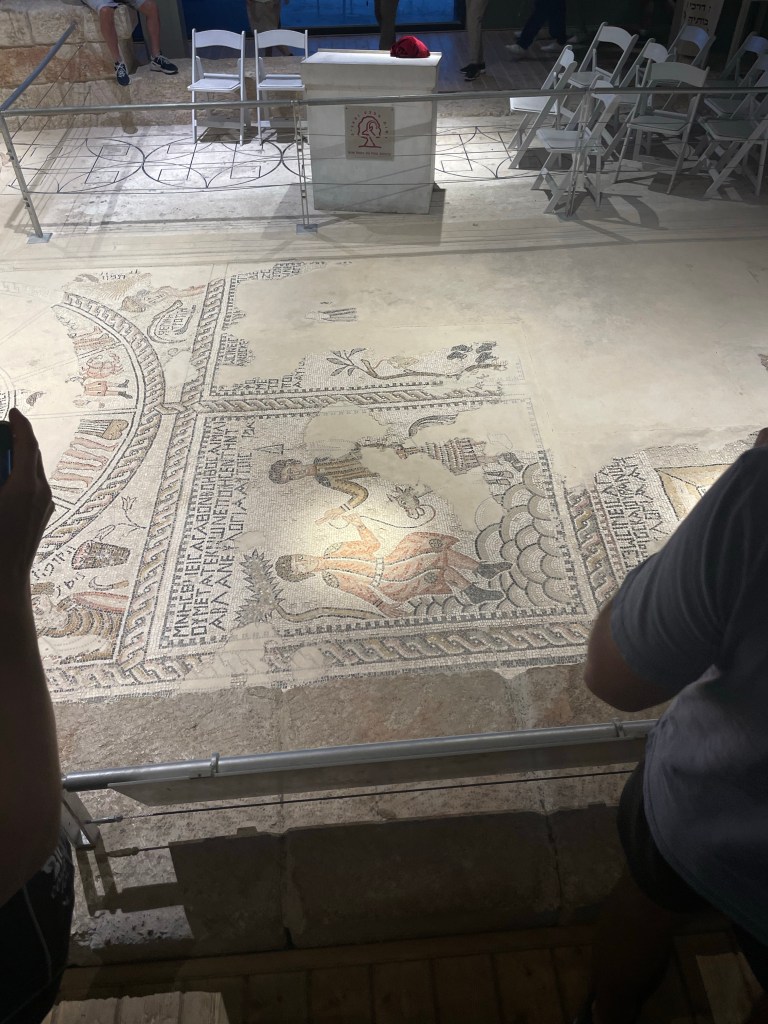
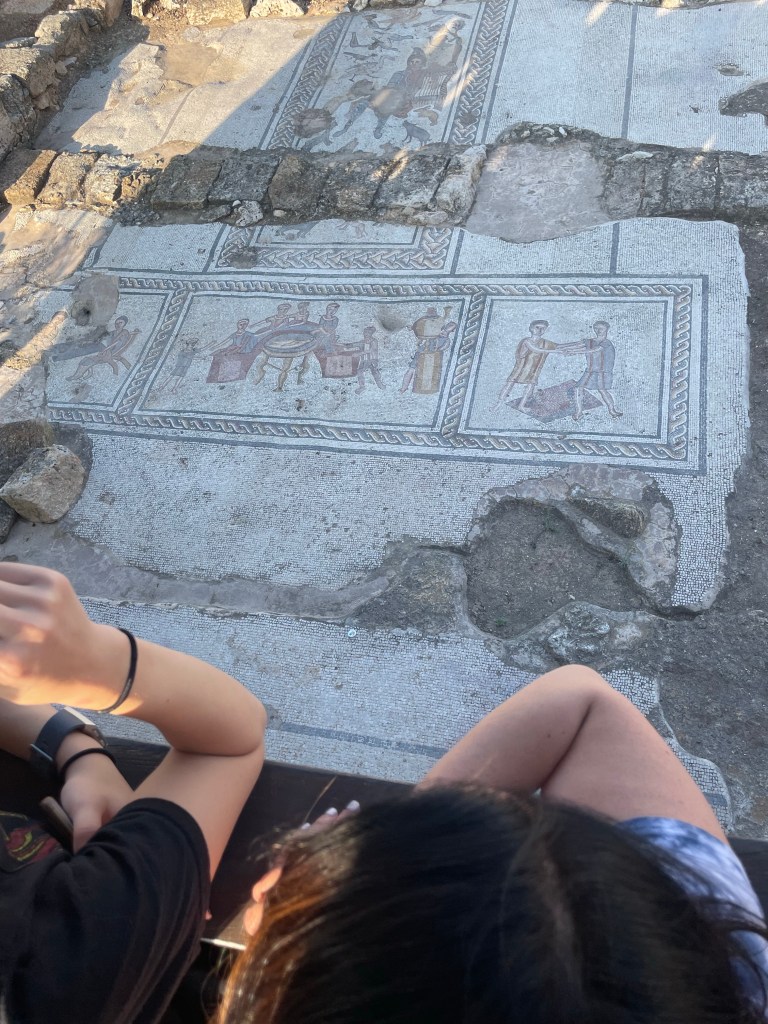
Note that the mosaics include images of animals and humans. Wasn’t this an offense against the Second Commandment? That’s what we just heard about Herod’s palace, after all. But such is the cultural impact of the Byzantine era; paganism and idol/image worship was no longer a threat, and by this time, these are just considered to be artistic images, neither meant nor expected to be worshipped.
Daniel and I have been wondering whether buildings were made of limestone or sandstone in ancient Israel. It would seem we’re both right; what we’re seeing here in Zippori is limestone, but they used sandstone in Caesarea Maritima. It all comes down to using whatever you can source locally, and that’s how it worked out.
Lots of cacti here, but they aren’t native, either – they’re from Mexico. They serve as cheap fencing to keep flocks from straying
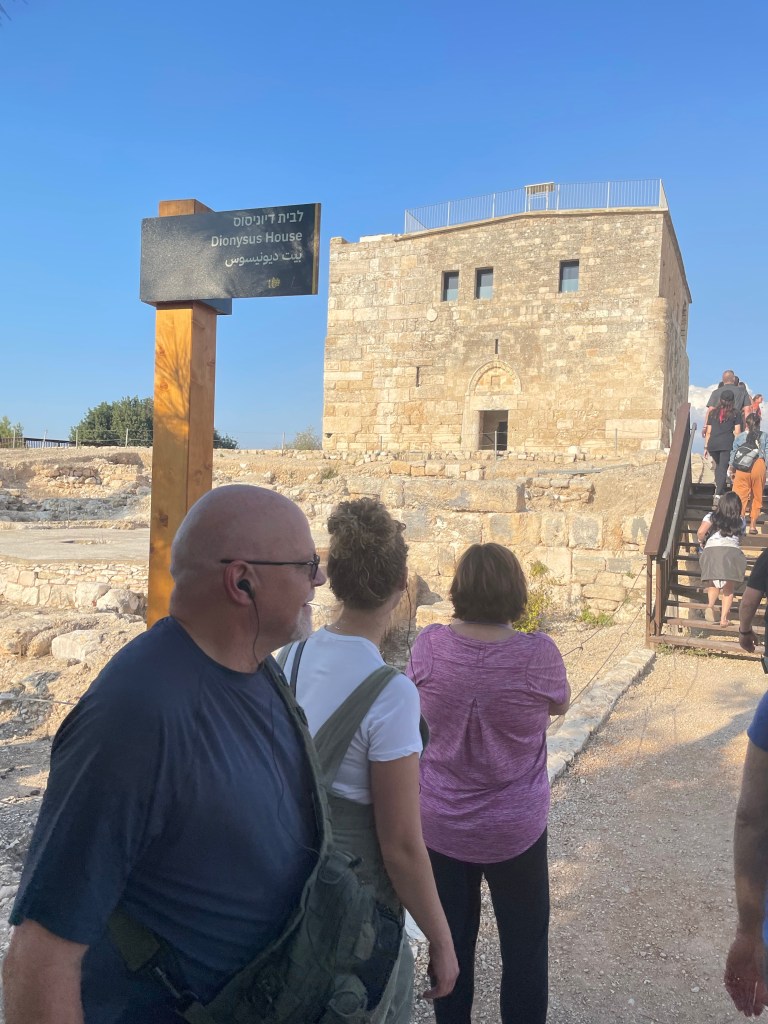
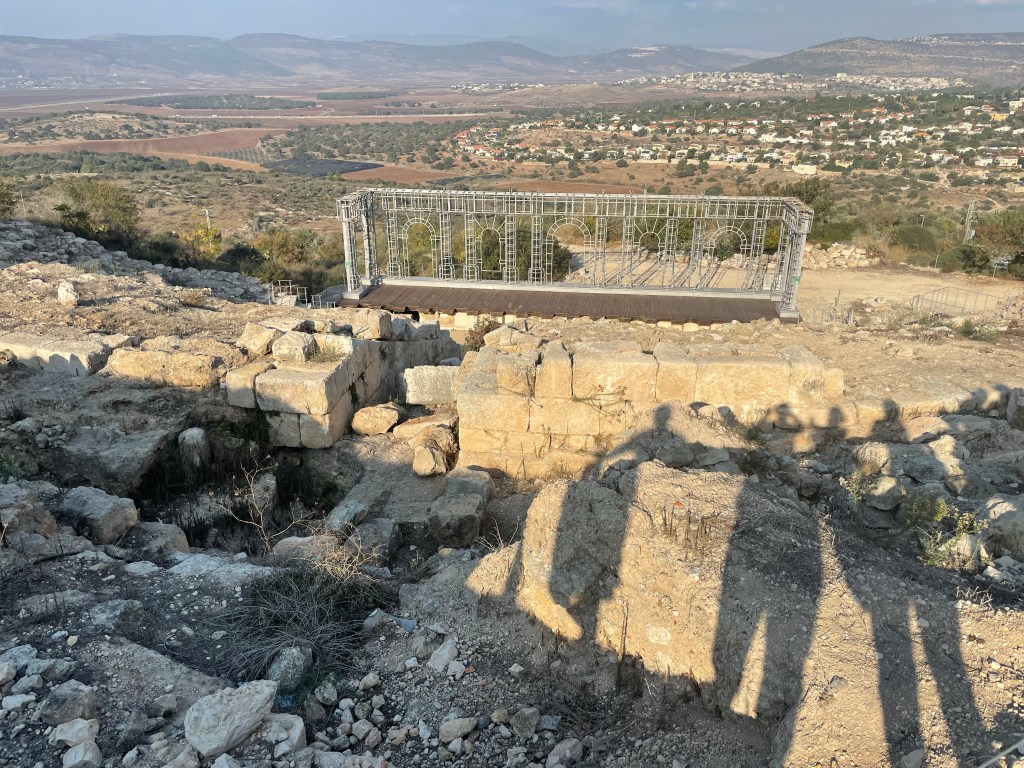
Yael claims that Zippori survived the Roman crackdown in 70 AD because they surrendered, demonstrating that they were no threat to Rome. So why, I asked, is Zippori a ruin, and Nazareth still stands? Well, Zippori rebelled later on (in approximately the sixteenth century) and was destroyed then. “We are a rebellious people,” Yael comments wryly. Meanwhile, Nazareth is not so much still standing, as much as it is merely rebuilt upon the old city of once upon a time. So it’s something of an apples-and-oranges comparison.
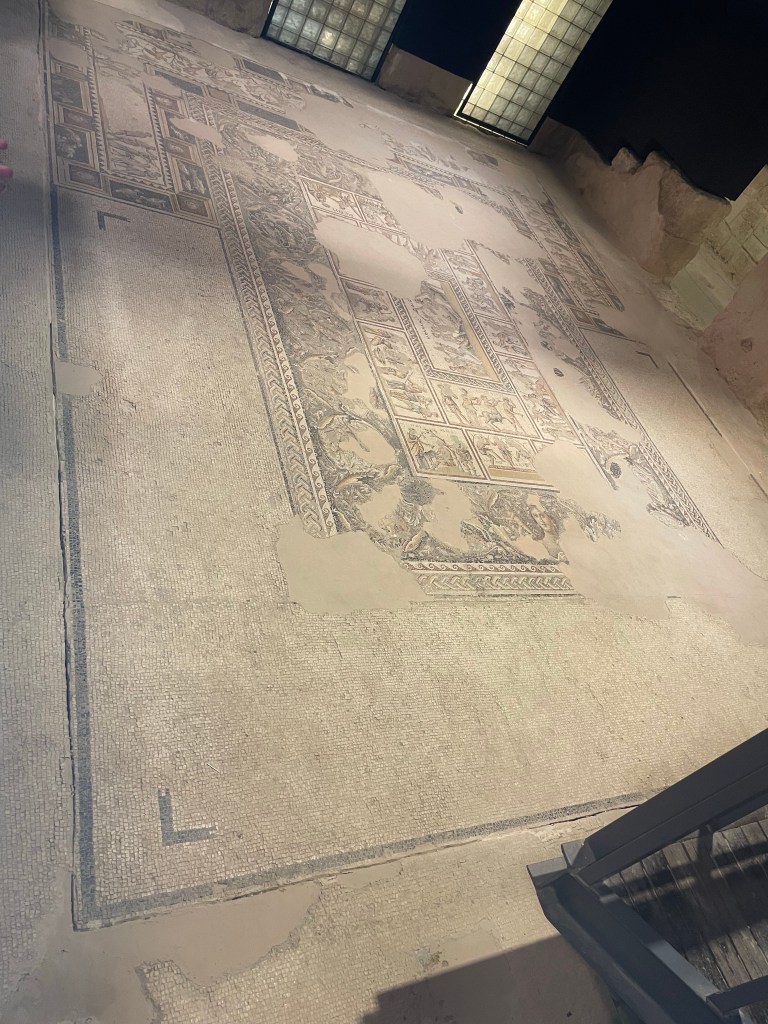
Indeed I remember spending some time going over that big house to the right – although, amusingly enough, Yael seems to suspect it’s not a home at all, but rather, a business; a showroom of mosaics:
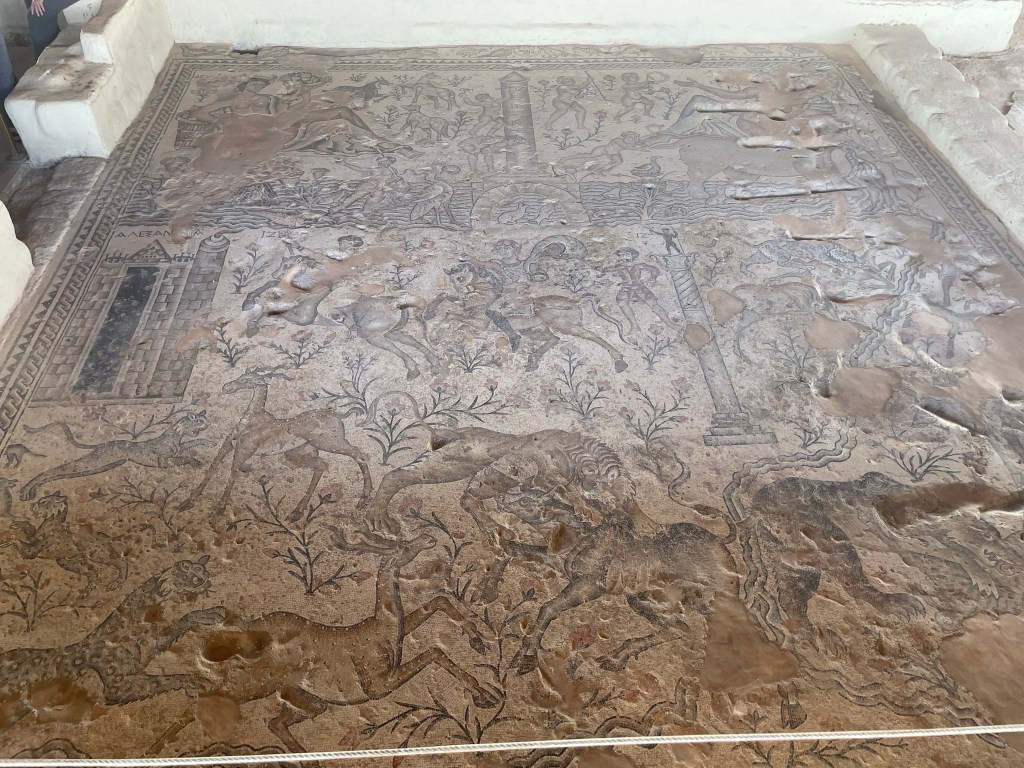
Yael points out that the Moslems never caught wind of this place, or they would have destroyed (or at least, defaced, literally), as they had – and still have – proscriptions against such ‘blasphemous’ images.
As we walk down toward the bus, I’m astonished to hear people complaining about how tired they are – despite being half my age and likely a hundred pounds lighter. When I mention this, one of the girls grins ruefully. “This,” she says as she gestures to her body, from top to toe, “is an illusion.”
Still, it reminds me how you would be dragging me in your wake (when you weren’t stopping for one bathroom break or another), and here I’m one of the energetic ones in this group. What would you have said about these folks, especially since this day is being cut short for Shabbat? After tomorrow, it’s only getting crazier from here on.
Yael agrees; this entire visit is simply a matter of ‘tasting’ the various sites. Entire days can be spent at any one place, but that might be more intensive than most of the group would be willing to take. Besides, there’s too much else to see than to take a whole day at any one place.
***
One last stop as we enter Nazareth (and our driver battles his way through rush hour traffic; a place referred to as Mount Precipice, where ‘a prophet is not without honor, save in his own town’
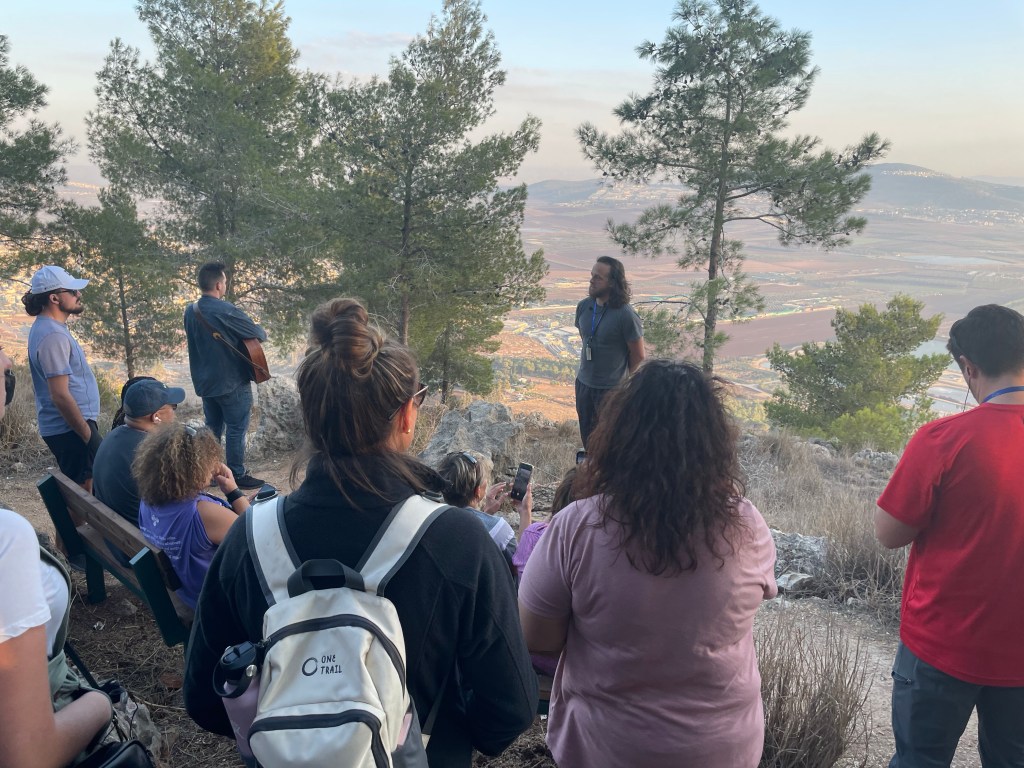
While we don’t know if was precisely here, it’s not unlikely – Nazareth is hilly, but there aren’t so many actual cliffs outside of town. It’s what referred to as a ‘C’ site
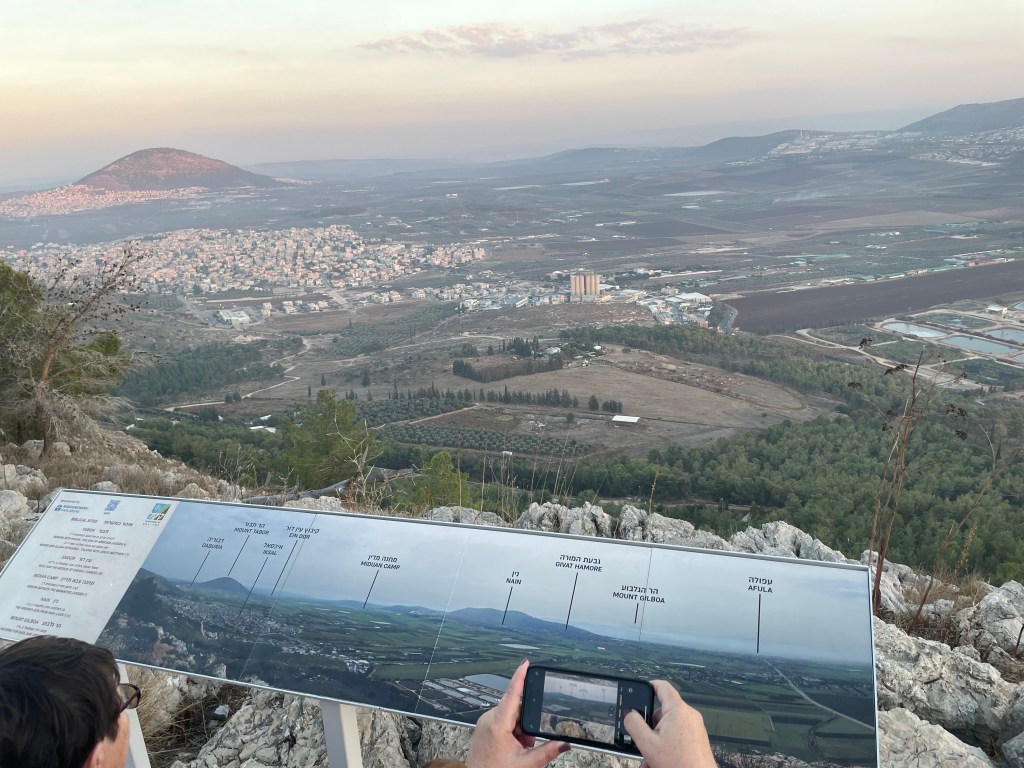
In telling the story, Yael points out that soil in the northern part of Israel is rich and thick, and the mud created by them is heavy – more than enough to stall the Canaanite chariots, thus eliminating their strategic advantage, resulting in the rout of the Canaanites… and particularly, the destruction of Sisera, who ran away, and hid out with the wife of who he thought to be an ally. But of course, Yael knows well the story of her namesake, and how she ran him through in his sleep with a tent peg.
Some women are just not to be messed with.
Glad you weren’t one of them. Or did I just know not to with you?


