Dearest Rachel –
According to Meatloaf, I’m told that “ain’t bad.”
But for whatever reason, our visit to Hokkaido wasn’t quite as successful as Daniel and I wanted it to be. During that last hour before boarding call, as we dithered about whether to stay on land – and where to go if we did – our visit was suddenly feeling that much less enjoyable because of this.
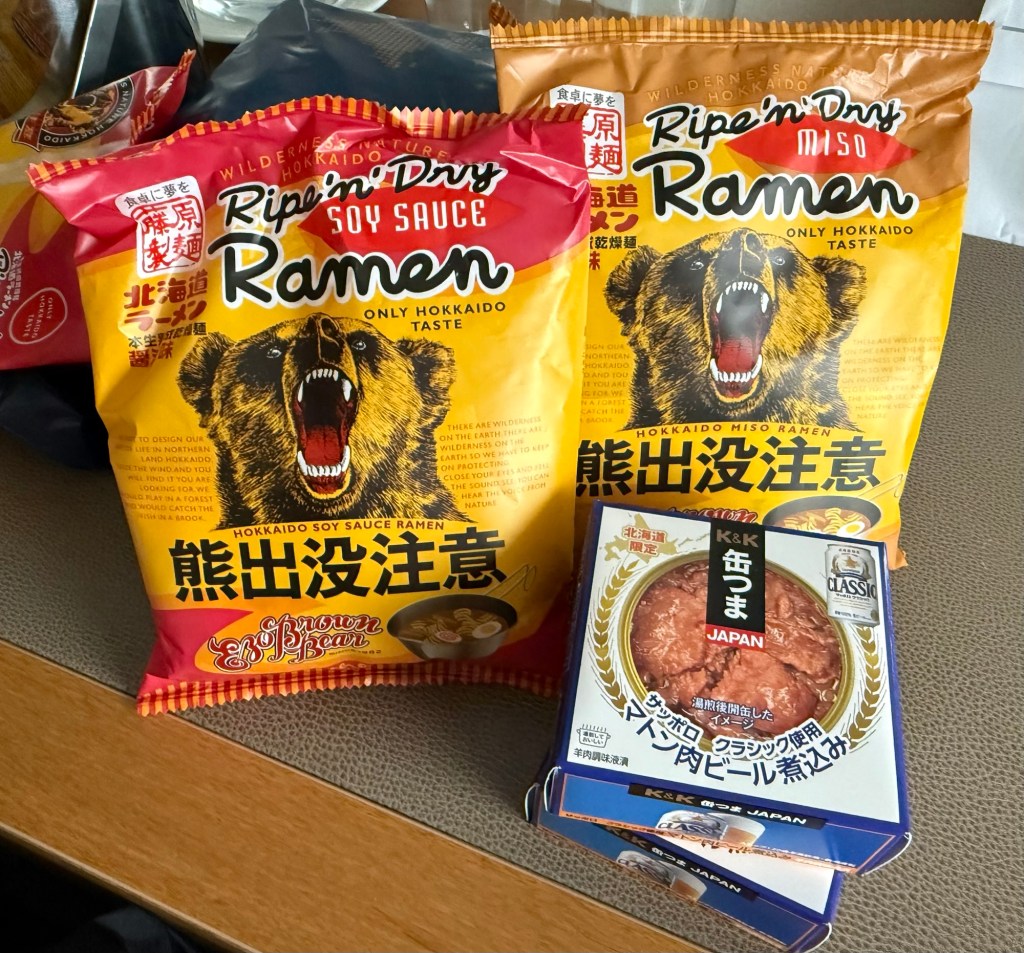
Much of the problem stems from the fact that we actually had specific goals here. Sapporo (and Hokkaido in general) has a lot of things going on that are unique to it, and while we knew we couldn’t do or gather them all in the amount of time we’d been given to do so, we thought our plans weren’t all that unrealistic. We were going to try the local game (and again, this is something that doesn’t exist in, say, our Alaskan destinations; they have moose, caribou and bear there, but you’re not allowed to kill and serve them commercially); try a specific form of meal preparation that is seemingly exclusive to the area; and, going back to the game (especially since we both agreed as to how tasty it was), but some to take home, and perhaps prepare for the gang some time in the future.
Really, the first two seemed like more of a challenge than the last one, especially given our very limited Japanese (and the fact that our pursuits are apparently so niche, even the shore excursion personnel aboard ship weren’t familiar with the terminology I was using to describe it). And yet, those were the successes, while the third goal turned out to be the one we couldn’t quite accomplish.
Now, I’ve already told you about our trip downtown last night, and how, apart from the weather, things actually worked out better than we could have hoped for (although our friendly local was a bit of a challenge to deal with diplomatically; in fact, on our shore excursion today, our guide mentioned about how ‘shy’ Japanese people were, as a rule – her word, not mine – and Daniel and I couldn’t help but laugh). I’ll get to today’s lunch in a moment, and how it worked out – and also didn’t – but I should mention a few things about the excursion itself (and about excursions in general).
These trips are meant to a be curated look at what is considered by the locality to be the “best of” a given place. These are what they consider to be the important sights to see and things to do in a limited amount of time (whether you, the guest, consider them to be or not). Again, this is fine when you have no real expectations of a place, but when you have certain destinations in mind that don’t correlate with where you’re being taken, you’re essentially running out your clock. I hesitate to say you’re “wasting time,” because you can’t deny that what you’re seeing is, in fact, important. If nothing else, you’re being told it is by those who would know, so you’re not in a position to gainsay it, but it distracts you from your own goals (not that you’re necessarily aware of it; as we were going about this trek, we assumed we’d be back in port with ample time to do what we wanted and needed to).
Meanwhile, much as I appreciate being driven about in coaches (apart from the train – and we’d already done that – it’s the only way to get to Sapporo from the port at Otaru), there’s a lot of “on your right side you’ll see this” and “on your left side you’ll see that.” Even if you can keep up with the information dump, you inevitably miss out on half the sights, since you’re belted in (by law) and can’t just get up to take a picture of this or that. And, of course, some of the buildings are tall, beyond the ability to capture from the window of the bus.
And finally, some of the chosen destinations are… problematic, although that’s more on us than on the destination, as such. Daniel, in particular, takes issue with visiting shrines and temples, which Japan is covered with, even in the only recently-developed (relatively speaking; the Japanese only began to move here at the same time as we Americans were trekking out to the West) Hokkaido. He seems willing to respect them as part of the nation’s history and culture, but the fact that they’re still being used to this day for actual worship bothers him. In his mind, the question is: what, exactly, is there that’s being worshiped? While I tend to take the view that there’s nothing there but tradition, he sees actual malign forces behind such places, and is uncomfortable in a way that I can’t assuage or deny.
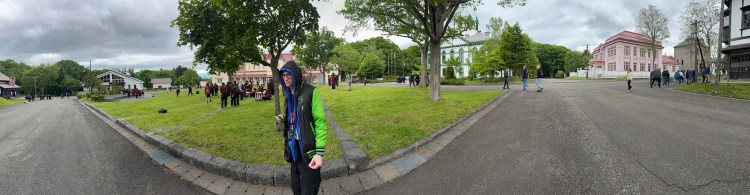
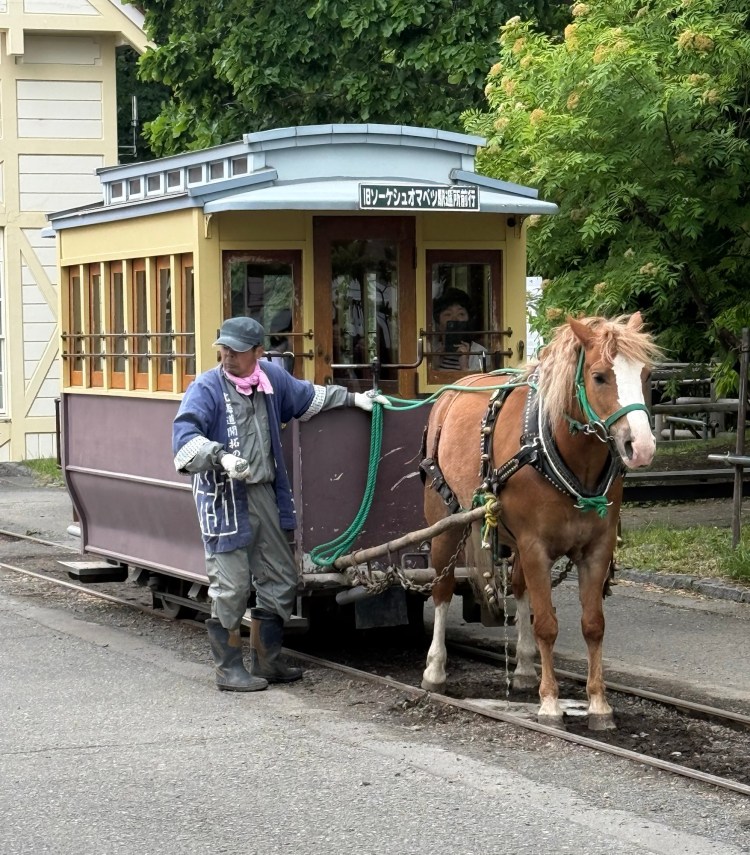
On the other hand, our other stop was a “historical village” assembled from nineteenth-century homes and businesses from various places around the island; some from Sapporo itself (including the entrance, built from the original JR station that once stood in the middle of the city), but others from Otaru and Hakodate as well. This, he seemed content to wander around.
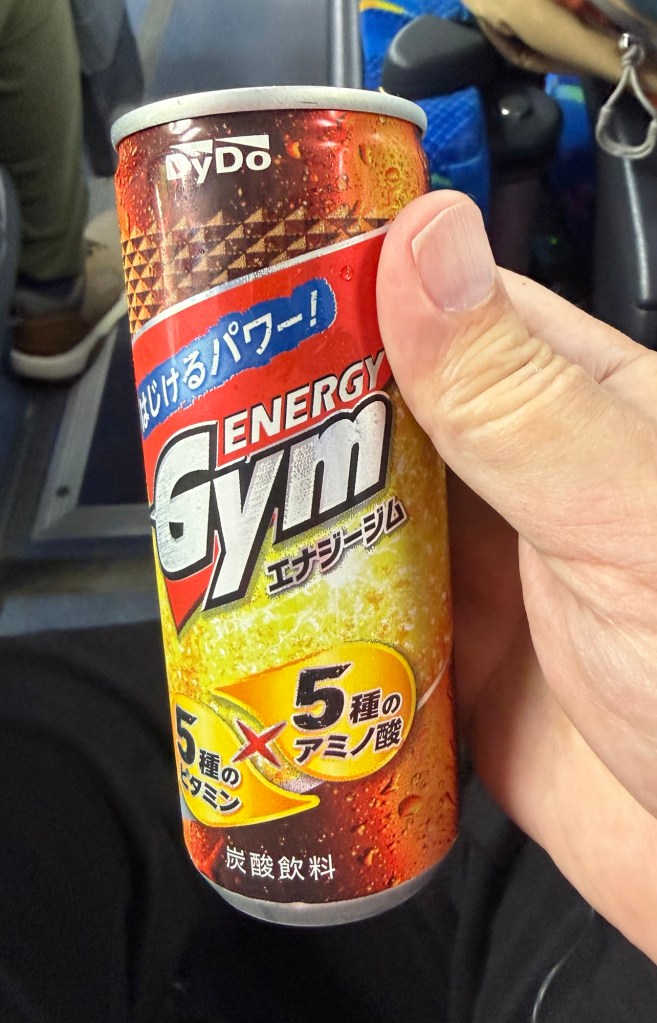
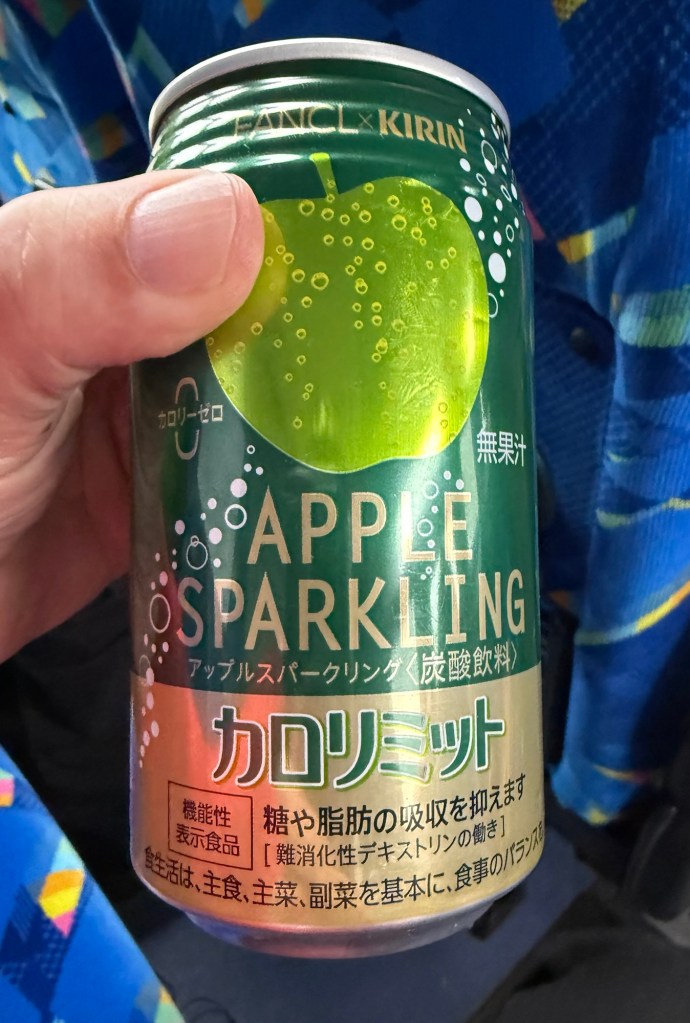
While here, we’d taken the opportunity to get a few more conventional souvenirs (they did sell various foodstuffs, as that’s a common souvenir to get in Japan, but as bear meat wasn’t on offer, we weren’t particularly interested), as well as a drink for each of us out of a vending machine or another; it’s that sort of thing that gets our attention, as they don’t exist back home like they do here.
And those were our two stops in Sapporo – or rather, outside of Sapporo, as these both seemed to be on the outskirts of the city proper. Unlike our excursion in Tokyo, it wasn’t as if we could just peel off and go our own way, with the option to return to Otaru via the train again. We were a long way from any transportation back to where we needed to be within the next five or so hours, so we stuck with the excursion the whole time, having little in the way of other alternatives. Granted, at this point, we didn’t think that we were exactly running out of time.
And, indeed, when we got back to the ship (and we did go back onto the ship to drop off our purchases, rather than getting ourselves processed by immigration at that time and being stuck having to remain aboard from that point on) we were about on schedule, according to Copilot. It had charted a schedule, if not directions (as it had proven unreliable in Kabuki-cho a few months ago; we were relying on Google for our map) that would get us to the restaurant serving jingisukan (‘Genghis Khan’) for lunch.
Only… they didn’t do lunch, or they had stopped serving it at that hour. We found the place, but just as we were about to go in, a girl came out to inform us of this in halting English. When we asked her if there were any other places serving it, she just looked kind of puzzled and gestured in both directions. Eventually, we found a node where we could get wi-fi, and Copilot apologetically suggested another place. Honestly, apart from the delay, I wasn’t too bothered by this; we have restaurants that do this very same thing so it shouldn’t come as a great surprise when we show up at two o’clock and they would just as soon not let in a patron in as they’re about to close to prepare for the dinner crowd.
In some ways, it’s not that different from they cook-it-yourself yakiniku place; except that the grill is shaped like a helmet, with a dome in the middle. You put the meat (generally mutton, as sheep are commonly raised here in Hokkaido as well as cattle) on the dome and while it cooks, the fat drains to the brim of the ‘helmet,’ where you have onions and bamboo shoots simmering. That fat allows the vegetables to cook and caramelize, and gives them an extra amount of flavor. It’s really quite good, as long as you don’t undercook the meat (and the sauce they provide adds an extra level of flavor to both the meat and the vegetables – although I wouldn’t recommend consuming the sauce by itself; Daniel made that mistake, and warned me not to try). All in all, a reasonably satisfying meal, if not so much so that we wouldn’t be looking forward to dinner when it rolled around, and we’d accomplished our second goal of the visit.
The trouble was that, after having relied on Copilot to get us to both the gibier and the jingisukan restaurant, we asked it to suggest where to go to find bear meat souvenirs. Its first recommendation, if you can believe it or not, was to a glass place; it’s assertion was that the place was large enough to have souvenirs of all sorts, as well as the glass artwork. And it wasn’t wrong insofar as the place was quite large; two stories tall at the very least, with a maze of steps leading here and there to various different departments of the overall store. But it was basically all glass artwork and tchotchkes; no comestibles of any sort.
At this point, we were burning more time than we really had, and we’re finding no success. Upon inquiring once again of Copilot, it admitted that the specific location wasn’t the one it was supposedly referring to, but the name it gave as an alternative didn’t even exist on the map, and we said so. It finally simply directed us to the shops by the canal, and lacking either reasonable alternatives or time at this point (there was a Don Quijote by the train station, and Daniel was curious as to what it might contain, but at this point we had less than an hour before we absolutely had to be on the ship), we decided to follow its lead one more time.
Well, you could see from the opening picture what we ended up with. To be fair, the Don Quijote was a mile from the dock; it would’ve taken more time to get there than we had, let alone be able to go through the several floors of the place looking for what we were wanting. but if we hadn’t spent all that time chasing the blind alleys that Copilot had sent us down – even the jingisukan location that we “settled on” was so much closer to the dock than the one it had sent us to – we might have had the time to check the place out, and maybe we would’ve found something. So you can see why we were somewhat disappointed when we had to surrender and make our way back to the ship.
But at least that self-imposed stress is no longer a consideration. We have nearly a week at sea ahead of us, and no real expectations for any of the upcoming stops in Alaska. The rest of the time can be spent actually relaxing at this point.
However, that’s no reason for us not to ask you to keep an eye on us, and wish us well, honey. We still need it, and we always will.


One thought on “Two Out Of Three…”