Dearest Rachel –
Life does not work like literature, honey. Anton Chekov insisted that a gun that appears in the first act of a stage play must be fired by the third act, but that’s not how things work in real life. Your dad’s pistol, hidden (ironically) in a book with its pages hollowed out, is a good example, having lain unused and forgotten in its hiding place for something approaching half a century. It’s possible that Twofeathers and her family brought it back to working order, but as far as either of us know, it’s never been used for anything other than target practice.
Similarly, there aren’t normally the miraculous recoveries from deep adversity that we see in certain inspiring works. To be fair, the first one that comes to my mind is that of Rocky Balboa, who actually doesn’t win the bout that made him famous – although his survival through the full fifteen rounds was a moral victory in and of itself – and subsequent bouts subvert the original subversion by having him win the championship out of the obscurity in which he languished. But it’s an exception that tests the rule; to have the hero lose isn’t the kind of uplifting story that (Western? American?) audiences crave, for the very reason that it doesn’t happen like that in our own lives, as a general rule.
And of course, literature – in all of its forms – eventually draws the curtain, as opposed to requiring the reader or viewer to follow the protagonists throughout the remainder of their lives, even when they do triumph. We get a “and they all lived happily ever after” with all the assurance of “trust me, bro,” but without further information, we’re left with those as the final words of the narration, even as we tacitly understand that “happily ever after” just isn’t a thing, if we choose to think about it – which we don’t always do; after all, it’s only a story, and not to be taken seriously.
Except that we do take it seriously; we often maintain a certain level of magical thinking in our lives. It’s why people (including myself, from time to time) buy lottery tickets: someone has to win, and life hasn’t been treating us well lately; the universe owes us a chance or something. Again, we know better, deep down, but it doesn’t stop us from such silly choices.
Now, what does this have to do with the events of the past weekend? I’m not sure; maybe nothing. But these were the thoughts running through my mind when I began sorting through the unusual events of Saturday evening, in particular. Sometimes, we just show up, and hope that counts for something; if nothing else, there are interesting moments to tell about.
I suppose I should start with what precipitated it in the first place; Kerstin informed me – on maybe a day’s notice or so – of her company’s outing to a local minor league ballpark, and would I like to be her ‘plus one’? In fact, there were probably enough tickets acquired and unused that the boys could come with, if they were interested. I did ask them, and while their responses weren’t vehemently opposed to the idea, they weren’t what you could call enthusiastic, either. As far as things to watch go, sports just aren’t their thing. For Daniel’s part, going to Fenway to observe a storied rivalry was one thing (and the finishing touch to a much larger day), but this felt more like something to just get him out of the house, which he didn’t see reason to do.
Meanwhile, I’m only analyzing my motives in hindsight. The thing is, I spend enough weekends (and weekday evenings, as well; I can hardly tell the difference, these days) cooped up in the bedroom, watching this or that. I can do that anytime. Sure, it may require more effort than I might want to expend to get out to watch something that, when you come down to it, doesn’t really matter, but it’s something different from my normal routine – and that’s what I ought to show up for. It occurs to me that it may not have been Kerstin’s idea of a good time, either, but company solidarity and all that – and with someone around to narrate things for her, it might be more enjoyable. So why not be that narrator, explaining a bit of what’s going on.
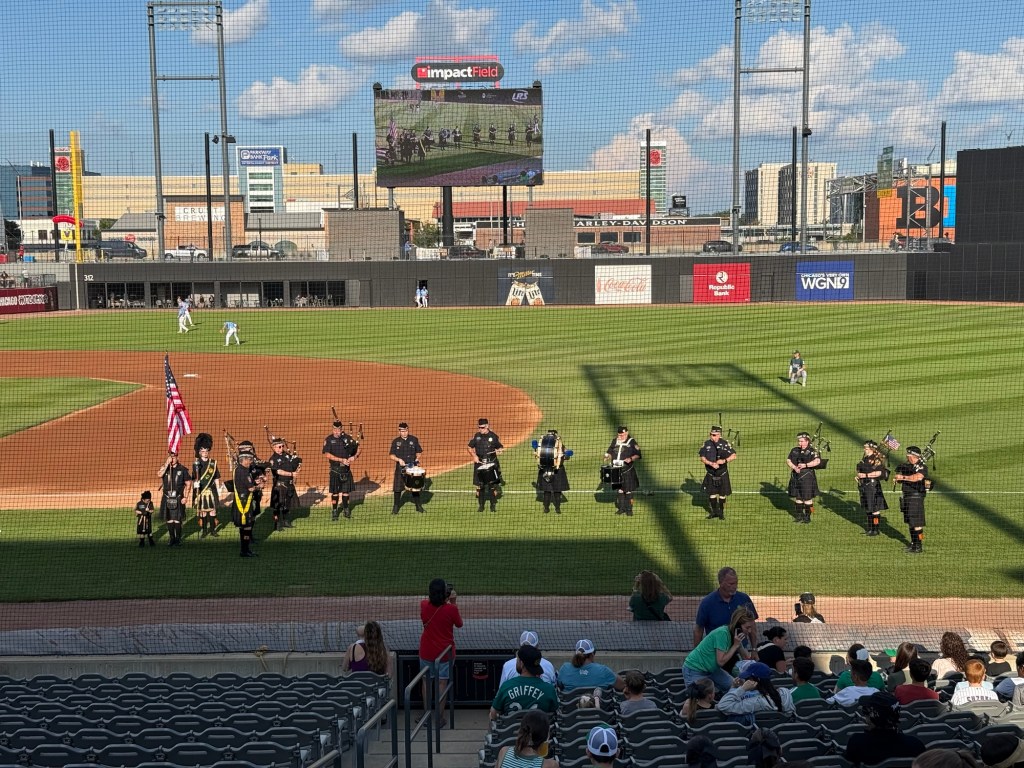
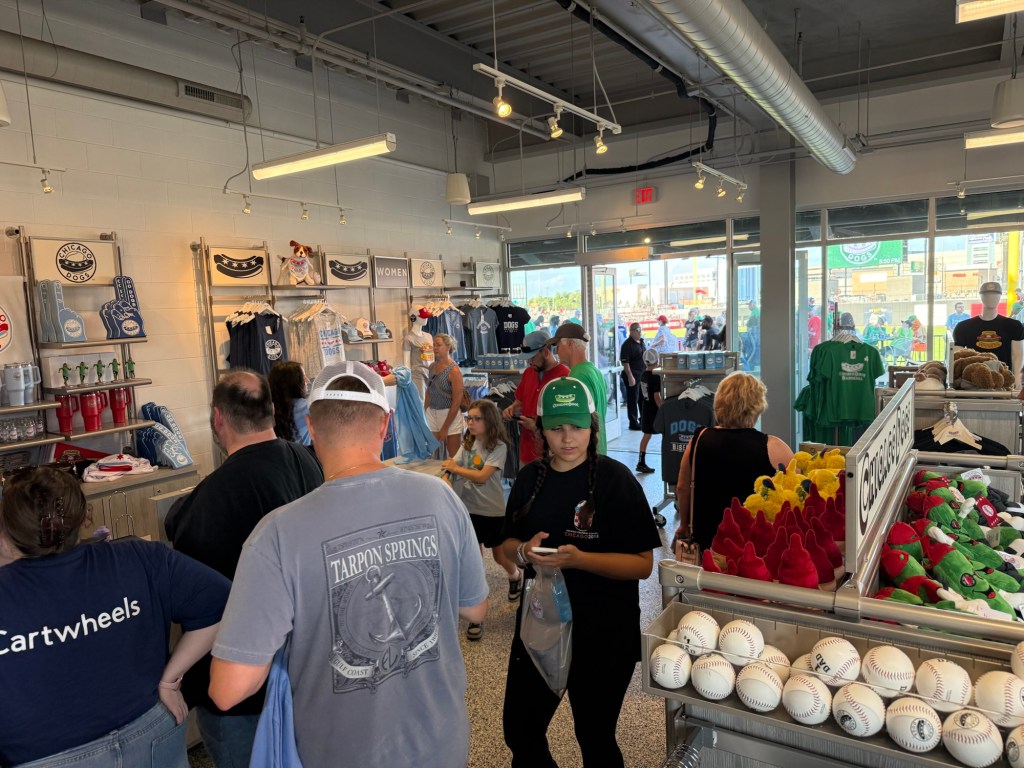
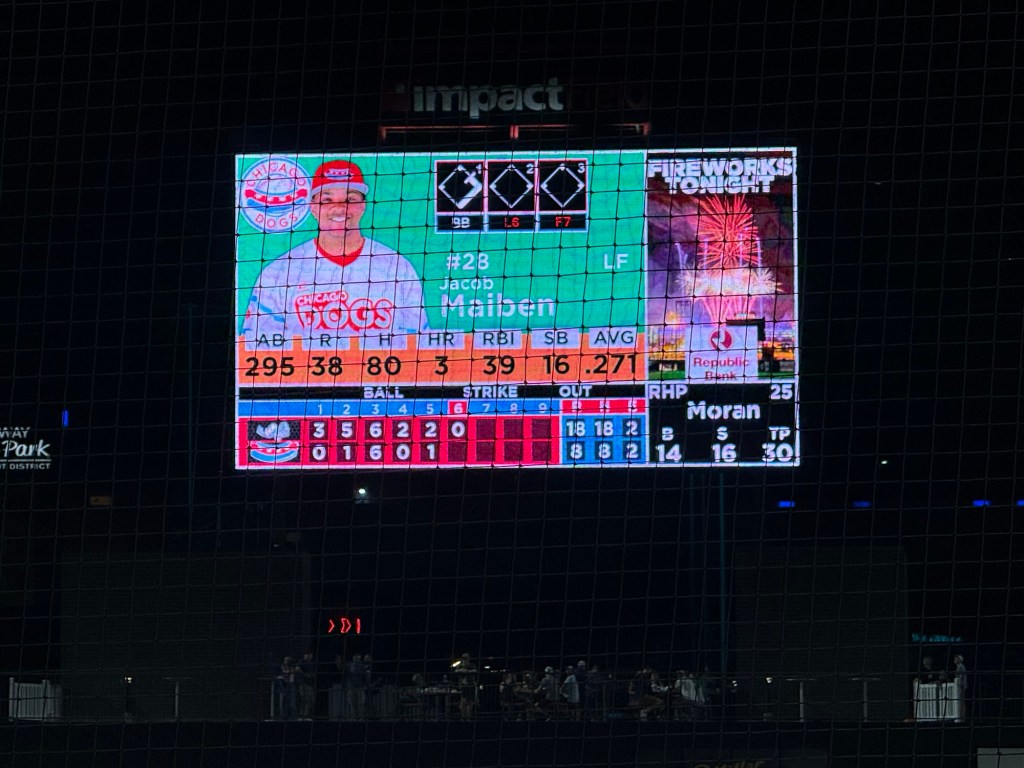
But as you can see from the scoreboard, it’s not as if the home team simply rolled over and let their guests completely wipe them out; they did show up, eventually, with a flurry of runs, especially in the third inning. In fact, that third inning showing turned out to be a mitigating windfall for us spectators, since a local pizza chain was offering free pizzas if the team either won or scored five runs (which generally is the same thing; if a team scores five runs in a game, that’s often enough to win. Not this time, though, not by a long chalk).
Still, the third inning alone was enough to guarantee that the pizzeria would be on the hook for it, even though it was absolutely clear that the team was not going to be winning this thing. They were already passing out the coupons to departing fans as we were leaving the park in the middle of the sixth inning, around nine o’clock – which was when apparently everybody expected the game to be over, but when one team is putting on a track meet instead of a baseball game, things take a little longer.
Now in a fictional narrative, these literal underdogs would come back from all this to pull off a mighty triumph after most of their fans (including us) had given up and left the stadium, thereby shaming us all for our limited faith. But I looked it up; while the home team did score three more runs (compared to only one more for the visitors), that was nowhere near enough to make up the difference. They put in the effort, yes, but it fell far short of what they needed.
Like I said earlier, this feels like there should be an analogy here to real life, but I don’t know if I have the wit or wisdom to make it. There’s a saying that’s been in parlance lately that “the future belongs to those who deign to show up,” but showing up is no guarantee of a successful future. It only means that you don’t default to failure.
And with that having been said, I suppose I should ask for your eye to be upon me today so that I don’t “default to failure.” Oh, and wish me well; I’m sure I’m going to need it.


