Dearest Rachel –
As I indicated in an earlier letter, now that the official part of our tour is over, we were going to take things at our own pace, and in our own directions. For all that Japan is so rich in history, we’ve decided not to bother dealing with that for now. If nothing else, the religious aspect of their history rubs Daniel the wrong way. He tries to be quiet and polite about it, but I can tell the shrines and the like get under his skin. So we’re going to eschew that sort of thing for the next few days.
Instead, we’re focusing on the commercial powerhouse that Japan has become, even from back in the days when each of us visited the country for the first time separately, honey (some would say especially from that time, as things have slowed down since the end of the Showa era and the ‘bubble economy’ popped, but whatever). The place has become a capitalist mecca; there is so much available to buy that it’s almost overwhelming. It’s not that we’re actually planning on shopping for anything in particular, but that’s the gist of what we’re doing. These mammoth, multi-story malls that seem to go on forever, connecting from one to another, just fascinate us, even if most of the goods they offer for sale hardly interest us.
Having already gone through the Lumine and Tobu depaatos on the west side of the station (where our hotel is situated), I suggested that we check out the Seibu store on the opposite side before heading further east back to Sunshine City, the marquee shopping center in Ikebukuro. We’d already walked there the week before, as we were killing time before meeting up with the group, but at the time, we’d focused on the Animate building adjacent to the place, only to discover that it generally touts the latest and greatest anime just being released. Which makes perfect sense from a local business standpoint, but means that there’s nothing we’d recognize in the place. So with that out of the way, we’re free to focus on Sunshine City proper.
Granted, that’s assuming that we can get to the other side of the station. There’s a path underneath the tracks to its south, just a straight left turn from the hotel’s main entrance, but we’ve taken that route before so many times already. Besides, all the colorful buildup is to the northeast, where the depaatos that lead into the station proper. We figure that there’s got to be a way to wander through all that without having to check ourselves in to one subway line or another.
It takes a while – although then again, we’ve got all the time in the world – but we finally emerge into the Seibu depaato. And you’ll notice I keep using the Japanese word for this, rather than ‘department store’; I really think that what they do is different enough from our idea of what a ‘department store’ is that it deserves its own term. Yes, everything in here is under control and managed by the main company with their name on the top of the building, but at the same time, it feels more like each of the building owners are a mall management system (like say, Simon back home), rather than controlling everything directly under their roof (like Macy’s or the like). Each little store feels different, rather than a part of the same continuity.
This goes double for the top few floors in the building, which are described on the map as belonging to ‘the Loft,’ with little more description than that. Daniel and I actually wonder whether there are apartments on those floors being managed by a company by that name; we’re half right, in that those floors are all being managed by ‘the Loft,’ but this just turns out to be more retail real estate. which makes sense because why (and how?) would anybody live here as an individual tenant, when this could be taken up for commercial purposes and generate that much more income for its owners?
I realize I speak of these places with such glowing terms; if you didn’t know better you would think I was some kind of shopaholic. But you also know that I’m no clothes horse, and while I used to be a bibliophile (indeed, back in college I would refer to myself as a bibliophage, since I would devour books), but a.) with the Internet, I don’t read so much in the way of physical books anymore, and b.) what could I buy here that I could even actually read? So my enthusiasm might just seem a little strange.
Then again, you and I had that whole ‘island vs. continent’ theory of urban buildup; you and your family lived on an island, where, if you couldn’t find it within a five minute drive you weren’t going to find it. By contrast, you could leave my town and drive in any direction, and proceed to go through one town after another after another… and it was all built up as far as could be seen. Tokyo, however, takes that and cranks it up, not just to eleven, but past twenty or so. And this is what awes me about the place, honey.
Admittedly, there’s a point where I have to ask Daniel if we can head out from Seibu and move on towards Sunshine City; I think he’s caught the same bug I have. But ultimately, we make our way there, via a very different path than the one we took last week.
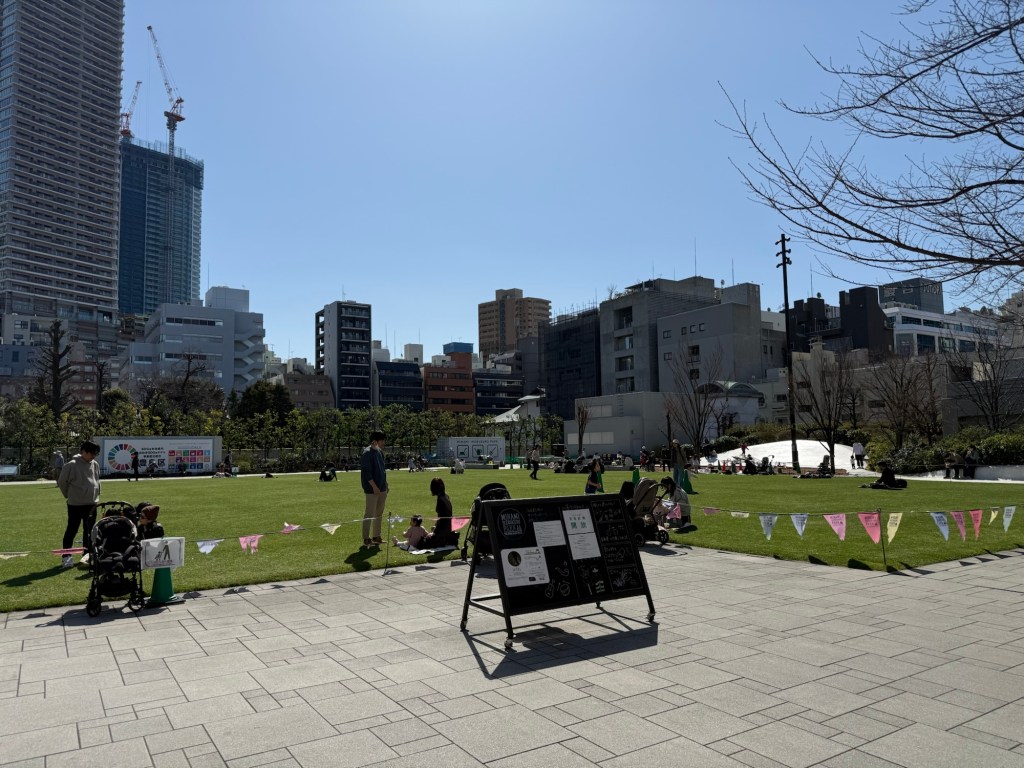
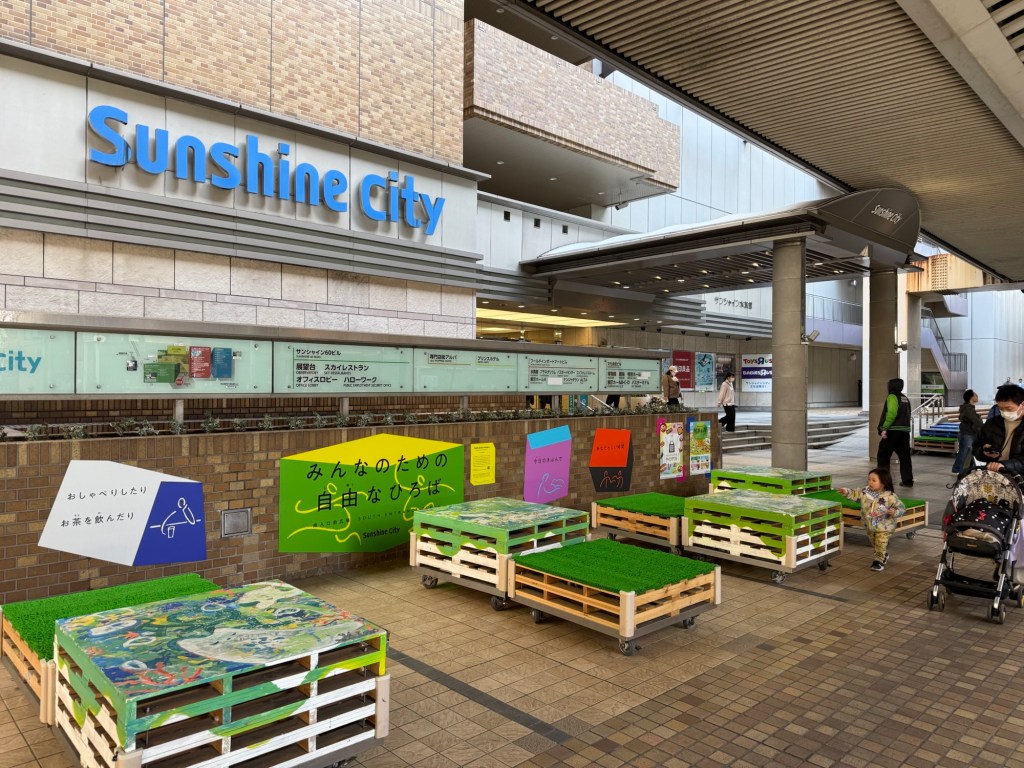
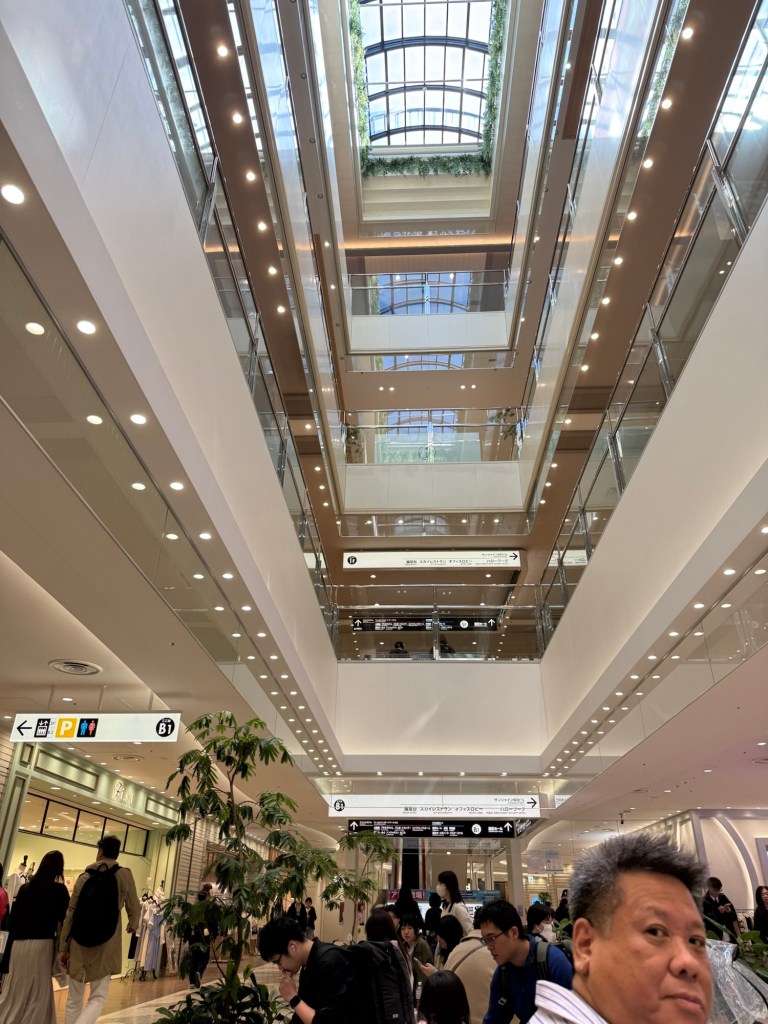
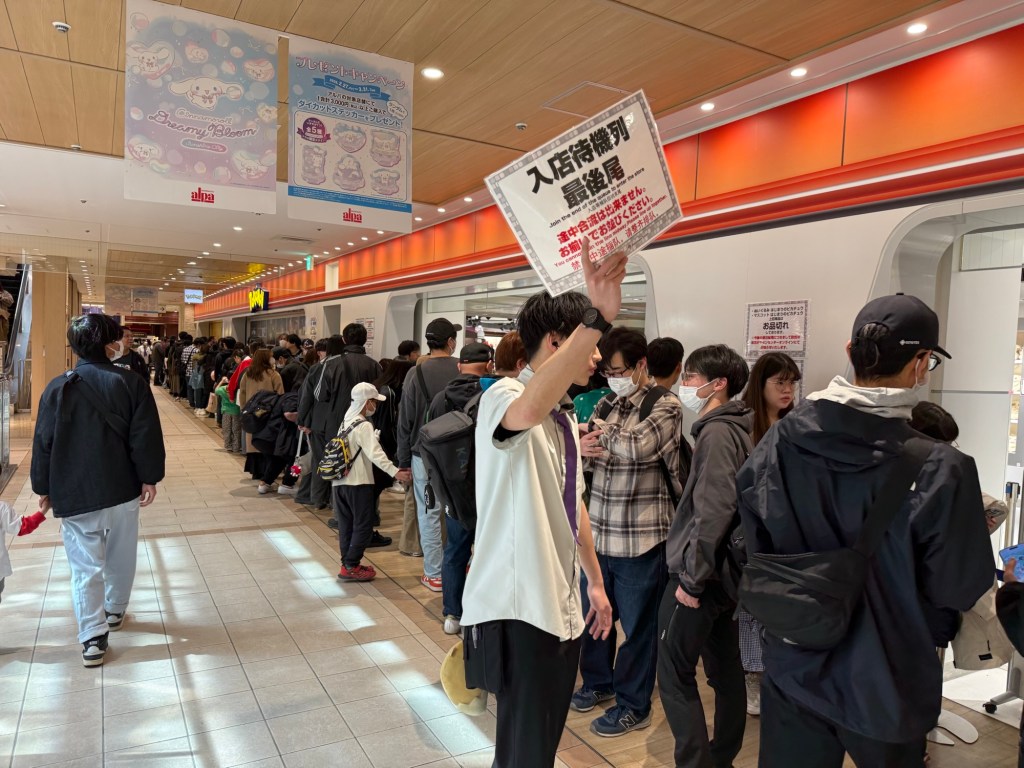
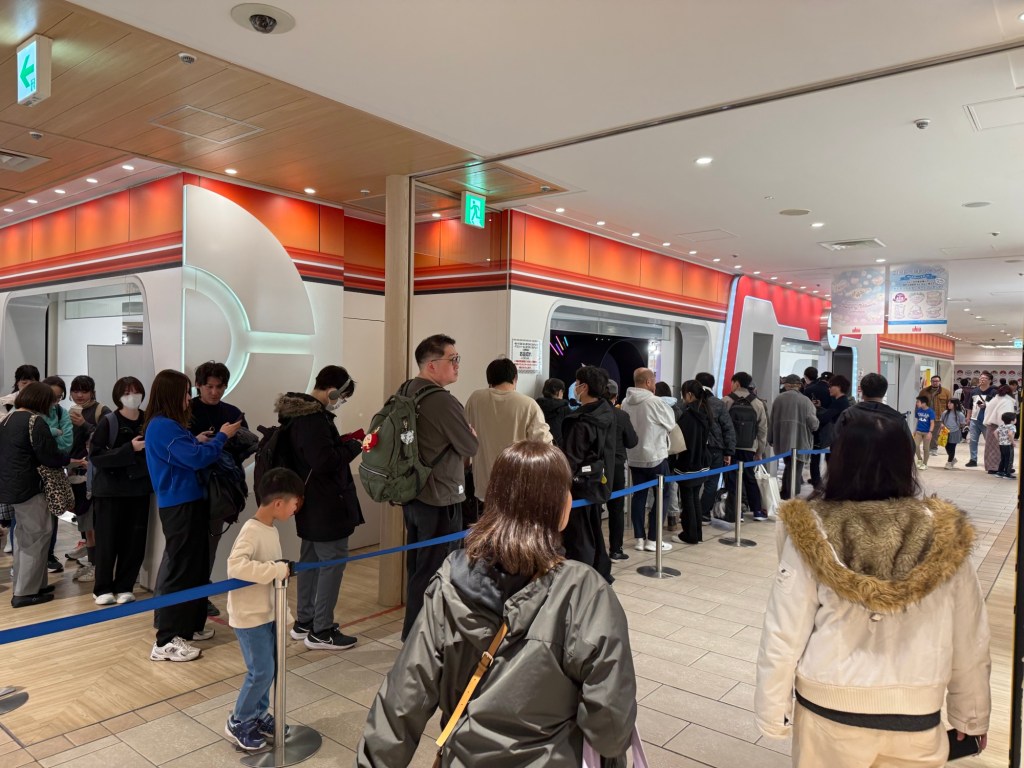
We walk around for an extended period of time, with no particular focus or direction. At some point, we find ourselves in the basement level, which inevitably leads to us wandering out of the Sunshine City complex proper and towards other parts of the region (all without noticing, of course, because everything dovetails so seamlessly; the next thing you know, you’re on your way to a bus or a subway station)
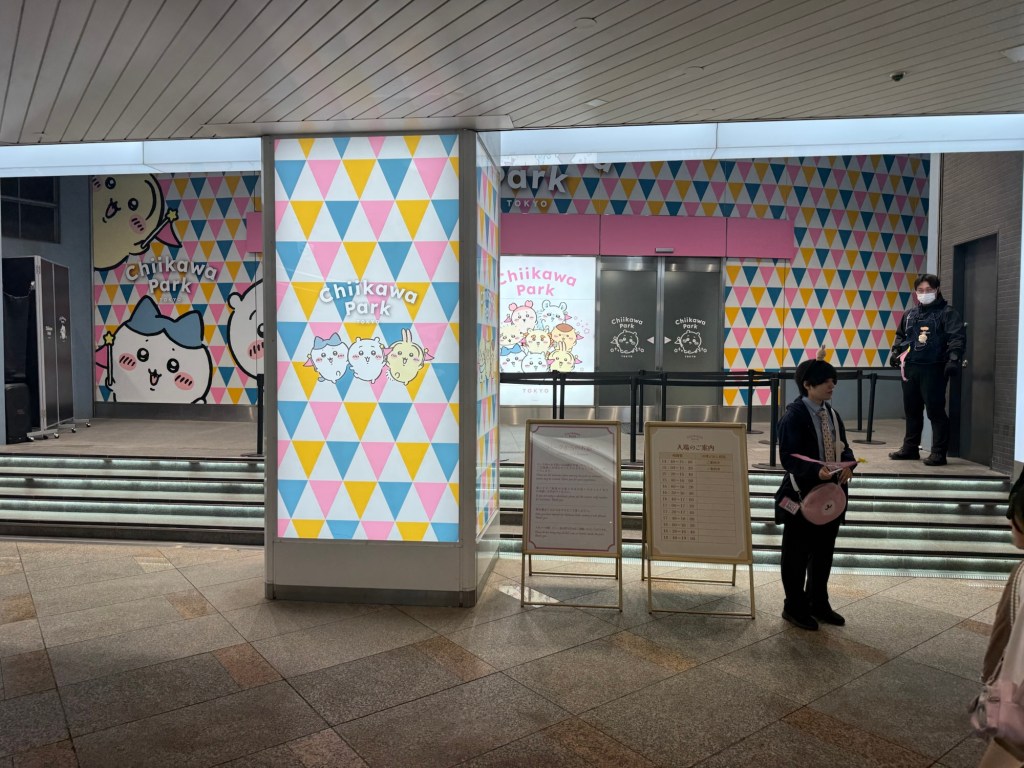
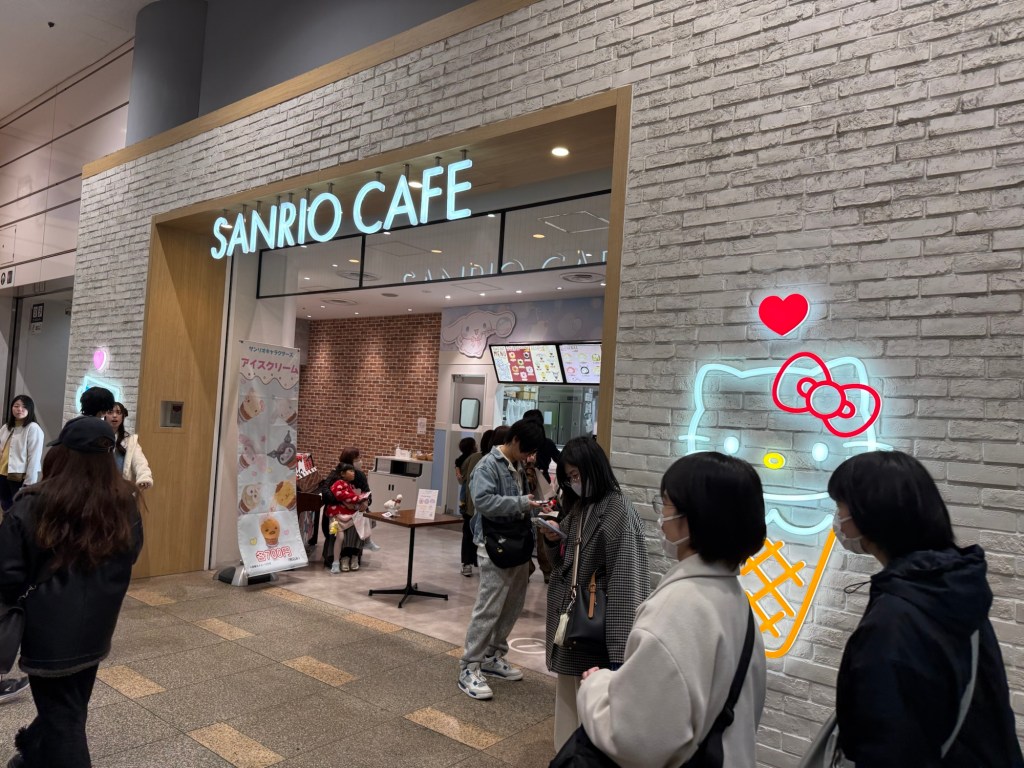
He doesn’t beg for us to get a bite here – he really doesn’t have to. I know him well enough to know how much he wants to do this, and that we’ll never get the chance again. Besides, it’s not as if we’re in a hurry to go anywhere or do anything in particular; if we have to wait here for this, what of it? We’re not even constrained by the tour group at this point; while waiting to get in here would be comparable to us sitting around to get into a Hatsune Miku cafe elsewhere (and I don’t doubt that they exist, either), each of us is now left to our own devices now. It’s just Daniel and I, and that particular fact is remarkably liberating.
Granted, it turns out to be a considerable wait…
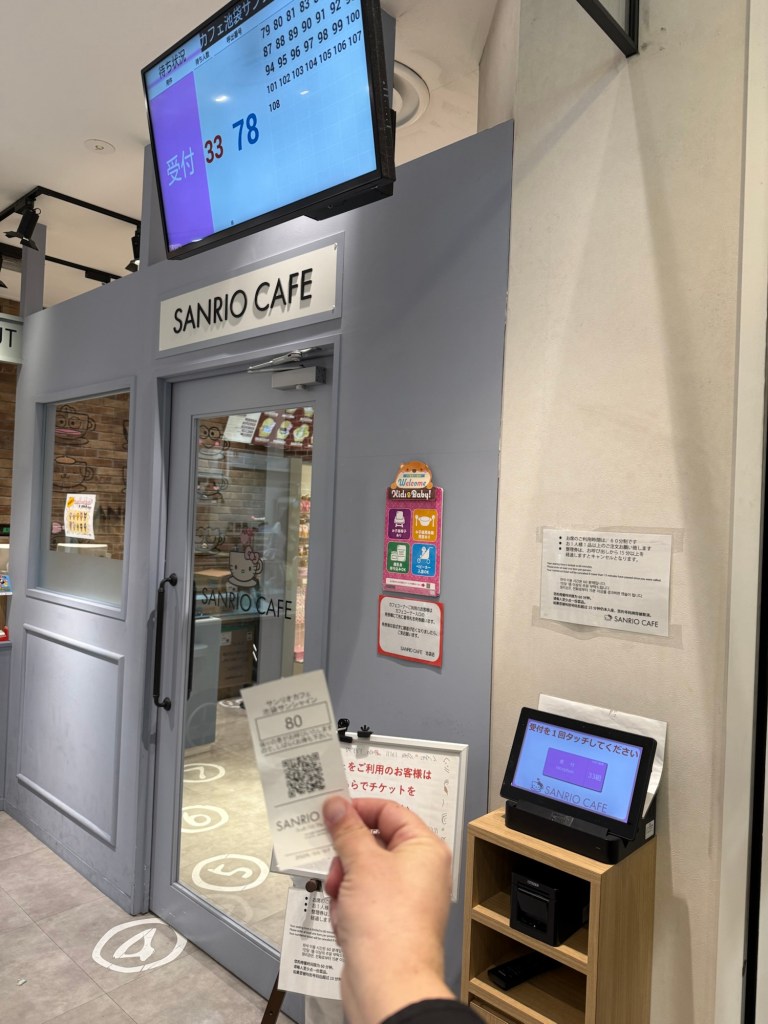
This is the sort of thing where one might find oneself wondering “I crossed the Pacific to do this?” It feels like a waste of time, even to Daniel, who apologizes multiple times to me over the course of our wait. But again, what else were we planning to do here? This is something that’s important in a way that nothing else around us really is, so I’m happy to wait here for him – as long as I don’t have to be standing around the whole time.
But here in Tokyo, there’s nowhere to sit down and rest, for the most part. I don’t know if it’s a matter of the dense population, the premium on retail space or that it’s all part of the city’s go-go-go ethos, but sitting down just isn’t an option. Even sitting on the ground is frowned on from a cultural standpoint, I understand; the only ones who do so tend to be the (admittedly very few) vagrants and unhoused that wander the streets of Tokyo, and no one wants to be mistaken for them.
But we have an advantage that the average local doesn’t: the ‘gaijin’ card. The thing is, there’s no way we will ever be able to pass as a native Japanese; we look like foreigners, and there’s nothing we can do about that. As a result, rather than trying to blend in, we can lean into (quite literally; there’s apparently a certain posture referred to as the “American lean,” usually when propped against a building) the fact that we wouldn’t be expected to know the unwritten rules of Japanese society. This gives us a certain license to not hew to those societal norms such as sitting on the ground like this. They aren’t as offensive when done by the likes of me or Daniel, because folks can look at us and shrug that “oh well, they don’t know any better,” and offer us more grace than they would their fellow citizen. It’s entirely possible that they have contempt for us as foreigners, but as long as we’re not aggressive or deliberately offensive, this isn’t something that will necessarily make them think any less of us.
In any event, we get inside after a couple of hours, and it’s really a sight to see:
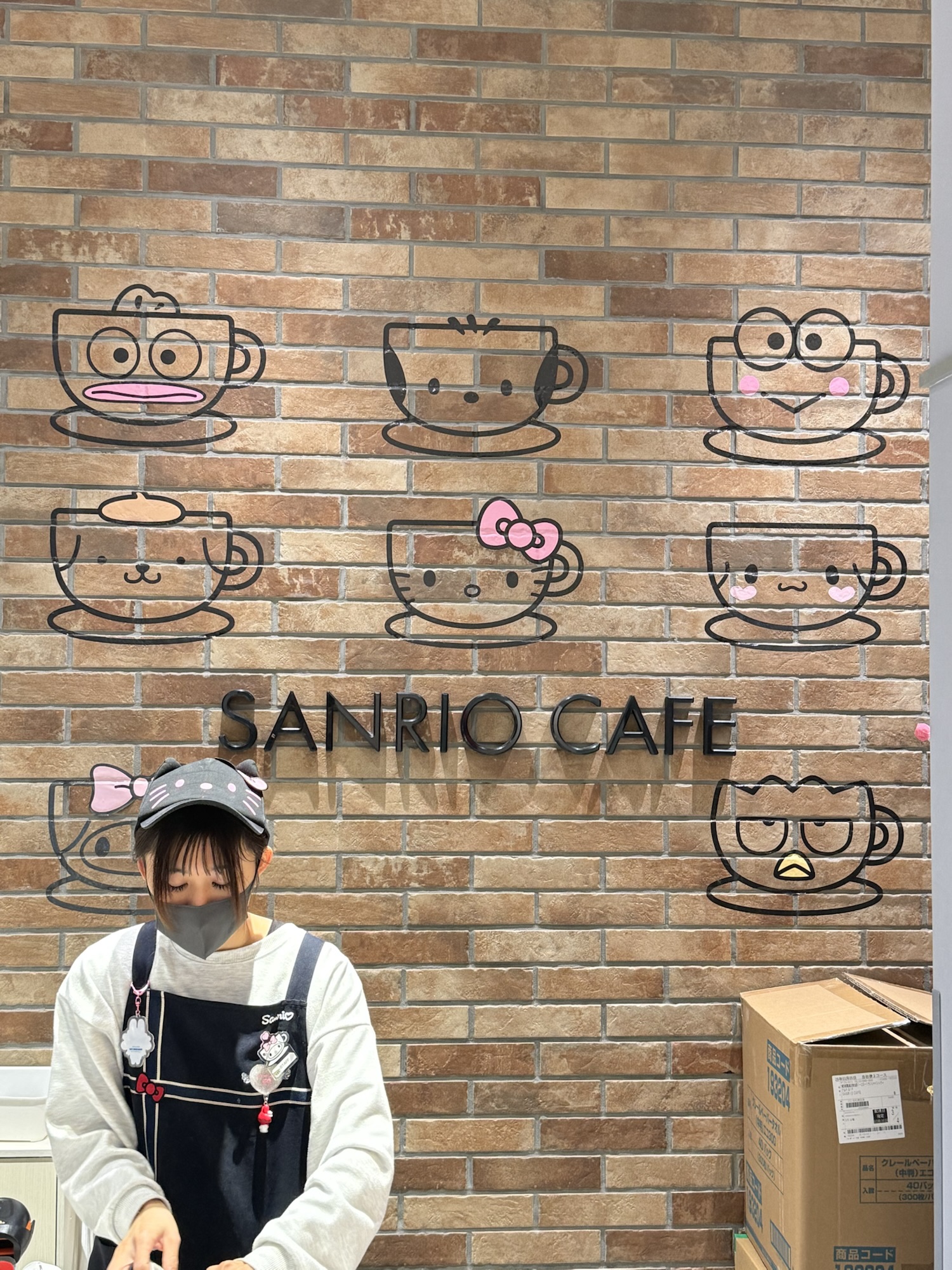
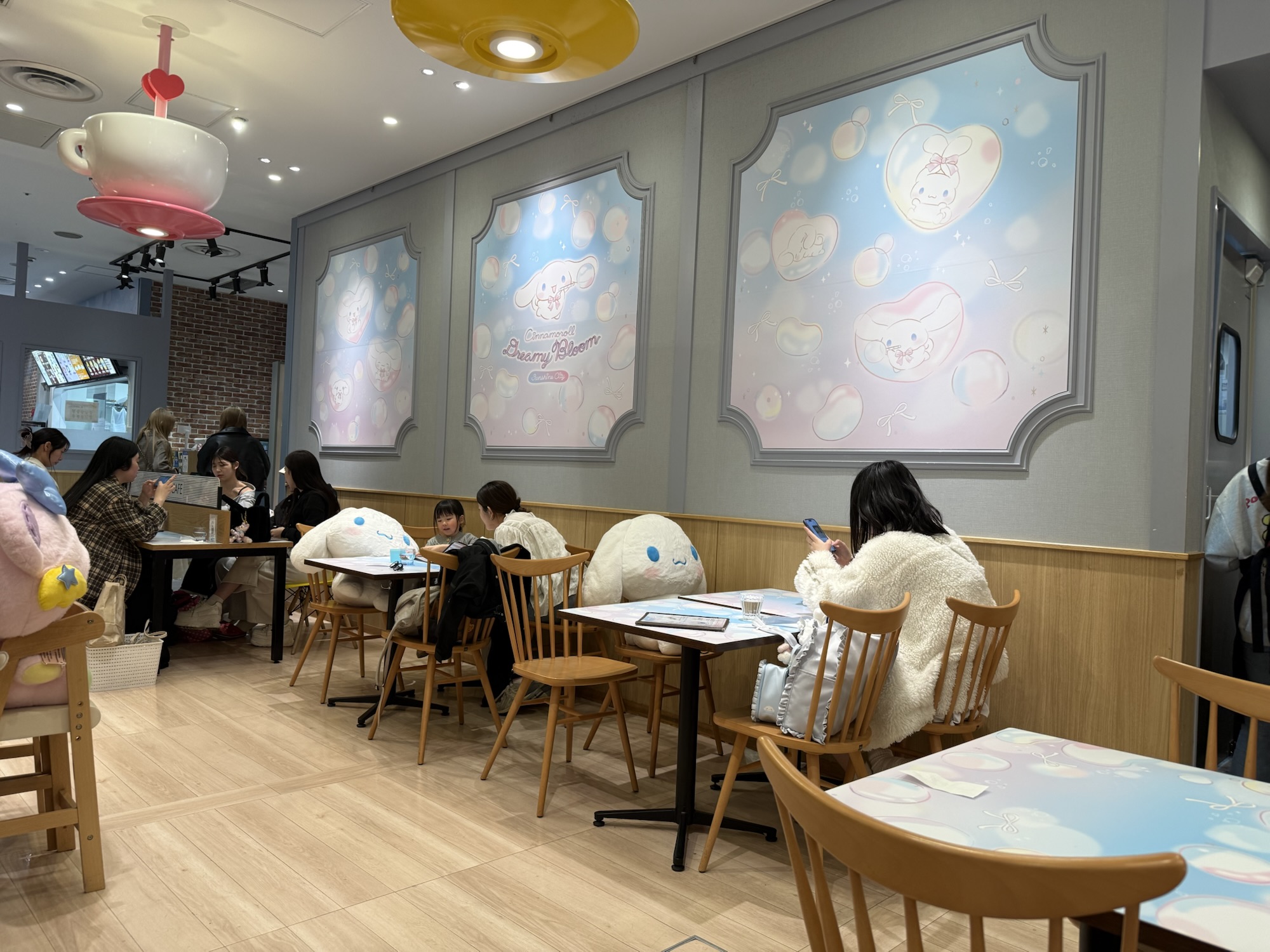
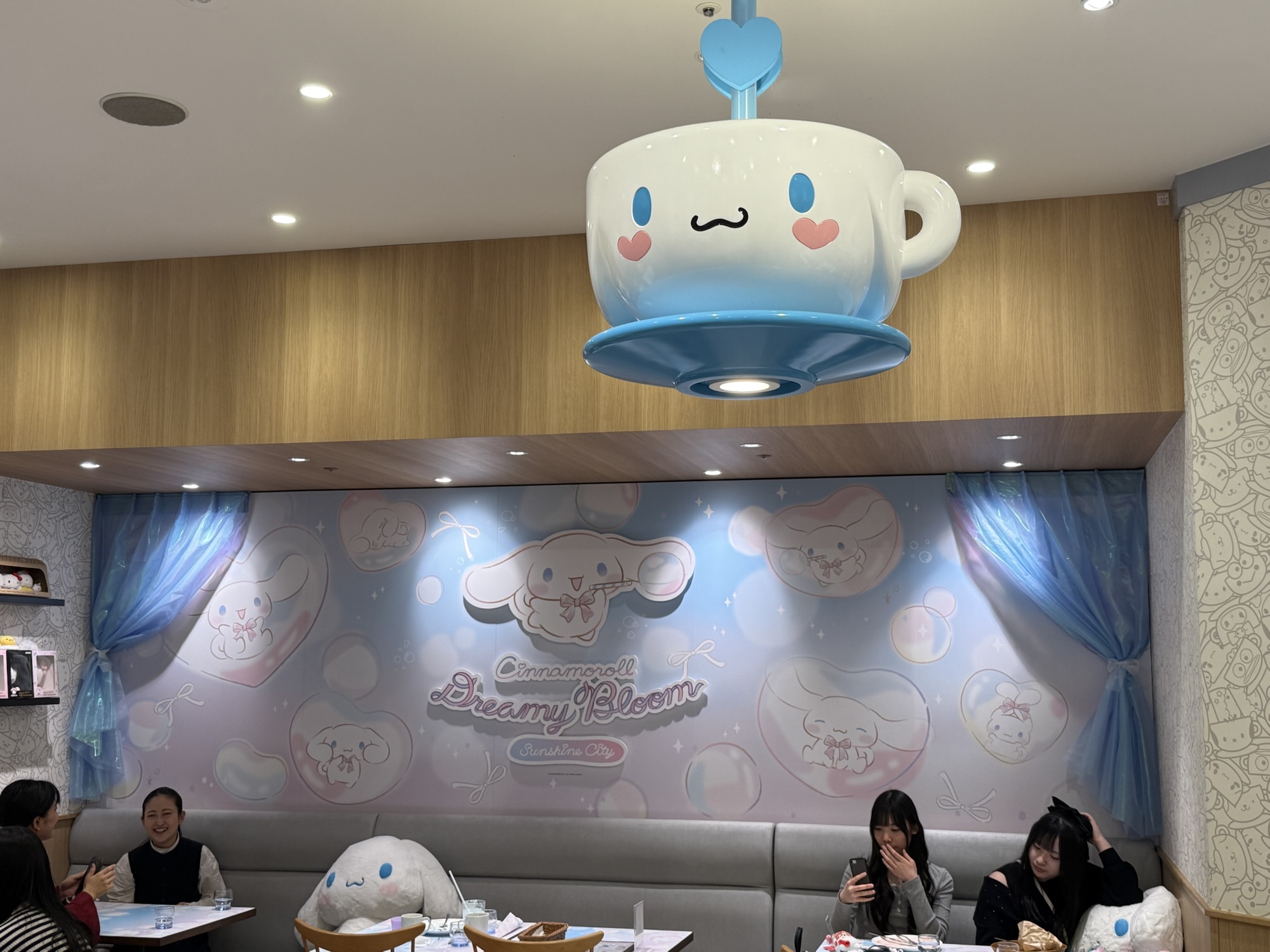
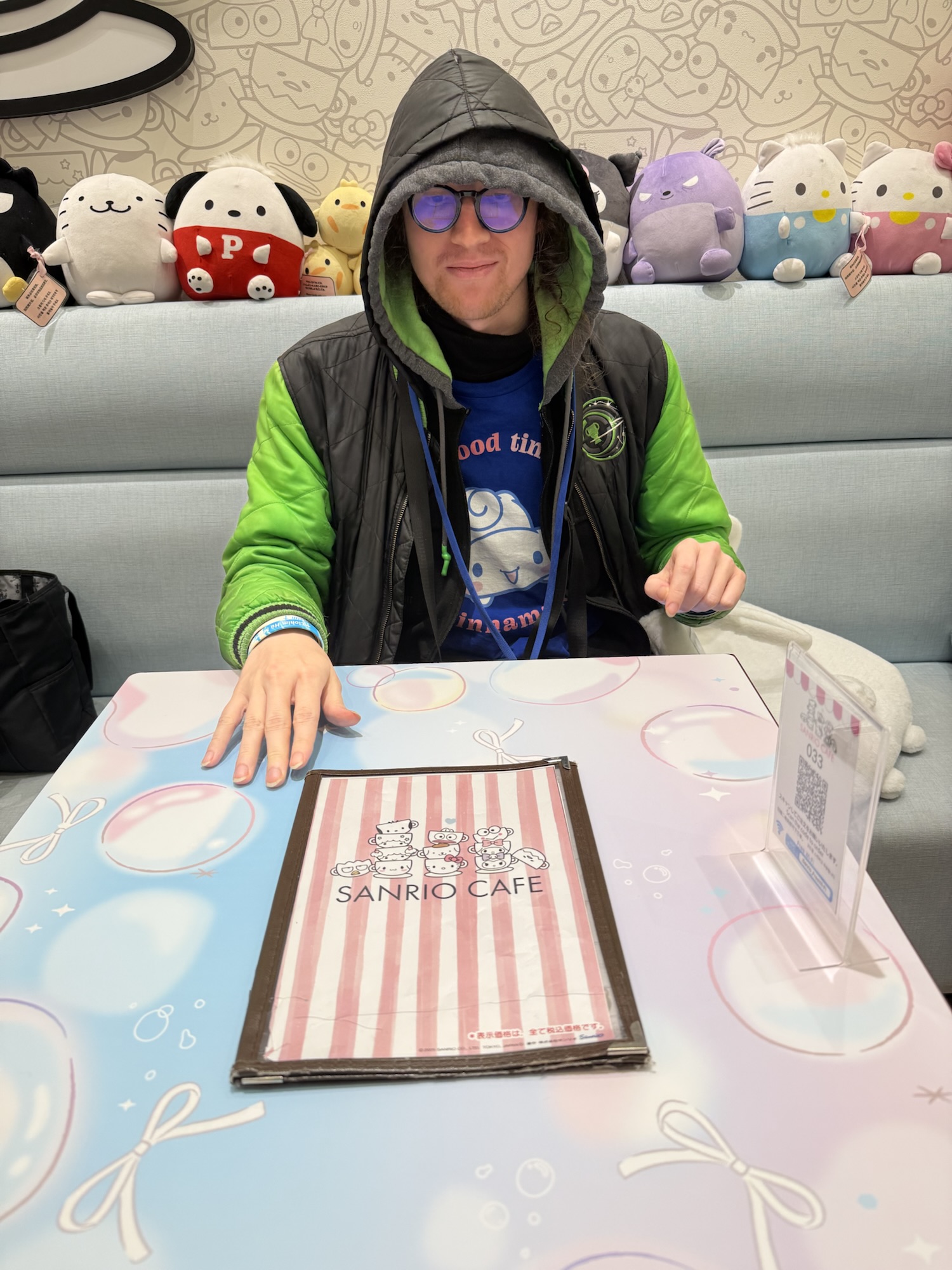
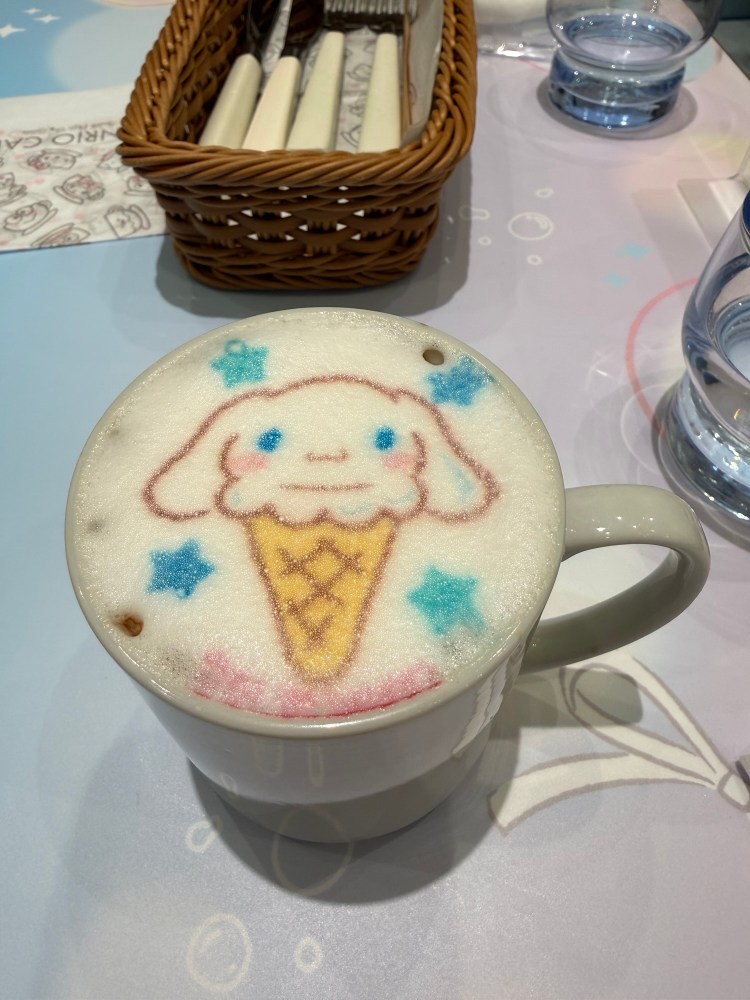
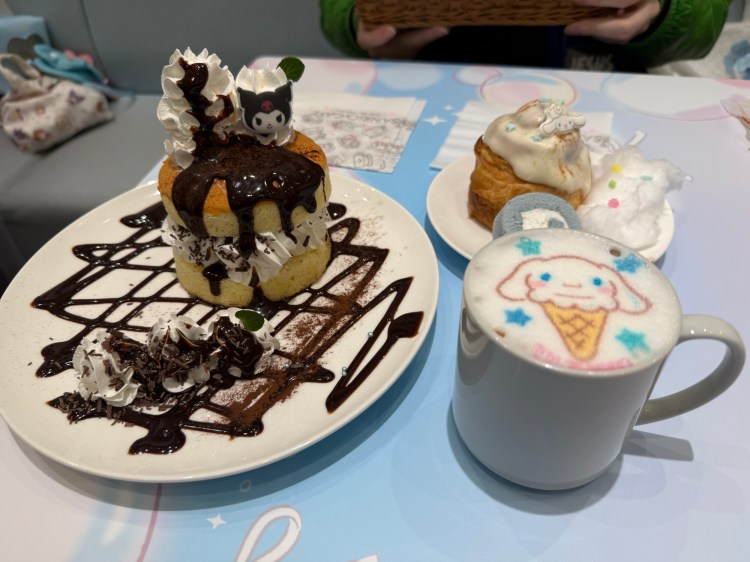
One of the ironies of our walk around the complex is that we passed up entire floors of restaurants because we weren’t hungry at the time – that, and we really couldn’t tell what any of the places offered, or if they were what we wanted – and we wound up settling on a very mid-level café such as this. On the other hand, this was meant to be an experience, not a meal, and if one takes it that way, we got our money and our time’s worth out of it in the end.
Not only that, but as we were sitting around waiting for our number to come up, I took the opportunity to check with my chatbot about local places worth getting something… let’s just say, a little more substantial. After a little bit of back-and-forth, it recommended a place called Gyukatsu Motomura (牛かつ もと村). And I know what you’re thinking; beef katsu? Most katsus are of pork, with the occasional chicken out there as well, but beef seems a little odd, to say the least. On the other hand, we Americans do have a regional tradition of chicken-fried steak ourselves, so it’s not as if this is completely alien.
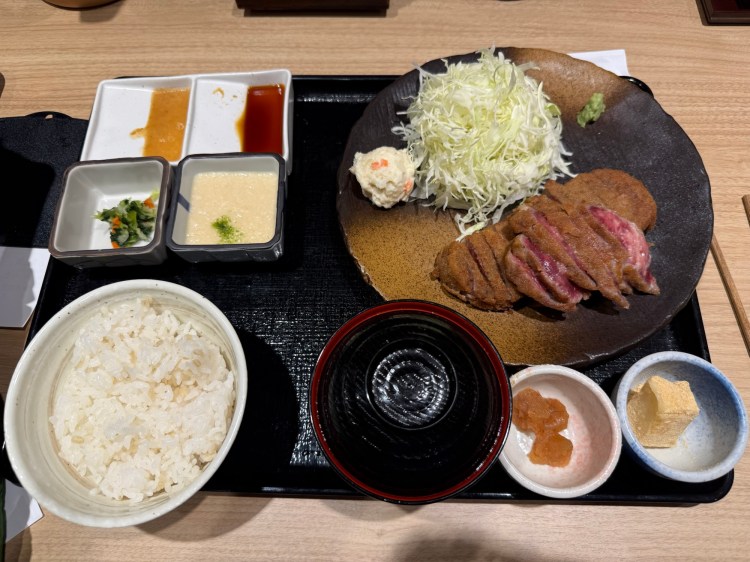
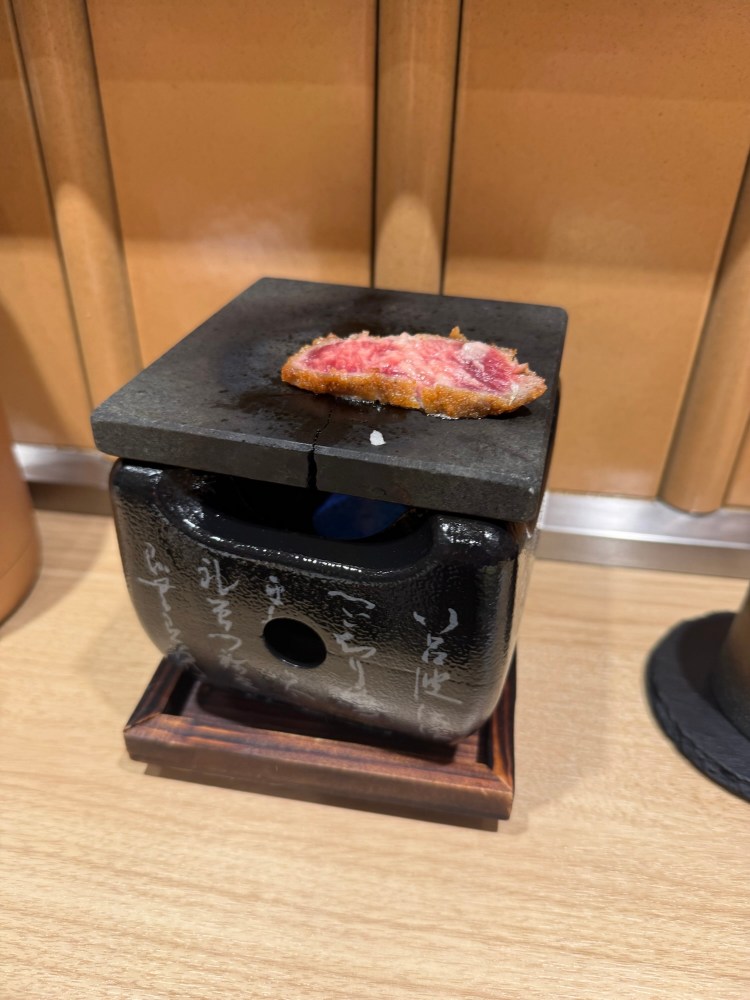
And just think – if we hadn’t had to sit around waiting like we did, we wouldn’t have been able to find out about this place. Finally, upon looking this up to write you about it, I just discovered that this location literally just opened up this past month; we were getting it at its brand-new best. Suddenly, I feel privileged, instead of inconvenienced.
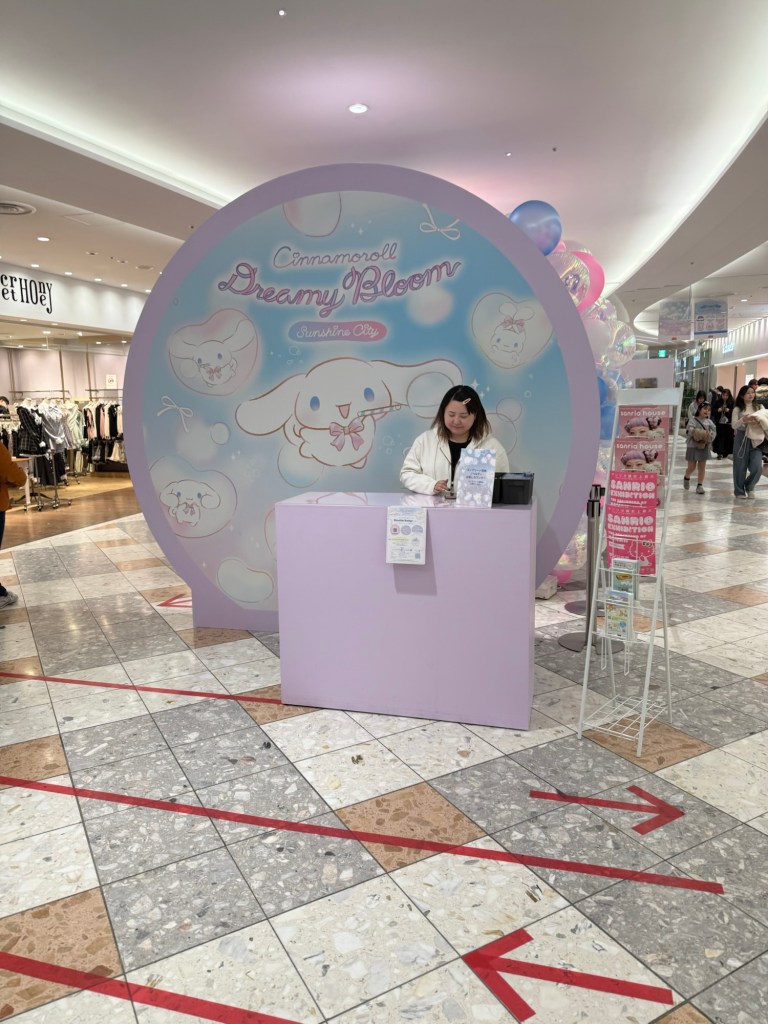
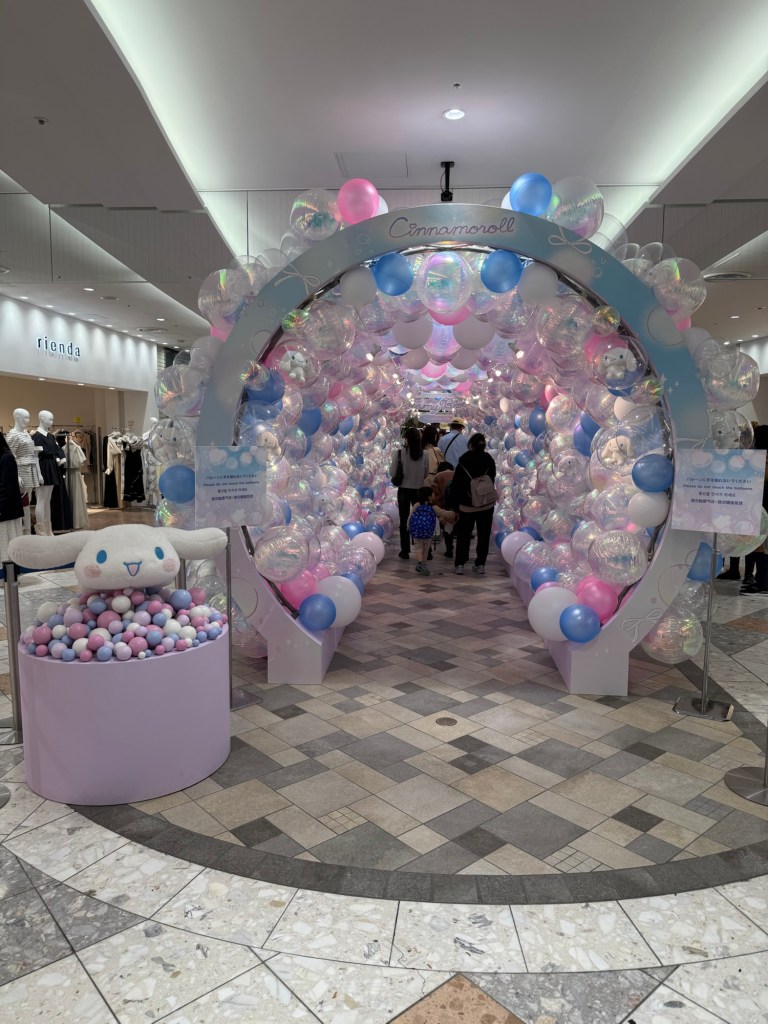
If this is what the rest of our on-our-own experience of Tokyo is going to be like, honey, I think we’re going to be okay. I don’t know if we’ll ever be capable of that cross-country trip I will occasionally dream of, but a day like this is as much what I would expect to encounter, and as much as I could ask for. I’m only sorry you couldn’t be around for it yourself.
But as we still have a couple such days of this to go, I’ll ask as usual that you keep an eye on us, and wish us luck, as we’re still going to need it.

 Letters to Rachel