Dearest Rachel –
It’s not natural, when everything is going crazy around oneself, to head in the direction of the chaos. The flight instinct is part of the whole self-preservation mechanism that is common to virtually all sentient life. But of course, someone has to get those in the midst of the madness out of there, as well as those who need to clean up and rebuild from the wreckage.
It’s why we (theoretically) honor those who do that sort of thing for a living – the first responders, the emergency management personnel, be they law enforcement, fire prevention and containment, or health services. These are the folks whose jobs are to set things right, even as everything is in the process of going to hell; they stand athwart the chaos, commanding it to stop as they attend to their duties.
Sure, they’re paid for their services, and in many cases, the bulk of their time is spent in relatively boring pursuits; be it paperwork, additional training or otherwise standing by until the next crisis comes up. But when it does (and eventually, it will, thanks to various natural tendencies toward chaos and entropy), and that one to ten percent of their time that is spent in mortal peril in upon them, they don’t flee from it, like a rational creature would (and ought to). No, they run to the scene of the disaster.
Sometimes, this is even quite literal; there’s a footrace held every September 11th in New York, from the Brooklyn Battery Tunnel to the site of the World Trade Center in honor of an off-duty firefighter by the name of Stephen Siller (who deserves to be named in full), who heard about the attacks on the radio and skipped the golf game he was heading toward with his brothers to go help. Since by the time he arrived at the tunnel, it had been closed due to security reasons, he strapped on his 60-pound gear and ran to the towers, where he ultimately disappeared in the collapse.
Is this normal behavior? Hardly. Is this even expected of a professional? Not really; being off-duty, he would have been well within his rights to head to his game as if everything was perfectly ordinary. But some situations call for an extraordinary response, and he was there to give it, and give his all in the process, thereby enshrining his name for posterity. Was it saving heroism? I don’t know; I assume that he may well have rescued others before being caught in the destruction himself. On a more spiritual level, while Jesus speaks of how “greater love has no man than this, that a man lay his life down for his friends,” and Mr. Siller did so for complete strangers, I don’t know – indeed, I rather doubt – if his heroism counts for anything in the eternal realm. If deeds are representative of faith, maybe it does, but as a result and proof of that faith, rather than any matter of ‘earning’ salvation through them. You might know, where you are; if you happen to have him pointed out to you up there, greet him for us all, and (if he doesn’t know about it already, which, if he’s been there for two decades prior to you) let him know he’s remembered.
Now, I hadn’t meant to write an essay on Stephen Siller – this was nothing more than me attempting to relate a scene (and that’s all it was; no plot, no dialogue that I can recall. Just the sight of you running toward the chaos) in my dreams last night.











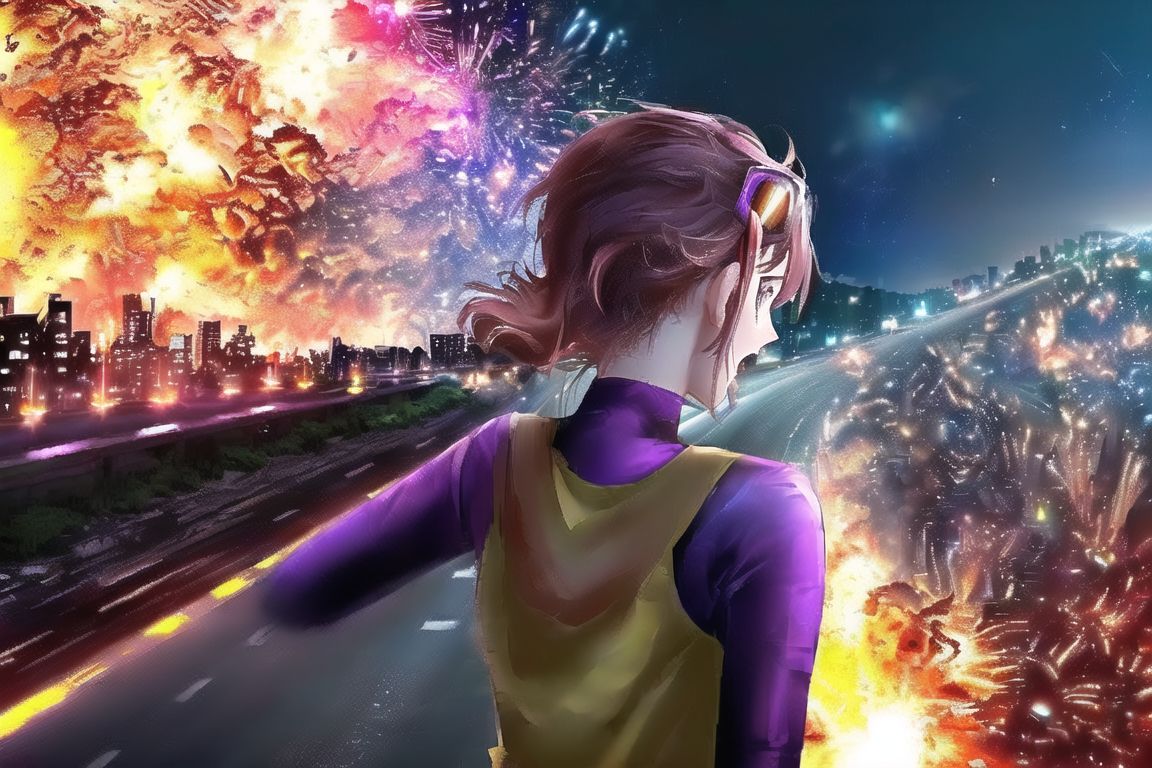




But for all that we yearn for heroes, to the point of creating whole organizations of fictional characters with superhuman abilities to fight the ever-encroaching entropy, there are the occasional real-life figures who step up to the challenges when they are presented. Many times, they live to be honored for their heroism; sometimes, they do not. But either way, it goes completely against nature to do what they do.
That’s what I saw last night in you, and thought I ought to let you know.
Anyway, take care of the city for me. Keep an eye on me, and wish me luck; I’m going to need it.

 Letters to Rachel