Dearest Rachel –
We’re back at Masada yet again; and although it doesn’t factor into the Biblical record, it seems to be de rigeur for a tourist in Israel to visit, it would seem.
It’s a symbol of heroism for Israelis, despite involving what was effectively mass suicide, a serious breach of Jewish morality. However, given the fact that capture meant death or slavery (and the loss of their identities as Jews), this seemed a case of ‘better to die on our feet than live on our knees,’ which, in the context of the Holocaust that was beginning as it was being excavated, makes a certain form of sense.
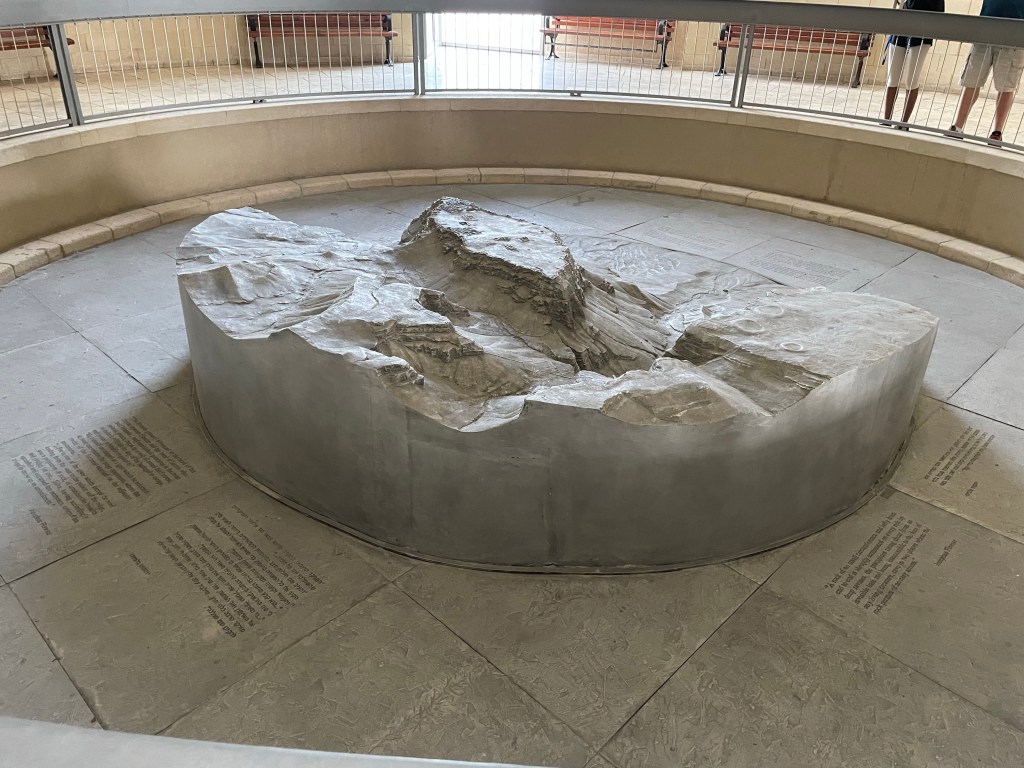
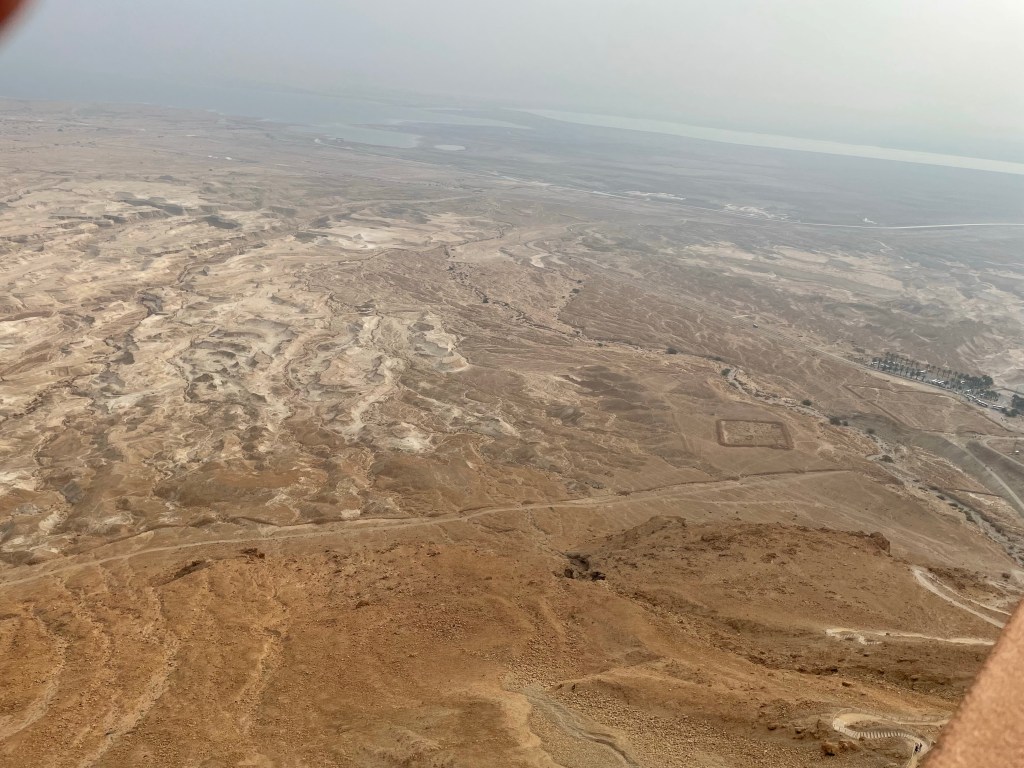
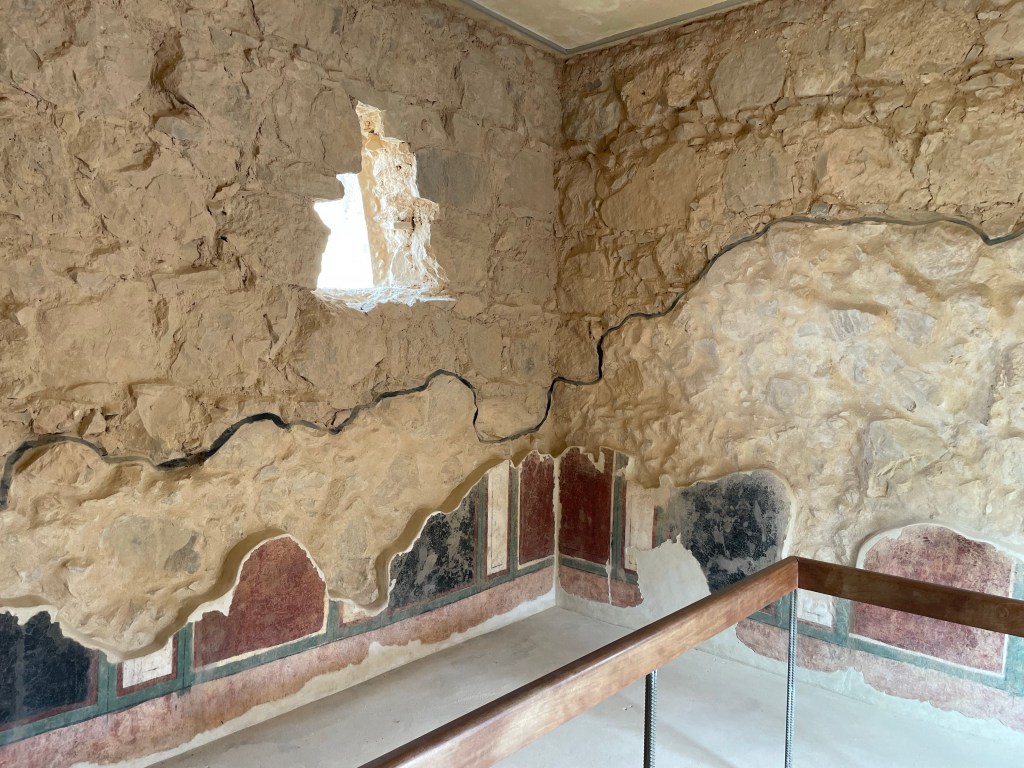
Masada stood for four years after the fall of Jerusalem (the Jewish revolt actually began in 66-67 AD in Galilee, with Gamla being one of the first casualties, before the sack of Jerusalem in 70). It had been once of Herod’s winter palaces (because it was always warm, even what passed for winter here in Israel), so it was both well-built and well-stocked. And, of course, it dominates the mesa upon which it was built, making assault by climbing the mesa all but impossible. In short, it was the perfect spot to weather out a long siege.




The rebellious Sicarii (named for their curved daggers) were no angels. Prior to taking their last stand, they raided En Gedi (one of the wealthier villages in the area) for food and other supplies, killing 700 women and children in the process. It would seem they justified this with the motto ‘if you’re not with us, you’re against us,’ with lethal consequences for the unfortunate people of En Gedi.
As the Romans sweltered at the base of the mesa, they would wash their clothes, letting them drip dry in the sight of the Romans in a form of psychological warfare (“Hey, we have so much water here, we can waste it by washing our clothes in it like this!”)

When the Romans breached the wall (although they were thwarted by a fire that burned their equipment on their first assault), Eleazer Ben-Ya’ir convinced the rebels he commanded that it would be better to die than be killed, raped or sold. Amidst the bodies were quantities of food and water, just to give one last middle finger to the Romans: “we didn’t die because we ran out of supplies; we killed ourselves, because we’d rather be dead than lose to you.”

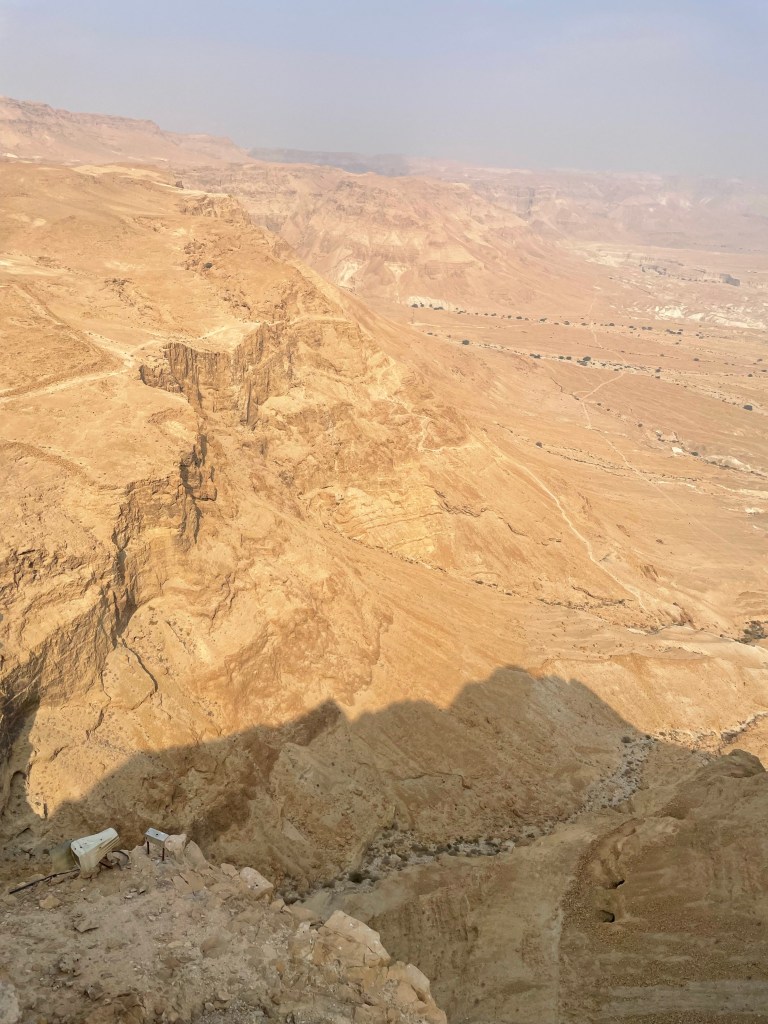

Why, Yael asks, would the Romans bothered to attack such a small pocket of resistance? In the words of an American general of the Indian wars, “Nits breed lice.” Any rebels may potentially be able to recruit more, so the thought was to completely eradicate them before considering the area pacified.
However, there is also the question of the few survivors; what happened to them? Unfortunately, there is no record of that; whether they were killed, sold or set free. It could well have been a propaganda coup if the Romans were to choose the final option: “Look at what these idiots did in order to ‘escape’ us. We’re not monsters, by Jupiter. They did this all for nothing.” Granted, it could then be argued that the few that survived were spared precisely because they were so few and helpless, but since we’ve no idea what happened to them, it’s rather a moot point.
Speaking of being all for nothing (and of last stands, for that matter)… They have a factory outlet store here at the foot of Masada for the very thing I’d been shopping for at the Dead Sea Mall. To think, I didn’t need to go there last night. And what with being an outlet store – and thus likely to be cheaper than retail – I’m almost dreading to see the prices in comparison to what I paid.
But it turns out they’re only cheaper by about 5%, so I feel pretty good about my decision, all in all.
Anyway, I need to get going; the bus is waiting for us. Keep an eye on us, honey, and I’ll check in with you later on.

 Letters to Rachel
One thought on “The Last Stand”