Dearest Rachel –
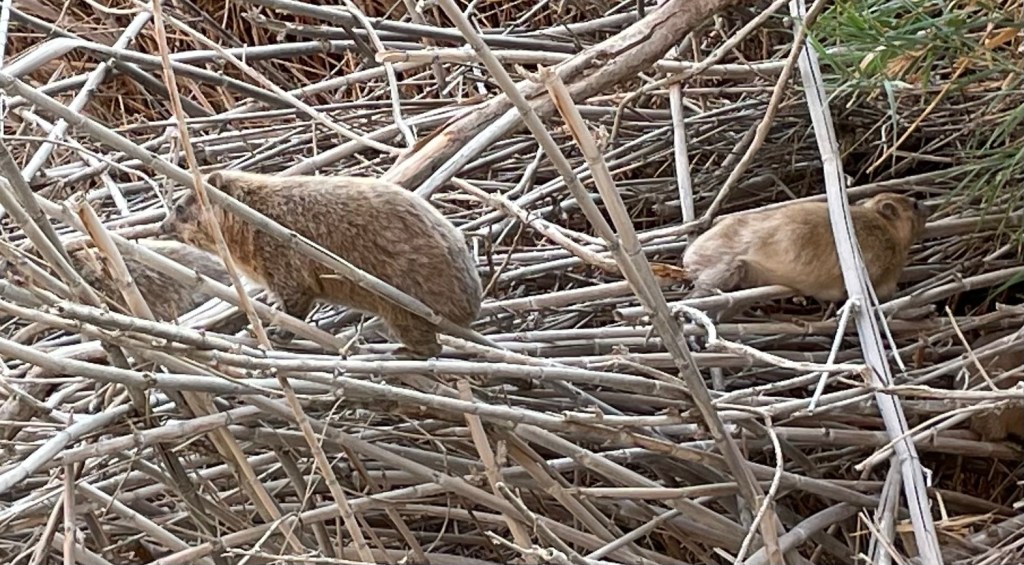
We’re warned not allowed to eat, drink, smoke or feed the animals as we make our way into the En Gedi nature preserve. I wonder about smoking the animals for eating, but Daniel nudges me like you would for a crack like that – which I probably deserve.
I thought that En Gedi was a popular honeymoon spot for Israeli couples (which would have bothered me to encounter, to be honest), but the nature preserve is quite crowded, especially with groups of kids who I assume are out here on field trips or the like.



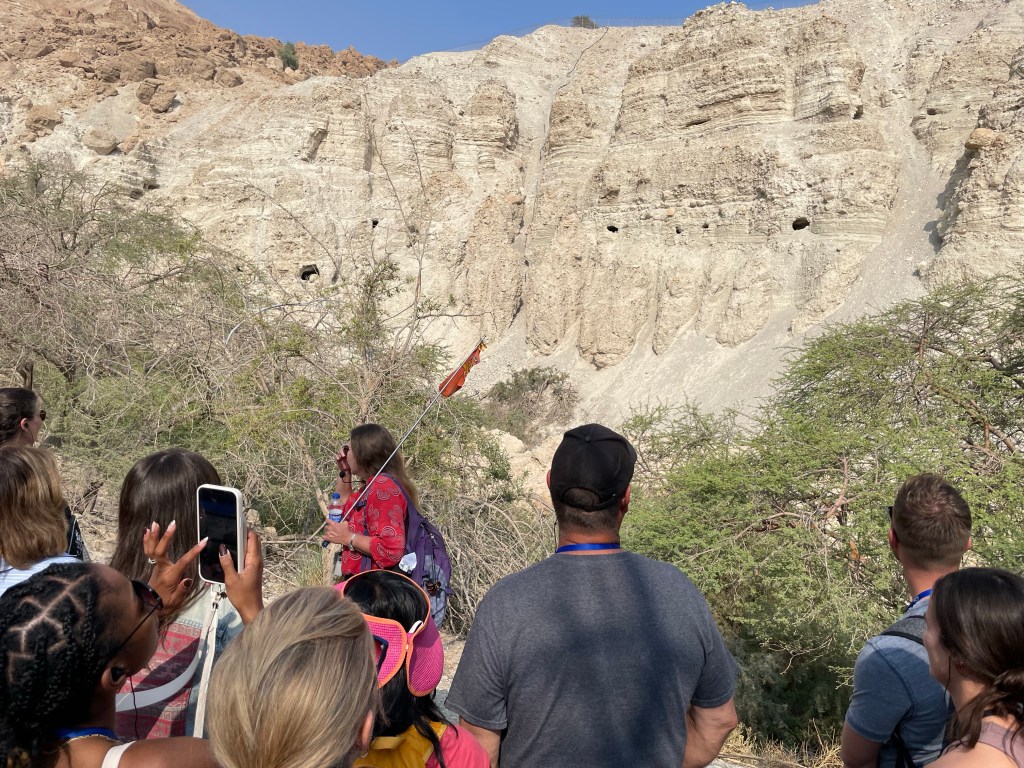
To be honest, when Yael first asks us what these caves were used for, Daniel guesses bathrooms (based on the cat-and-mouse game played between David and Saul, and the incident that happened when Saul did just that in a cave David and his men were hiding in), to which she responds, “What is it with you and bathrooms? Oh wait, that’s me.” To be honest, that exchange would probably have been even more appropriate had it been with you, back in the day – and you know full why. But, to be fair, Yael does spend a lot of time discussing bathhouses and latrines, mostly because the history of a civilization really does hinge on their hygiene. More on that later, in another letter.
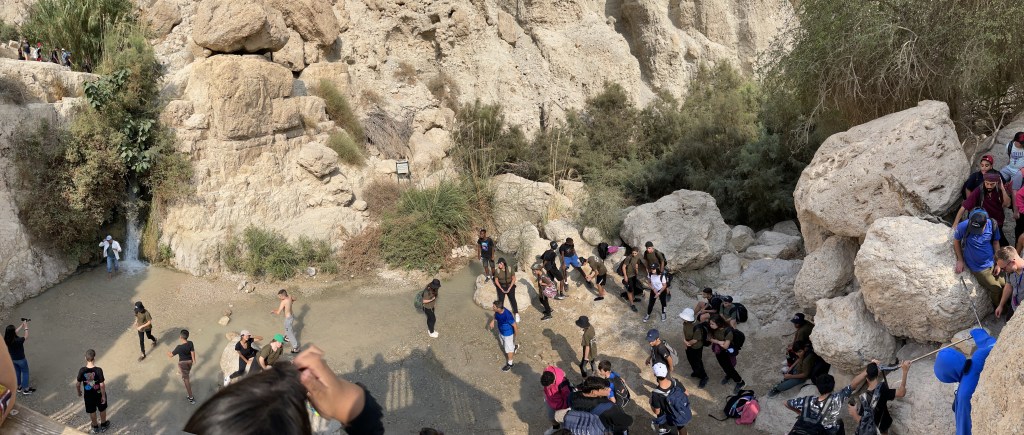

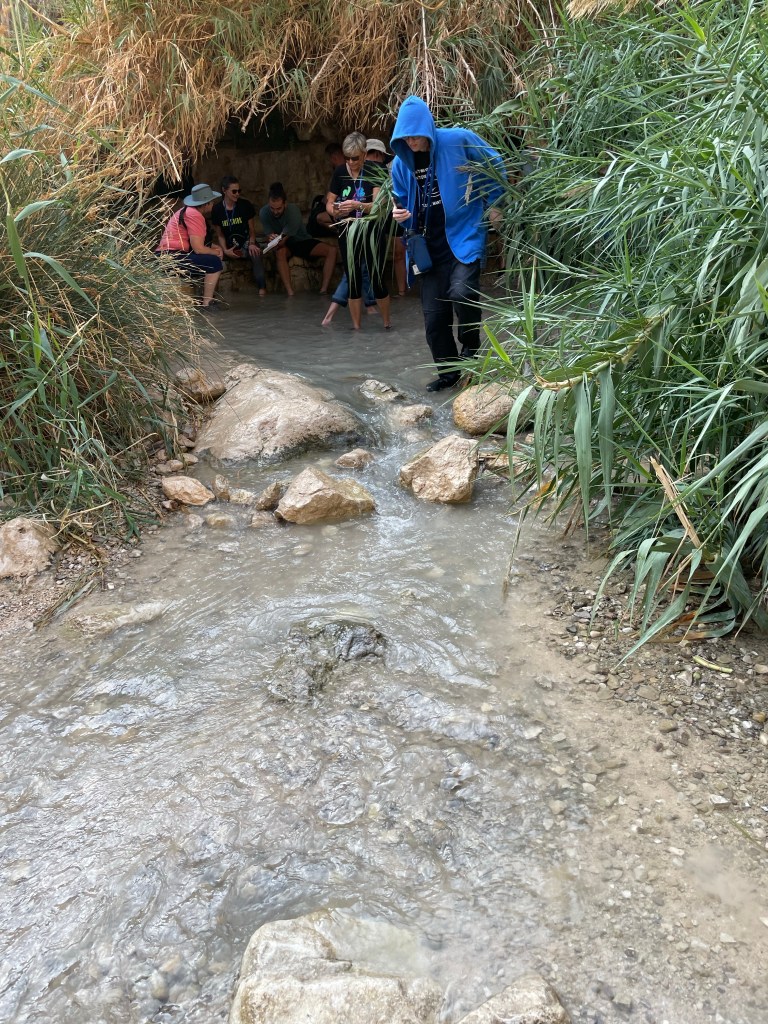
This place really is an oasis in the desert, which is a concept we have difficulty grasping apart from literature. Living by the Great Lakes as we do, we don’t always appreciate how necessary, important and rare water can be, especially for those living in biblical times and places. Here, within shouting distance of the otherwise useless Dead Sea, are springs of clean, fresh running water; enough for David and the few hundred men loyal to him (as well as for the animals they might have been able to kill and eat as they were hiding out in such a place).
Although, with that in mind, it seems odd that Saul would have so much trouble finding David. Israel is a small place, relatively speaking, and places where hundreds of warriors could hole up in might well be few and far between. If you rule out certain surrounding areas, you’d think he could have zeroed in on such a place as this. But let’s set that aside – and everything else, as Paul, Denim and Jordan call up a few of David’s psalms
Be ·merciful [gracious] to me, God; be ·merciful [gracious] to me
Psalm 57:1, Expanded Bible
because I ·come to you for protection [L seek refuge].
Let me ·hide [be protected; L seek refuge] under the shadow of your wings [Ruth 2:12; Matt. 23:37]
until the ·trouble [destruction] has passed.
(Just as David was merciful to Saul, perhaps?)
You prepare a ·meal [L table] for me
Psalm 23:5, Expanded Bible
in ·front [the presence] of my enemies.
You ·pour oil of blessing on my head [anoint my head with oil; C oil was a means of refreshment in a hot, dry environment];
you ·fill my cup to overflowing [L make my cup overflow; C a cup of blessing].
David was certainly dealing with enemies at this point.
As a deer ·thirsts [longs; T pants] for streams of water,
Psalm 42:1, Expanded Bible
so ·I [T my soul] ·thirst [L longs] for you, God.
To think, this is the place that inspired David to write so many of those words of praise to God; even in the midst of being pursued by an army set out to kill him.
***
But again, our time is running short; we need to get going, as we have places to be, and certain times to be there. Still, there’s time for a few more photos:

I’ll talk to you later, honey. Until then, keep an eye on me.

 Letters to Rachel
One thought on “Streams and Songs in the Desert”