Dearest Rachel –
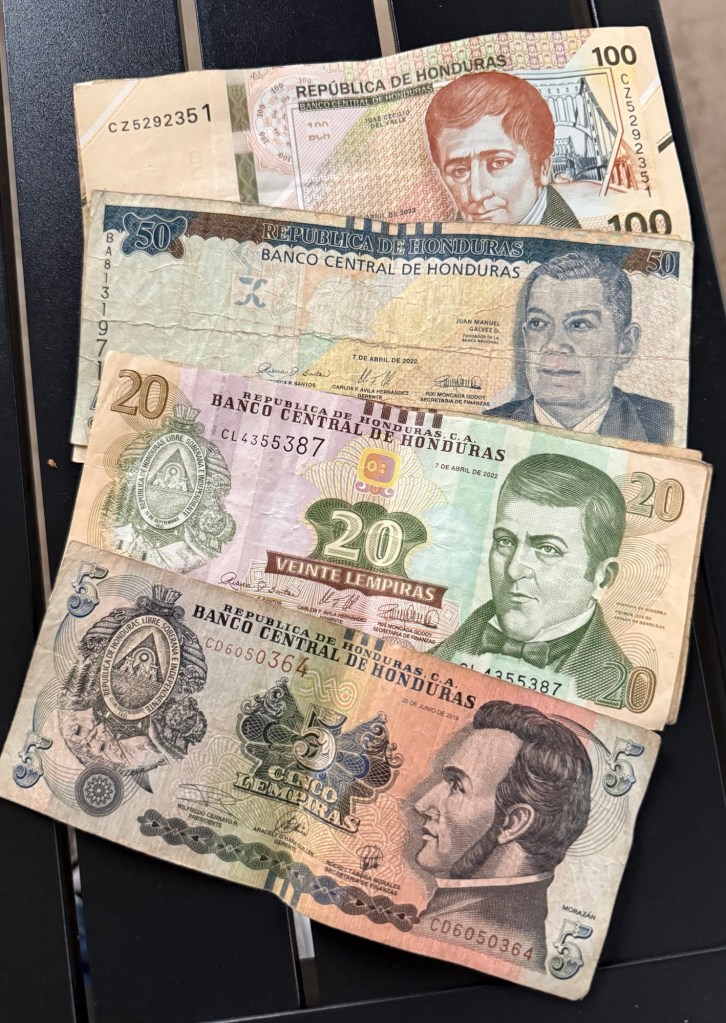
Douglas, the local head of operations here at Just One International, tells me that they have a saying here in Honduras (and bear in mind, I’m paraphrasing here) that “when you break a L500, the pieces scatter to the winds.” The gist of it is that, once you reduce the equivalent of a twenty dollar bill to smaller denominations, it’s so easy to spend them that they disappear without one being aware of it happening, or what they went for.
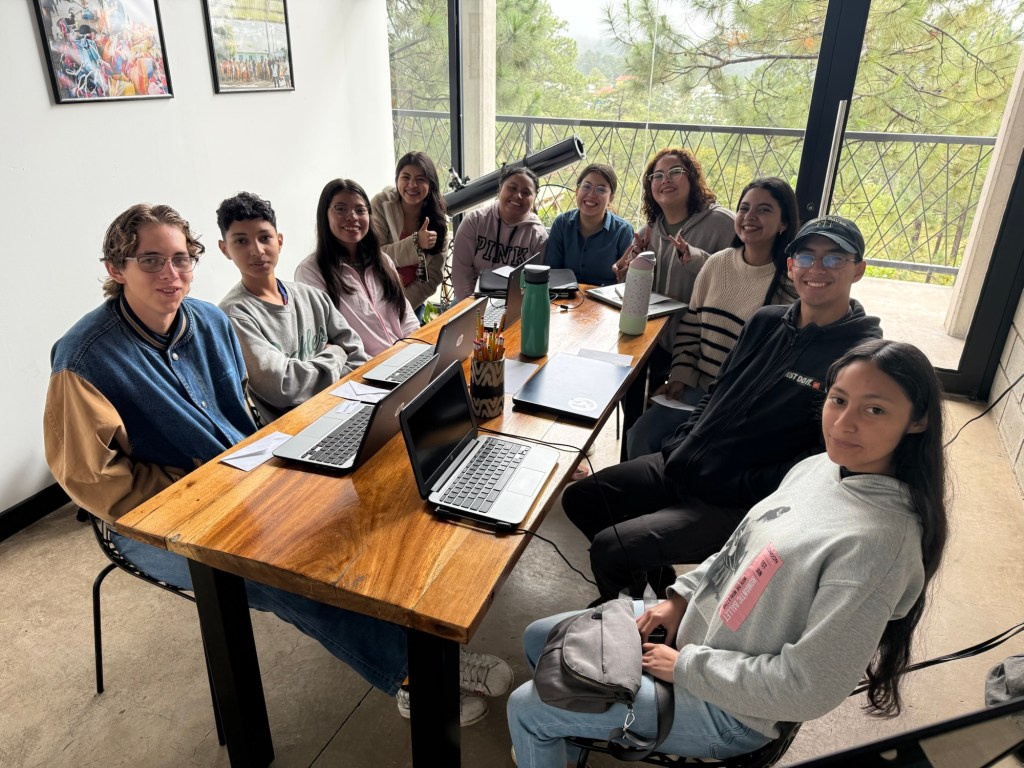
That was my purpose in being here; to teach a class how to manage one’s money, a topic that I understand doesn’t get covered in any great detail in school, if at all. Although based on my own high school experience (which most Hondurans don’t get the chance to progress to, by the way), that’s hardly worse than back in the States; classes exist, but as electives, so not everyone learns how to manage their money – and it shows.
Originally, I had intended to springboard off of the class I had taught back in July about spreadsheets, and have the kids build a table showing how money deposited in a bank account accumulates interest year over year (and more to the point, how the interest compounds upon itself, thereby growing without them having to do more than make the initial deposit – although if they could make a habit of adding a little bit more on a regular basis, that would be all for the better). However, the internet connection has been somewhat shaky all week – and as it turned out, there were more kids than computers anyway – so I simply put my own copy of the spreadsheet on the screen, as if I was filling out a whiteboard, and used that instead for my illustration. It did mean that some of the time I was expecting to take for the class wouldn’t be needed, while at the same time I talked way too fast for my own good or theirs out of sheer nervousness, which left me in a bit of a bind.
At the same time, though, I did have more material to work with than I had initially planned; upon arriving at Just One, Douglas had informed me about cultural attitudes toward credit that I might want to address. Given that I had been researching the equivalent to either payday loans or loan sharks within the country’s informal economy, the antipathy he described toward borrowing money is more than understandable. And honestly, if that instills a healthy fear of debt into these kids from childhood, that’s a good thing; better to be cautious with something like this, that can get out of control quickly.
But when the attitude bends towards considering debt to be borderline sinful, that strikes me as going a little too far. And so, rather than talking about saving money, as I’d originally intended, I spent the bulk of each class explaining how credit – specifically, credit cards – could be used as a tool, both to build up a history as well as a convenience for small payments. I didn’t specifically talk about how your folks couldn’t get a credit card due to their own lack of a credit history, but I pointed out how having one can be of benefit when preparing to take out a larger loan for something like a car or a house.
The morning class even had a number of the students wanting to ask questions about how the process worked; the information needed to apply for both bank accounts and credit cards (which, aside from assets and income for the latter, would be roughly the same), the ‘grace period’ afforded on credit card statements in which one was given time to send payment to the card issuer (and I made certain to insist that the balance ought to be paid, as opposed to the minimum recommended payment, thereby avoiding having to deal with interest or penalties). Unfortunately, I couldn’t remember all of the questions – or at best, I internalized a few of them into the afternoon version of the lesson – and the second session, despite having more students, was a little shorter on questions, and by extension, lesson. I’d like to think the kids got something out of it, but I keep having this nagging sensation of having missed, or glossed over, a few important items.
Still, at least I got to distribute the funds to each of them at the end of the class as a ‘homework’ assignment. The amount wasn’t much, but enough so that the few that didn’t have a bank account could open one (and for those that did have one, this was something for them to set aside to grow, as if they’d never received it). And while I’d gotten the cash from an airport ATM upon arriving, I’d gotten more than I needed, so I’ll have to use the remainder on souvenirs or coffee – interestingly enough, I originally received the funds in 500 lempira notes, and had to break each one down in order to distribute them to the students; guess that means I’ll have to test that proverb Douglas taught me.
Meanwhile, I promised the students that I’ll be back in either July or this time next year (probably both) in order to check on their progress. Granted, most of them don’t have jobs, so they can’t make a regular habit of setting aside a little bit for savings, but I assured them that I wouldn’t be issuing a grade on that basis – or on any basis, for that matter. All that needed to be done was that they set the funds aside to grow, and I would check in with them about that when I would return.
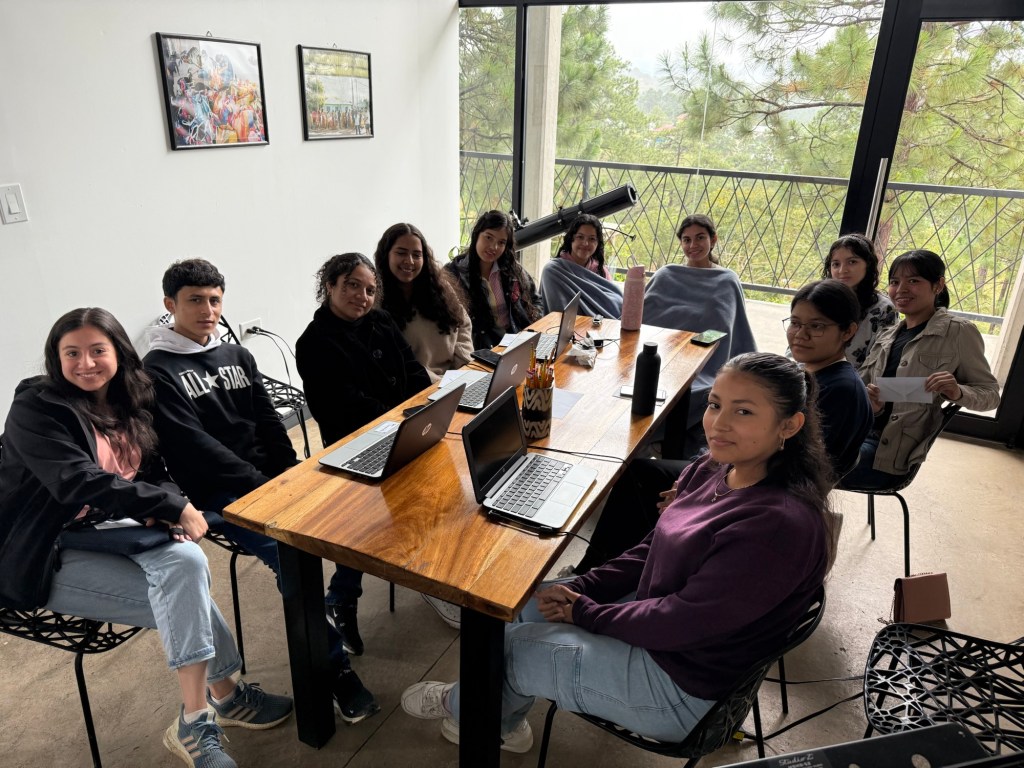
It will be interesting to see who’s still going to be there then, and how well they’ll be doing. I already know of one I’m not likely to see; Ixchel, on the far left in the second class, will be starting an internship at a hospital in La Esperanza. She did keep me after class with a few additional questions, particularly because she would be planning to rent a place in the town in order to work there. I acknowledged that paying rent on a prompt and faithful basis would serve just as well as having a credit card as far as building up a record of responsible cash management with the outside world. Whether she decides to open a credit account or not, it sounds like she has a promising future ahead of her at this point, as do several of the others to a lesser extent (not lesser in terms of prospects, but in terms of what I know of their stories).
In any event, maybe you could see your way clear to keep an eye on them as much as myself, and wish them luck, too. To be honest, they’ll need it more than I will, honey.

 Letters to Rachel