Dearest Rachel –
It was a running joke where we went to college (and eventually, where you and I met); by dint of being located in Bloomington, Illinois, we were by definition “as close to Normal as you could get” without actually quite being there. Geographically (and thus technically) true, but we certainly had our share of strange folks in our respective classes, didn’t we? I’ve mentioned Nanette and her rule about sleep (which you would adhere to at various times in your life); one of her other quirks was, when anyone pointed out her tattoo (which she acquired some time during her college career, so it wasn’t there when she started), she would act realistically shocked, as if she had no idea where it had come from and who had planted it on her. I forget if you remember the Sextette, the group of (mostly, as I was considered a member of their number) art and music majors that turned their table in the cafeteria into a low-budget Algonquin Round Table. And on the other side of the age line, there was Al and Andi, who, despite their carefree hippyesque personae, still managed to lead the B.A.S.I.C. group for a couple of years after graduating.
The point of all this is that we tended to make a point of being, well… something other than ‘normal,’ whatever that was supposed to be. We were cheerfully trying to be as weird as possible, all in our own ways. Which is kind of odd if you think about it, because it means that it was normal to try to be weird, as contradictory as that sounds as I’m writing it.
In some ways, this has been the way of things for generations, even predating our own. Possibly especially predating our own; certainly, the baby boomer generation that came of age in the sixties decried the “conformity” of their elders, and labored mightily to defy it during their college days. Of course, these days they’re being derided in turn for their own establishmentarian conformity: “Okay, boomer” is meant as a dismissive insult to some stuck-in-their-ways older person as they complain about “kids these days.”
Which is not to say they don’t deserve it; even in their attempts to defy “conformity” back in the day, they failed hilariously. You may remember an older couple who were friends of my folks going back from even before my time (we would go as a family to their place on Easter, and they would come to ours for Thanksgiving); it seems that Jack, after launching his business and making something of a success of it, decided to go back to college in order to get an MBA. So here he was, in his dress shirt, slacks and tie (and occasional suit), surrounded by a bunch of kids in sweatshirts and jeans. One of them deigned to accuse him of being a “conformist,” to which he invited his classmate to look around the room – take a good look – and then look at him again. Jack was the only one dressed as he was, while his interlocutor was wearing the de facto uniform of the insouciant college student. “Who’s the conformist, here?” It shut his classmate up.
I bring all this up to point out that, humans have always wanted to be different from their peers – which, ironically, makes them the same as those peers yet again. Sometimes, as with the generation that preceded us, they wind up failing at it in their efforts (because, to a certain extent, they didn’t really want to be ostracized from the herd; they just wanted to be running with a more exciting one); in other cases, they claim they don’t want to be different, and that they want to be accepted as normal (even as they go on social media to show just how wild and outrageous they can be, for the sake of the clout). It’s an interesting balancing act that people put on between weirdness and normality, complete with ambivalent attitudes toward both ends of the spectrum.
And it’s the concept of “the spectrum” that got me started on this topic in the first place. You might remember that, when Daniel was diagnosed with his condition, we received our first exposure to the symptoms that indicated Asperger’s Syndrome (which has since just been folded into the entirety of the autism spectrum). Even as we were told that his condition wasn’t hereditary, we found ourselves looking at these symptoms, and wondering if the two of us hadn’t simply given him all of our quirks, which when combined, wound up leaving him with a diagnosable condition. For all we could tell, we were… what’s the word they use these days?… ‘neurodivergent’? and we just didn’t know it, since kids just weren’t diagnosed on a regular basis back then like they are now.
The funny part about this, too, is that our childhood quirks (which again, offer the modern child social media cred as being ‘neurodivergent’) were well-known before our own day. I don’t remember if you were as into Charles Schulz as I was, but as a youngster, I related to the Peanuts gang
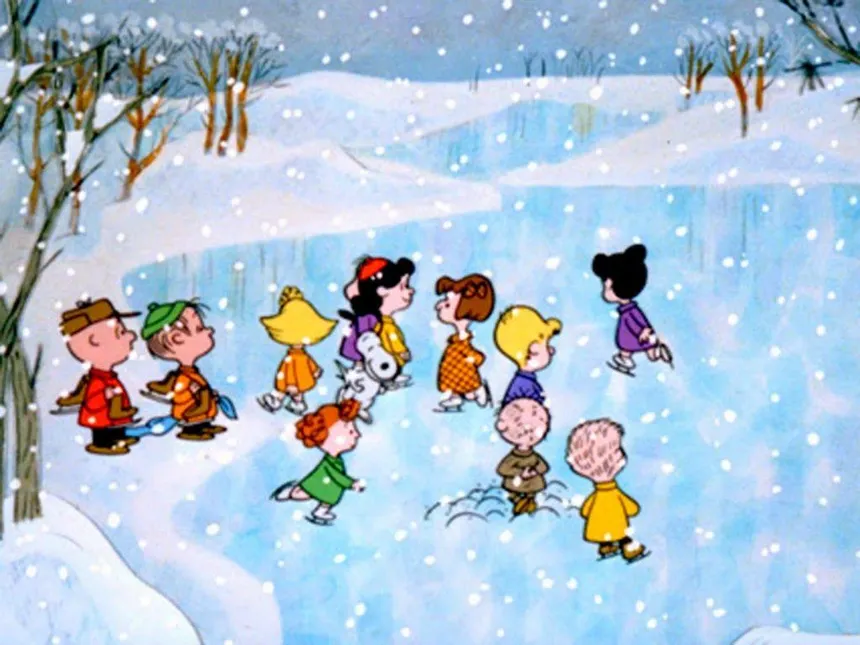
The thing is, if it were written today, people would recognize each of the main characters as being ‘neurodivergent’ in their own way; Linus and Schroeder probably have high-end forms of autism like Asperger’s, Sally and Peppermint Patty appear to have ADHD to one extent or another, Lucy (like Patty and Violet before her) is a control freak – while her psychiatric booth just highlights how messed up the cast is, if she can make more income from giving advice than from a typical lemonade stand – and Charlie Brown, the putative stand-in for Schulz himself, deals with severe depression. It’s almost glaring how obvious these characteristics are.
What’s even more wild is how much we recognize and relate to each of these characters in turns, despite their oddities. Each of them has a characteristic that we can see in ourselves, despite the fact that it makes them… well, we would have called them ‘weird’ or ‘quirky,’ if we were being charitable, whereas nowadays, they would all be put somewhere on the spectrum. The question is, if nearly all the cast is like this – and we all see ourselves in them – isn’t that what constitutes ‘normal’ (just like the baby boomers – which, if you think about it, the Peanuts cast were, having started in 1950, and the Christmas episode being released in 1966)? If everybody is ‘neurodivergent’, is anybody, really?
As always, honey, I don’t have an answer to that; given where you are, you might, but it’s a moot point, as you can’t convey it back to me. All I can do is reminisce and ask the question such memories conjure up; if others can offer a suitable answer, I’m up for listening to their thoughts, but I can’t claim to have anything but a whole load of questions. Still, if you’d keep an eye on me in the meantime, and wish me luck, I’d appreciate it, as I’m pretty sure I’ll be needing it.

 Letters to Rachel