Dearest Rachel –
I don’t know if you remember the slogan, but I have a vague recollection of the Peace Corps described as “the toughest job you’ll ever love.” It wouldn’t surprise me if Just One was striving to be that kind of job opportunity, even on the limited-time basis as it is for us volunteers. Meanwhile, we get to represent something greater than our nation when we serve here; call it the Prince of Peace Corps, if you like.
Granted, it’s a little too soon for me to tell if the description fits on a personal level. Yesterday morning was strenuous, I’ll not deny it, as I joined the men on the construction detail, mixing concrete to build pilas for several homes in the neighborhood – large basins for storing the occasional water deliveries made by the municipality (and I’m not entirely sure how that works, although I get the impression that the water pipes only flow every so often. And because it’s not clear when they’ll get their next delivery, they have to gather and store what they can get when they can get it).

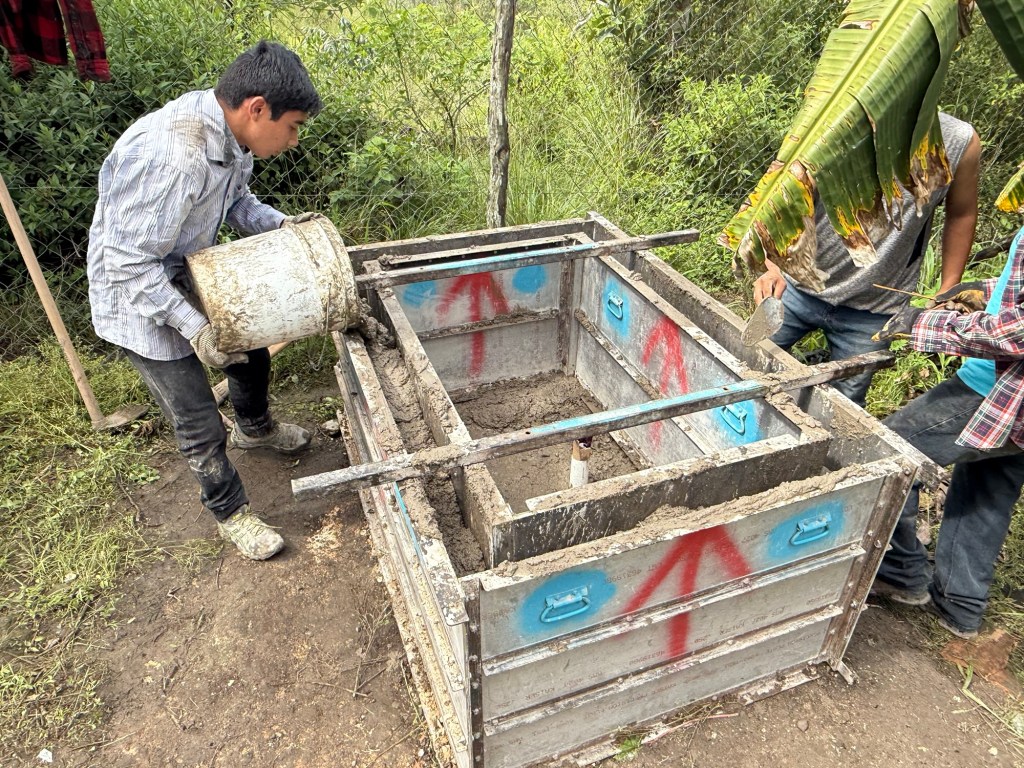

But was it the toughest job I’ve ever engaged? That’s debatable, especially since I didn’t spend all that much time on assembling pilas, only maybe three hours (to be fair, since we only had the two forms for pouring pila molds, there would be no more of that work until this morning, when the forms would be lifted off, to be used at two other houses). Once those were set up, it was back to headquarters for lunch and a regrouping.
This time, I was actually set to be in my element, since I’d been asked before setting out to discuss reconciling the organization’s books (or rather, that of the coffee shop, which was a separate – and ideally, a for-profit – business). Evidently, there was a difference between what they claimed to have in terms of cash, and what their bank said they had, and my job was to sort this out and set the café staff on the road to fiscal accuracy. All this in the course of a few hours, which struck me as a daunting task; even at work, when something wouldn’t reconcile, it would be a tangled mess to undo, requiring days to figure out.
However, on talking to the two that recorded the shop’s activity, it slowly dawned on me as to what was going on. The girl who’d set up the business in the first place had been faithfully recording actual transactions at the till, so her revenue figures were accurate. However, the fact that the bank was taking their cut on credit card sales – of about three percent, but it wasn’t consistent, and their documentation made nothing clear as to how it was calculated – meant that the cash as deposited was less than the revenue she had been recording in a spreadsheet on her own. Meanwhile, the accounting student who had been recording their transactions in the bookkeeping software program (the same one as used by the church and camp) had simply sliced through the Gordian knot by taking the word of the bank. Every month, he would simply record the transactions as received (as well as paid) by the bank, and as a result, their financial reports actually showed no discrepancy after all.
Since he had effectively already written off the discrepancy I had been warned about, I concluded – and informed them – that there really wasn’t anything more that needed to be done. Sure, one could go on about applying the difference to credit card fees while recording the whole amount of revenue, but there was no way (at least not that I was able to see over the limited amount of time we had) to identify on paper the breakdown between the original sale amounts and the actual amount that went into the bank. Without a clear audit trail, it was better to keep it simple and accurate with regard to the external numbers as issued by the bank.
I also recommended that they reconcile the activity and balances on (at the very least) a monthly basis for the three accounts that had external means of verification; the bank account, the credit card bill and the cash in the till. As long as they kept those in check, most of the remaining operations should fall into place; any differences from there would be just reclassifications. It was almost anticlimactic to not have a big problem to solve, but this way they had confirmation that they were on the right track – and that it wouldn’t chew up days of my time and theirs to work our way through to unwind.
With that taken care of, I spent a few moments writing to you before someone popped their head into the office to ask if I could help in the pharmacy. They seemed reluctant to do so, too; apparently, when one is in front of a computer, one is assumed to be busy doing something important, and not to be disturbed. You of all people know that’s not true in the slightest, both from watching me and your own personal experience. Needless to say, I set your letter aside, and headed downstairs.

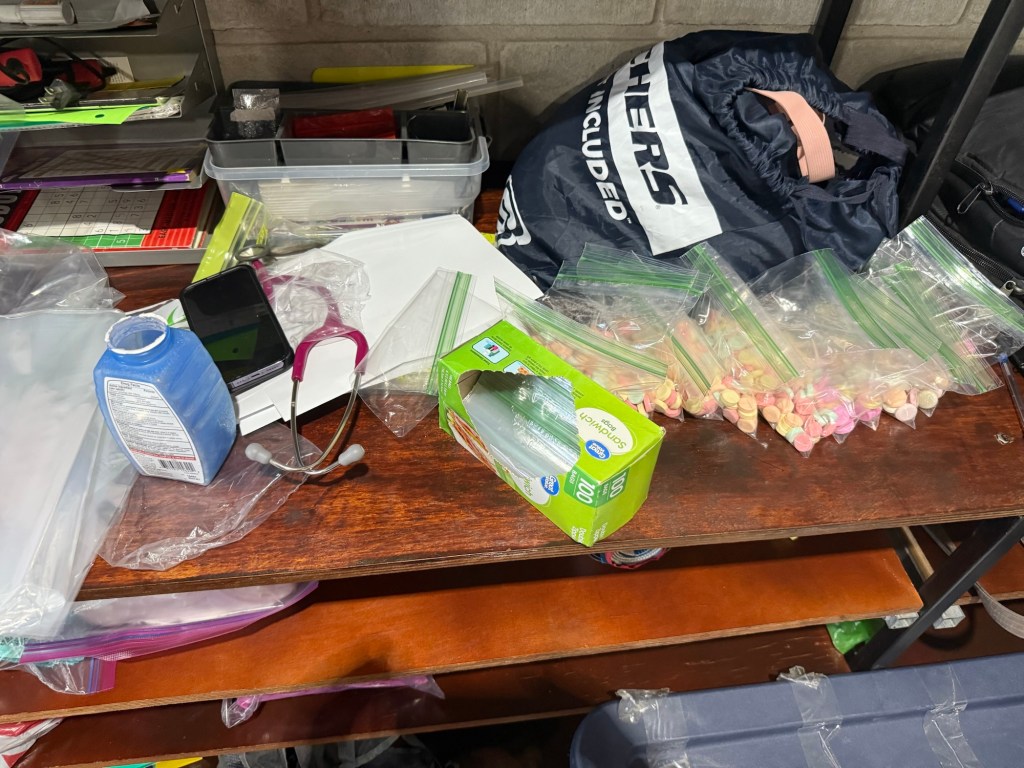
Eventually, though, somebody finally did tell me I’d put together too many bags, and directed me to break down certain other medications for redistribution. For all that it might be dull, tedious work, I could see that it was being used and gratefully accepted, and it felt fulfilling, in its own small way. Yes, it’s REFM work, but as with any other army, the army of God travels on its stomach, and it’s important that it not be upset.
Do I love what I’m doing? Eh, that’s putting it rather strongly. I see the enthusiasm of some of the others, and I know I’m not there yet, and may never be. I’m satisfied with the tasks I’m accomplishing, and I know they’re needed and appreciated, but I can already tell from the first day that I couldn’t keep up this pace day in and day out for weeks, let alone months or years. And to think, some folks live this life; not that they have much choice.
Still, I’ll need a little extra strength for the remaining days, honey, so if you can keep an eye on me and wish them to me and the rest of us, it would be highly appreciated. We’re going to need it, after all.

 Letters to Rachel
One thought on “Prince of Peace Corps”