Dearest Rachel –
I did mention that I’d have to wake up early this morning, didn’t I? Yes, well… I hadn’t expected to be this early.

I like to give myself a couple of hours before I’m to report to the theater for my shore excursions. It gives me time to shower, dry off, dress, check my news feed, get myself some coffee and breakfast (from separate places, because I can customize my coffee in the Crown Lounge) that sort of thing. So, much as I hate to have to do so, I set my alarm last night for five in the morning, and went to bed somewhere between nine and ten, to assure myself that I would be suitably rested when I had to get up for my seven o’clock call.
I needn’t have worried so.
I actually didn’t wake up to this red sky, but rather a pitch blackness, at around a quarter to four. I did try to go back to sleep, but could only stay there until a quarter after four, at which point I basically gave up, and proceeded through the morning routine at half the speed I’d expected to move at. The trouble with this approach is that eventually, one has to resume normal speed or get left behind. Fortunately, I had enough time to manage that so I could get down there with a few minutes to spare, but if you measure things strictly by time, it was close.
On the other hand, when you grade on the curve provided by my fellow passengers, I had absolutely nothing to worry about. I find myself sitting around for twenty minutes as we wait for everyone to arrive, as well as for the ship to be vetted by the authorities.
Once off the ship, we head to our bus. Now, this would be standard operating procedure, but it comes as a momentary surprise, as the excursion is billed as “Old Columbo on Foot.” Not complaining, just observing; if things have been built up between the old fort and the current port, that’s how it is. It wouldn’t be the first place we’ve visited that’s like this.

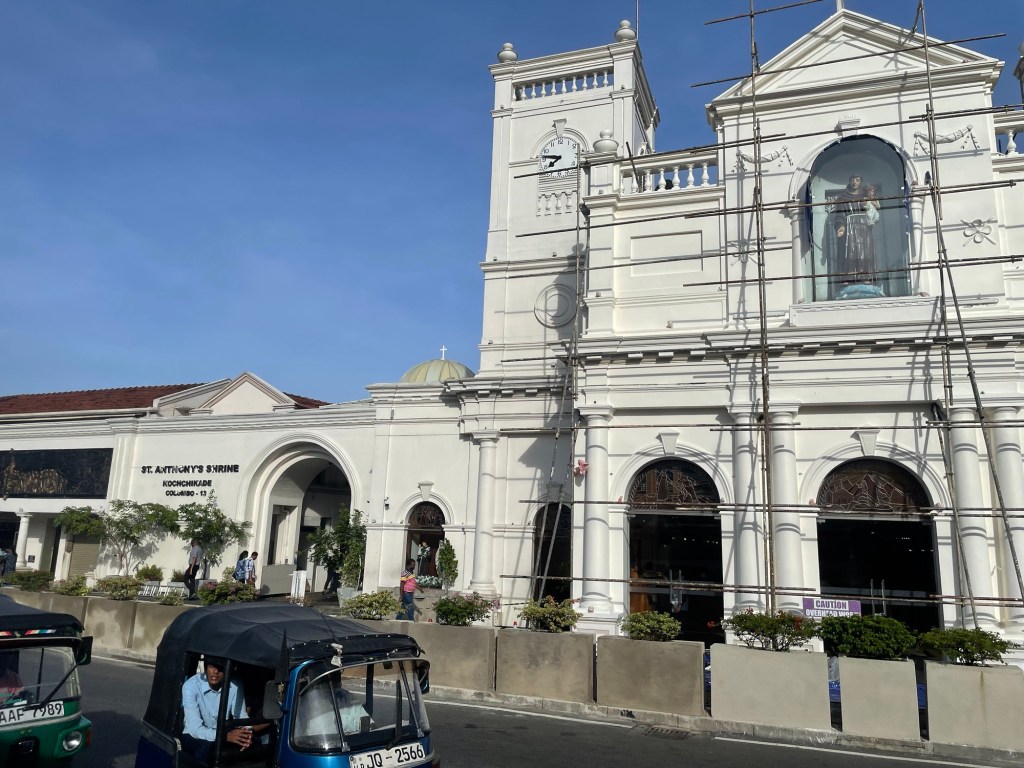
Shanelle points out that people are paid here for their work on a daily basis, rather than weekly or monthly; in part because employment is on a daily basis, rather like the parable of the landowner looking in the marketplace for men to work in his vineyard. The typical pay for the average Sri Lankan is the equivalent of about eight dollars a day; imagine how that would sit with those who insist that a $15-$20 an hour isn’t a sufficient “living wage.”
The smells of the Pettah market district are hard to describe, as they change every couple of steps. At best, they reflect the wares being offered for sale, such as onions, peppers and other vegetables.
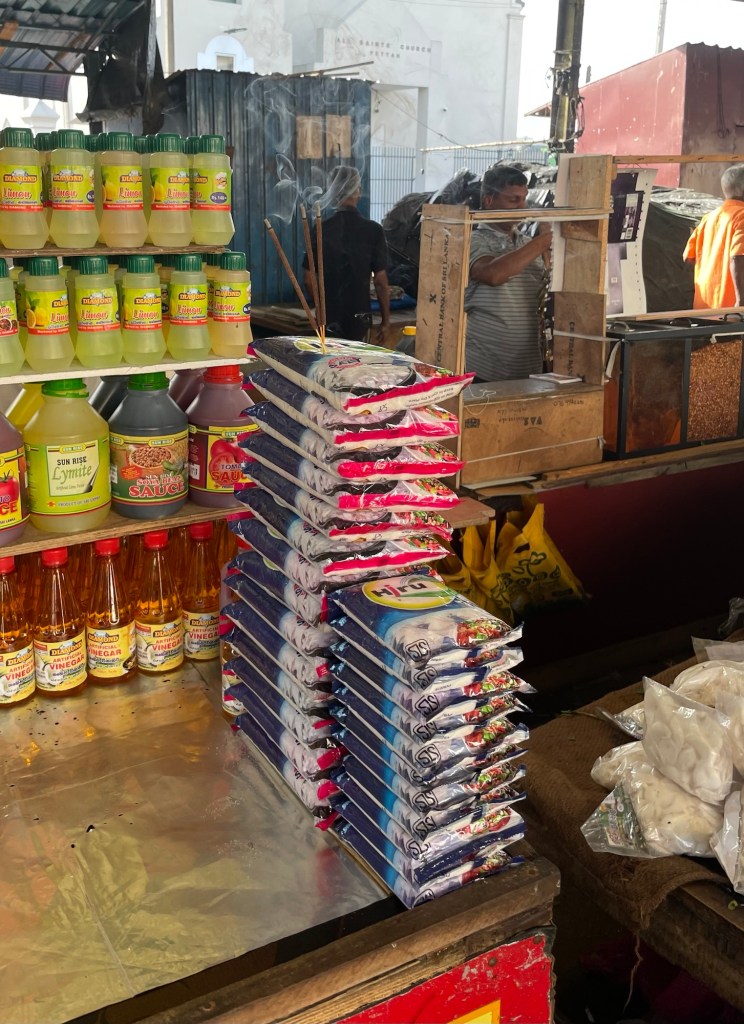
And then there are some pretty unpleasant scents, including the occasional whiff of vinegar or ammonia, and that’s not to mention that of dried and smoked fish being offered for sale in various places. Everything is set out in the open, which stands to reason given that it’s an open air market, but it also means that flies and other insects are buzzing around and landing on the food items being offered for sale. I understand that some of these products grow in the dirt, so it really shouldn’t bother me, but somehow it does.
It doesn’t feel like we’ve walked terribly far, but it’s at this point that Shanelle escorts us into the Great Oriental Hotel, just across the canal (that the Portuguese, once upon a time, filled with caimans – crocodiles! – as a security measure) that surrounds the Fort District, where the fort that basically served as the trading post for the Portuguese, the Dutch and the British, in succession, one stood. Of course, now the area is home to government buildings, high-end hotels, and some of the better shopping options in Colombo.
But not completely. It turns out that, during the civil war that went on between the Sinhalese and the Tamils between the 1960s and the 2000s (ending with a peace treaty signed in 2009), one event in particular damaged the Fort district significantly, both literally and figuratively. Apparently, at some point in the early 1970s, Tamil rebels set off a bomb that destroyed a number of buildings in the district. For years thereafter, it wasn’t safe to be in that district, and anyone there who shouldn’t have been there would be stopped by police. only with the signing of the peace treaty has Sri Lanka been able to rebuild and recover; this process is nowhere near complete, and it shows. 
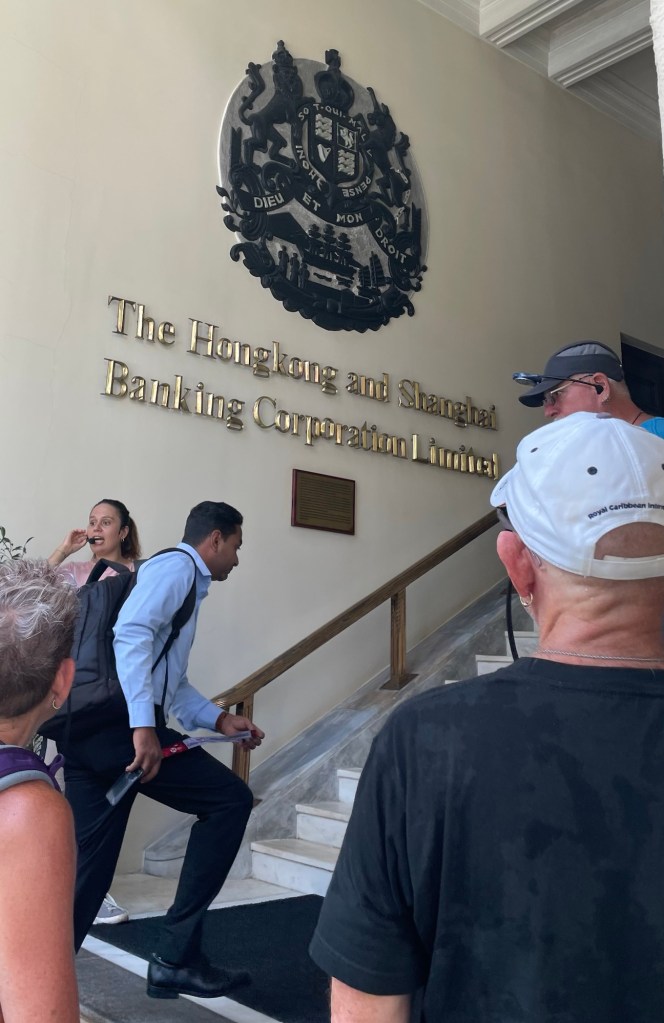
While we’re standing in front of the bank logo, Shanelle relates to us the origin of the concept of high tea – it appears that during the Opium Wars, some of the tea that went back to the British was laced with a slight amount of the very opium that was being sold by the British to the Chinese. Sauce for the goose, I guess – although I’m not entirely sure whether she’s pulling our collective legs. It certainly seems plausible that some opium would’ve slipped into the tea chests, but it probably wasn’t necessarily deliberate. I ask her about it later, and she confirms that it wasn’t, nor was it really the reason that four o’clock in the afternoon is referred to as “high” tea. But she insists that it makes for a good story, which I can’t deny. A good joke, at the bare minimum.
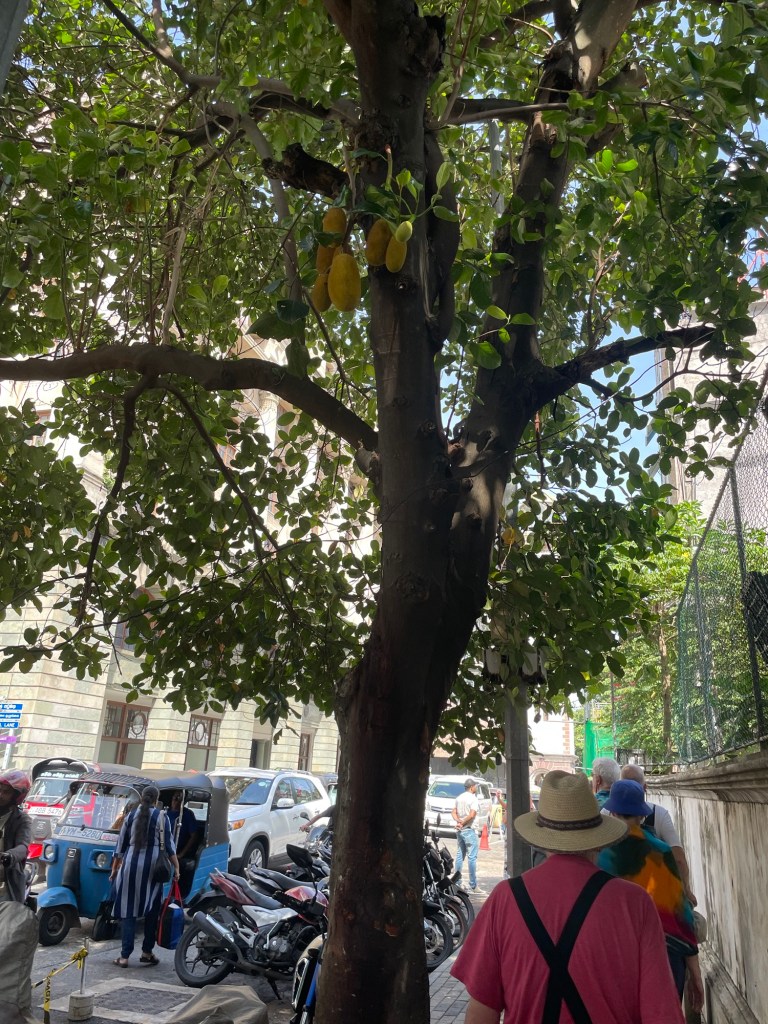

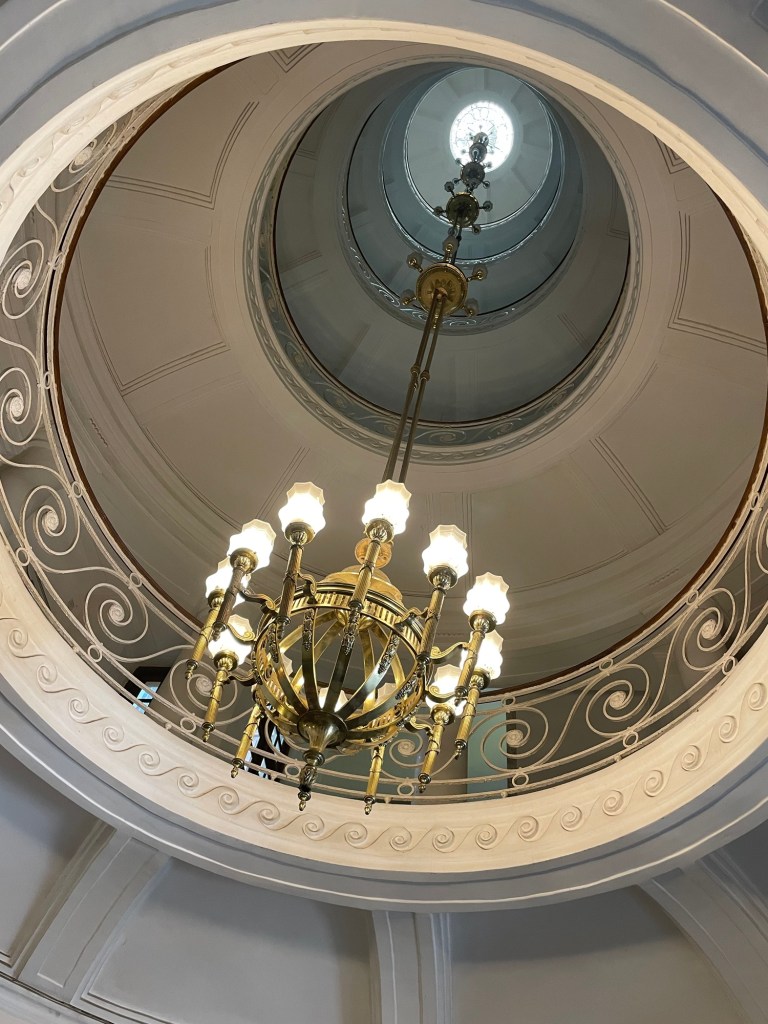


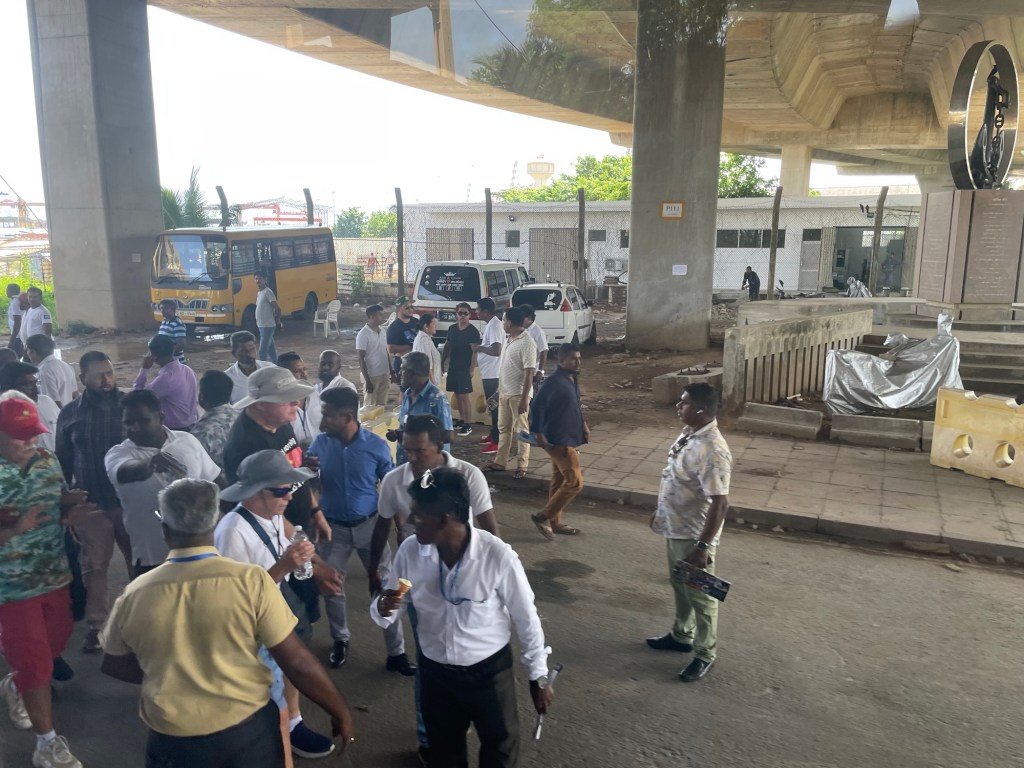
The winding roads of the port go on for a surprising length of time. Maybe it’s the fact that the bus can’t go very fast on these twists and turns, but it’s also quite true that the road seems to go on interminably, as well.
Maybe it’s the fact that we had to start so early (and, on top of that, the fact that I started that much earlier than I had to); maybe it’s because I’m reaching the end of this trip in its entirety (and also having passed the places I was really looking forward to visiting); but I think I’m starting to run out of energy, even though we’re not even near noon. I conclude that I’ve probably have had my fill of the place. Besides, I did get a few more souvenirs to bring home over by the old Dutch hospital, so it isn’t as if I have to go out and find something that I haven’t at this point. I decide to call it a day. And to think, it’ll be more than twenty-four hours before we go ashore in Kochi.
But for now, honey, keep an eye on me, and wish me luck. I’m going to need it.

 Letters to Rachel
One thought on “Colombo Morning”