Dearest Rachel –
I find myself hoping that I’m feeling well enough to go ashore here; of all the destinations to have to miss out on, Japan would be the worst, in my mind. However, I’m pretty sure I was battling a slight fever overnight; if they do a temperature check, I don’t know how well I’ll be able to do. Then again, I woke up this morning feeling much better, although I still have the cough I’ve been dealing with since returning from the Great Wall. I guess we’re just going to have to see how things go. At least it’s going to be a late morning, since we don’t arrive in port into almost eleven.
Anyway, about that port…
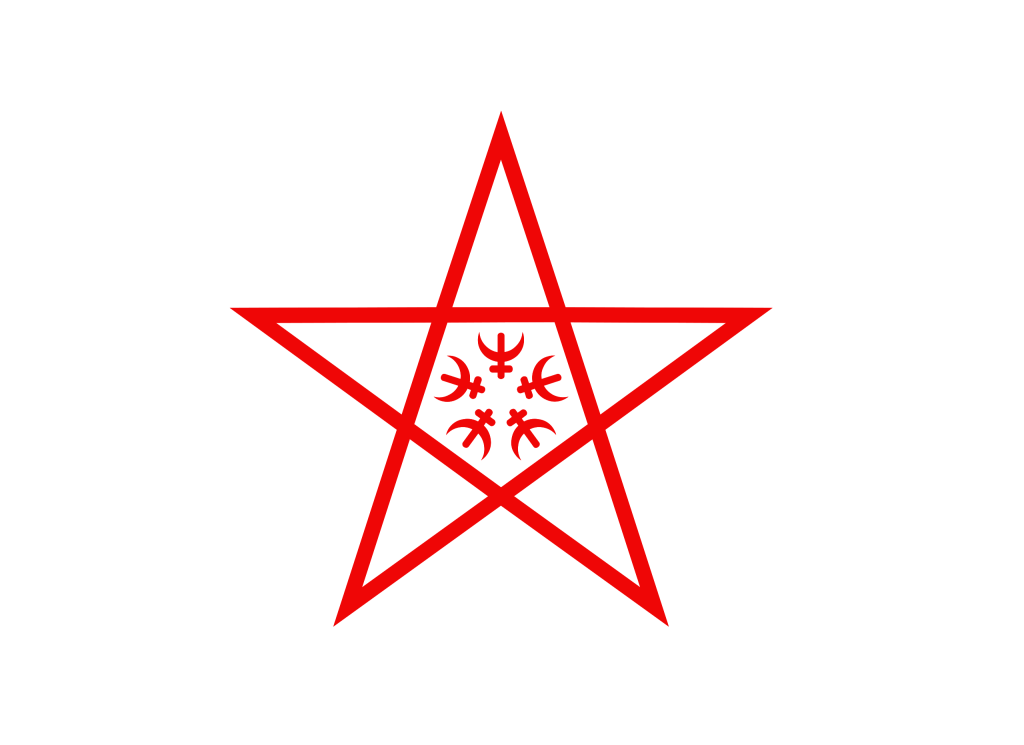
Nagasaki happens to have a fairly unique history, insofar as it was the trading port of the country, even during the time of the shogun, when the rest of the country was closed outside influence. The Portuguese made first contact with Japan in 1543, and begin sending regular traders shortly thereafter. They even served as intermediaries between Japan and China, since Japan had cut off relations with China due to various incidences of piracy (some things don’t change – only the venue and the method). Among the products brought into Japan by the Portuguese (including tobacco, bread and textiles) was a dish known as peixinhos de horta, but also referred to as ‘tempero,’ from the tempora quadragesima, the “forty days’ time” of Lent. A meatless dish of vegetables dipped in a light batter and quick-fried, the Japanese staple we know as tempura is a product of the exchange between Portugal and Japan.
Based on its Lenten origins, you might guess that the Portuguese brought their religion with them when they arrived. Catholic missionaries, most notably Saint Francis Xavier, who spent two fruitful years between Nagasaki and Kagoshima before leaving for China (and dying there shortly thereafter), made many converts – including some of the high-ranking daimyos in the area. In fact, during the instability of the Warring States period, a leading Jesuit priest devised a plan to have the society take over Nagasaki rather than let it be ruled by a non-Catholic daimyo, and from 1580 – 1587 the city was a Jesuit colony, and a refuge for Christians escaping mistreatment in other regions of Japan. In 1587, in an attempt to unify the country, Toyotomi Hideyoshi ordered that all missionaries be expelled from Japan, an order which, for a time went benignly neglected.
However, in 1596, a Spanish ship was wrecked off the coast of Shikoku, and Toyotomi discovered that Spanish Franciscans were preparing to invade Japan. Thus labeled as in league with the invaders, and therefore considered traitors, 26 native Catholics were crucified in Nagasaki the following year. Oddly enough, the Portuguese were allowed to continue trading – either the Japanese could tell the difference between Spanish and Portuguese, or money talked louder than religion for certain people, and the Japanese recognized that much.
The early 17th century saw the addition of the Dutch and English as trade partners; the Protestants were well regarded as they did not impose their religion with the same militancy as the Catholics. However, given the animosity between protestants and Catholics at the time, combined with the fact that the Tokugawa shogunate had taken the throne from the Toyotomi clan, it wasn’t long before Catholicism was officially banned and missionaries expelled. The final straw was an incident known as the Shimabara Rebellion between December 1637 and April 1638, which was as much a tax protest as one against prohibitions towards Catholicism. There doesn’t seem to be any historical evidence linking foreigners directly to the rebellion, the fact that they used various Portuguese symbols as part of they’re rallying banners, led the Shogun to conclude that the foreigners were a pernicious influence upon Japan in the Japanese, and threw everybody out, beginning hundreds of years of isolation – although, barely a century into this isolation, Nagasaki was still opened up to western sciences and art, which were referred to locally as rangaku or “Dutch learning.” The Dutch were, however, confined to an artificial island in the bay known as Dejima, which is part of my relatively brief excursion tomorrow.
With the Meiji Restoration, and Japan reopened to foreign trade and diplomatic relations, Nagasaki resumed its position as a treaty port, and also became a center of heavy industry, including shipbuilding. This would be one of the reasons why Nagasaki was near the top of the list as a target for the atom bomb.
Ah, yes… the atom bomb. If the choice to drop ‘Little Boy’ on Hiroshima was controversial, how much more so ‘Fat Man’? But it was either that, or Operation Downfall, which would involve actually invading the main islands of Japan, and considering the terrible toll taken up through the Ryukyu and Okinawa Islands, that could’ve taken so much more of a toll on both Japan and the Allies. Besides, there had been a mistranslation with regards to the Japanese response to Hiroshima; the term ‘mokusatsu’ could be translated as “to think about” the request for surrender, or “to ignore” it. The fact that the latter translation was used sealed the deal, and Nagasaki‘s fate. The bridge that was nearly at ground zero was very much the same one at which the 26 martyrs were crucified four hundred years previously.
While there is, I understand, a museum pertaining to the bomb, just like in Hiroshima, I will be forgoing that for a cable car ride up Mount Inasa, where we’ll be able to look out over the entirety of the city. After that, we’ll be wandering around Dejima before returning to the ship; I may look into getting a tram pass to get around the city a little more thereafter, depending how I feel (and if they let me off in the first place; but since they’re apparently requiring us all to disembark for a face-to-face customs interview – this being our first port in Japan after visiting other countries such as Korea and China – I’m going to do my level best to keep going once I’m off the ship. I’ve requested Marlon to fill my bucket with ice tonight, and if I’m still feeling less than fully whole, I’m going to take a towel, fill it with ice, and set it on my forehead so that when I go ashore, I can fool the temperature readers just long enough. So with that being said, honey, keep an eye on me, and wish me luck. I’m going to need it.

 Letters to Rachel
One thought on “Nagasaki”