Dearest Rachel –
Morning in Incheon starts slowly; while I’m up an hour before the alarm I set for myself, I’m slow in getting myself put together. It’s reasonable, as I don’t need to be in the theater until a quarter after nine – and the extra hour, in particular, means I have more than enough time to linger over breakfast, if I want to, and watch as we pass under the Incheon highway bridge.


But it’s chilly on the Windjammer’s aft deck, and the actual restaurant area is the proverbial zoo some describe it as from time to time. I stay long enough to polish off an omelette, but grab a danish or two before heading back to my room.
I actually get down to the theater a little early (old habits and all that), only to find out that first, our group is supposed to congregate in the balcony instead, and second, the ship still hasn’t been cleared for anyone to go ashore yet. It’s time enough for me to catch my breath and get started letting you know what’s going on.
You’ve probably noticed that these letters seem to drag on about the beginning of every day, and then get a little short on details as the day wears on. There’s a reason for that; this is the one point during the day when it feels like I have nothing but time to write, whereas once things get started, what little time I have to compose my thoughts, I’m spilling them directly to the camera (which is why I include so many of these videos in these letters nowadays). I hope you don’t mind that; there’s not a whole lot I can do about it, to be honest.

Obviously, I can’t take photos within the immigration hall, but trust me when I compare it to the game “Papers Please.” The guy was holding my passport up to my face; I had to take my glasses off to ensure a proper match.

It’s a long drive from Incheon to Seoul, and our guide keeps things occupied by telling us about the area. He mentions the birth rate – which, at 0.6 per woman, is actually lower than the numbers I’d heard about! – and the expense of trying to get by in Seoul on an average salary of about $35K a year. But much of the drive is spent talking about the relationship with North Korea, particularly with harrowing tales of those who’ve managed to flee the place. Not that he’s one of them – indeed, he’d be worried for his son if he decided to date and marry a North Korean defector, for reasons I can’t quite understand – but he admires the bravery of those who make the attempt, given the difficulties involved in trying to do so.
He also relates that they have a period of mandatory service in the armed forces for young men between 19-30 years of age. It’s for less than a year, if I understand Soemhwon (“call me ‘Someone,’” he says) correctly, but it just goes to show that the country is serious about self defense, with some six hundred thousand forces in uniform at any given time – including the members of BTS, who decided not to take the option to serve as mere cultural ambassadors, but actually go through their standard military service, and be an example to their fans as to what a truly patriotic Korean ought to be and do.
Soemhwon also expresses pride in how far his country has come, from one of the poorest and most backward, reeling from the effects of the war, to one of the most powerful economies in the world, all in the course of barely seventy years; the span of a single lifetime. No wonder they soldier on, even with the threats so close by as they are. For all the disadvantages they have to work with, they have certainly made something of the hand they’ve been dealt.
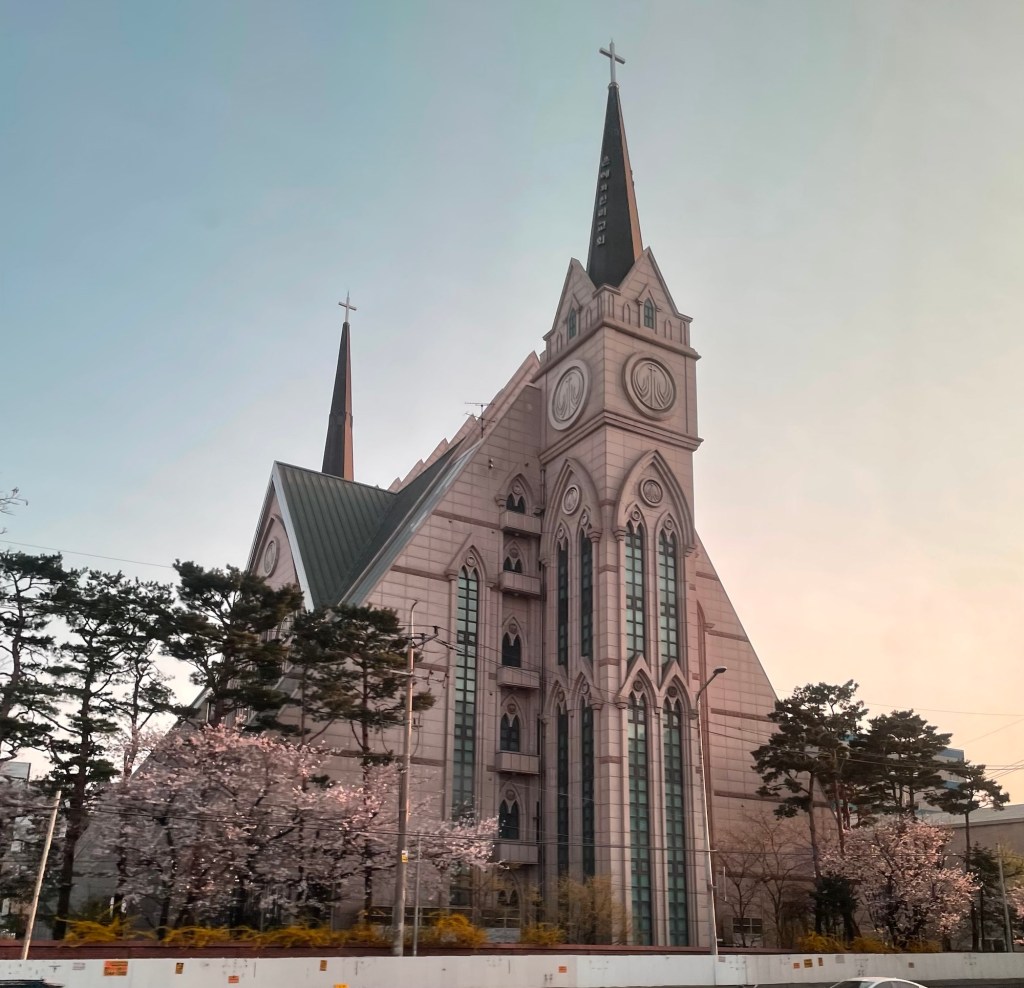
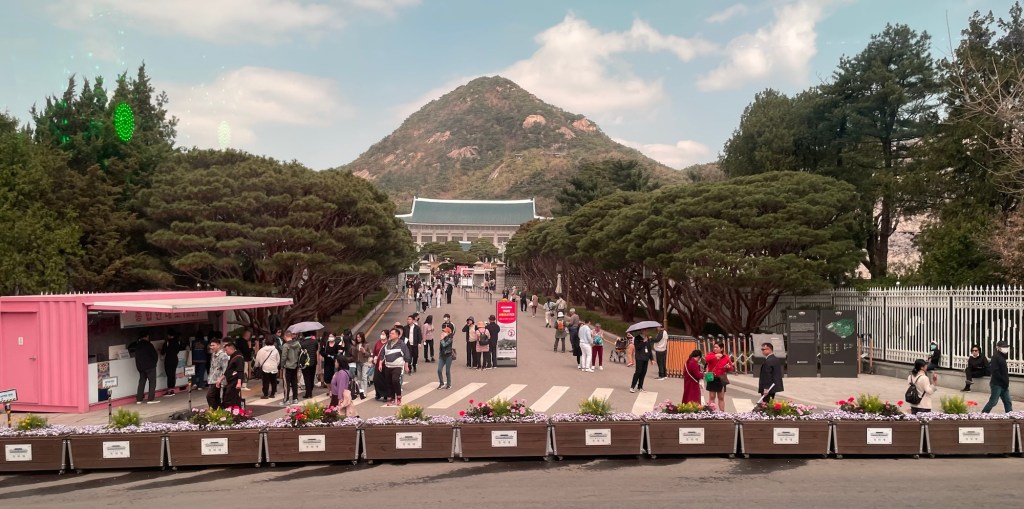


Soemhwon also mentions the fact that hanbok rental (which will get you free admission onto the grounds) costs 15,000 won (somewhere between $10-$11), whereas the admission fee runs about 3,000 won (about $2.50 or so). Then again, I suppose the experience is priceless, not to mention the photographs you could get of yourself in front of these buildings.
Now, while one could presumably walk there – one would assume the officials did back in the day – we are driven a few minutes over to the Bukchon Hanok Village to walk among the restored old buildings that served his homes for the bureaucratic class – and still do to this day (well, not necessarily the bureaucratic class – whoever can afford these places). It’s weird how, when we were pulling into Incheon, I was wondering whether my windbreaker was going to be enough to ward off the cold during the day. At this point, the sun has come out, and I don’t think I even need that.
We wander around for a while, climbing the streets of the old city. This is supposedly where the palace officials lived, close to the royal compound, but not quite in it. Our guide asks for us to be as quiet and respectful as possible; some tour groups have come through the neighborhood at ridiculous hours, being loud and obnoxious. While it seems like a perfectly reasonable request, as he goes on about how certain residents complain about the constant attention, I find it hard to be too sympathetic. One would think that homebuyers would know that living in a national treasure, they would receive the attention. It’s kind of like a celebrity complaining about being recognized wherever they go; my friend, this is the life you signed up for. You could always get an apartment in downtown Seoul instead, if it bothers you so much. It would be closer to everything, and probably cheaper. But hey, that’s just my opinion; not everyone has the same taste.
***
From there, we went on to lunch; our guide had been talking about this place that served a ginseng chicken soup – and in fact, it’s apparently been listed in the Michelin guide for a few years running in the past.
For my part, I could’ve taken or left it. But I’m sure it was good for me; it’s chicken soup, after all.
***
On the Antique Street, I wandered around for a bit, finding myself somewhat under pressure to locate something upon which to blow my remaining cash. It’s problematic in that I don’t really need or want anything, so what can I purchase?
I finally settle on a small build-it-yourself model to offer to Dad. It’s not exactly like a puzzle – or even a 3D puzzle – but he might find it interesting. At least this breaks my fifty thousand won note; somehow, I find the smaller denominations so much easier to waste.
Indeed, as I make my way back to the meeting point, I pass by a storefront offering caricatures in ten minutes. They’re more simplified drawings rather than the exaggerated features of what you might think of when you think of a caricature. I figure, “why not?” hand the artist my cash, find a point just beyond her head, unfocus my gaze and let work. Only at one point does she have to remind me to “smile” as I stare off into the distance that isn’t technically there (since the wall is right behind her).
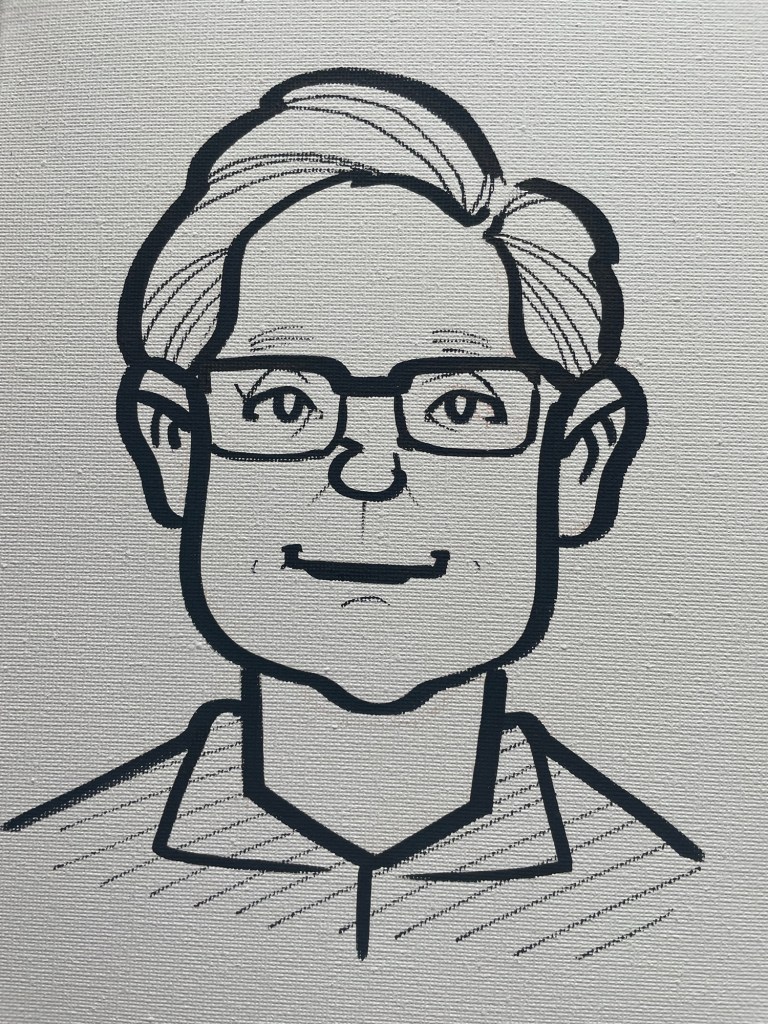
I also take the time to purchase a waffle cone in the shape of a fish, stuffed with a honeycomb, ice cream and an Oreo garnish. It’s a bit more of a mess to eat than I’d expected…
…and it makes me almost late, as it happens; the folks sitting next to me in the corner square ask me, “isn’t that your bus?” I’m not worried, as I’m there at the prescribed time. But it turns out that I’m the last person to board the bus, once I finish my treat and make my way over. It’s mildly embarrassing; I have to ask whether I was late or something, but am told that I was there at the requested time. Everybody else just got on the bus right away, that’s all.
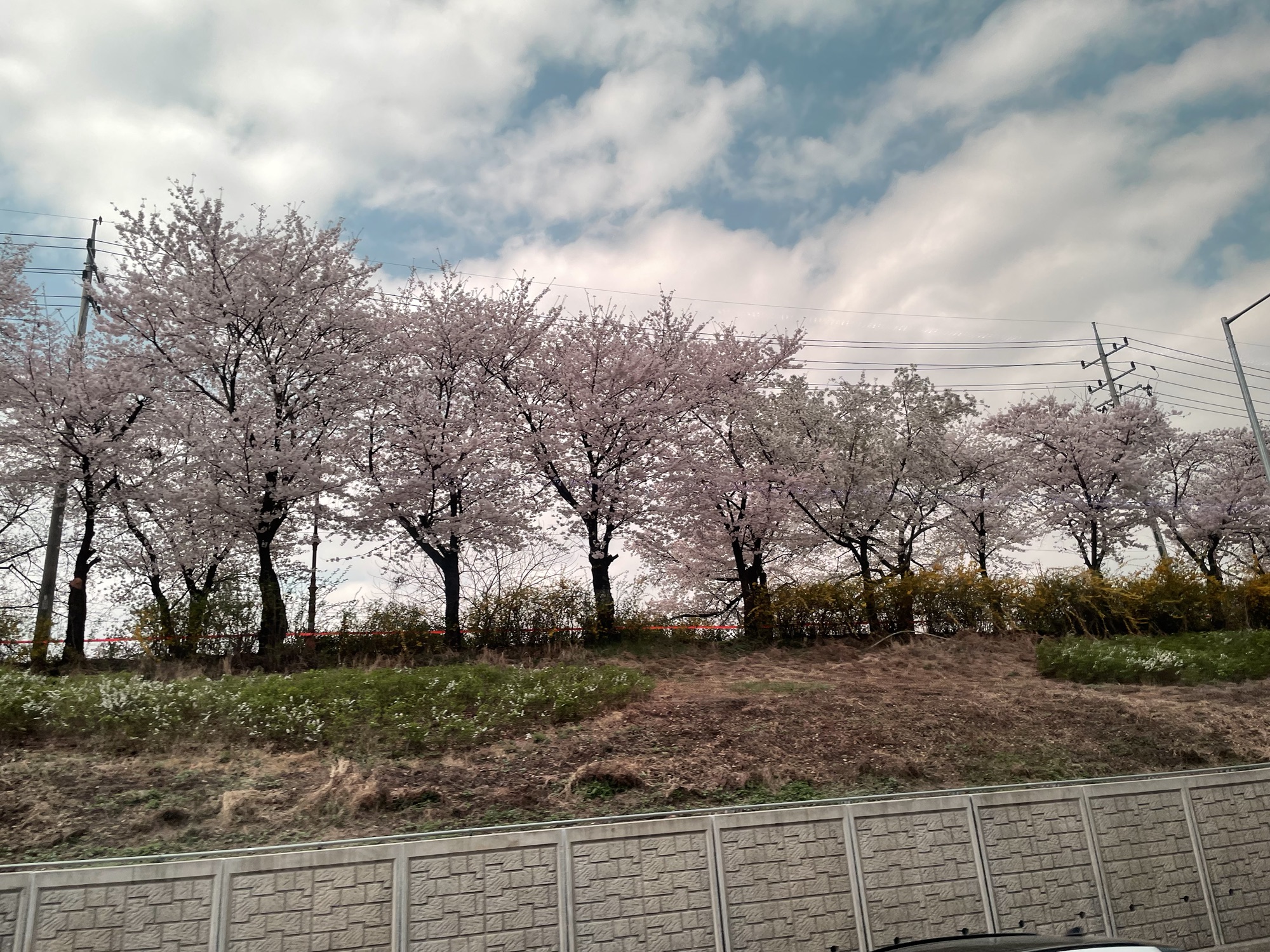
It’s another long trip back, made a bit slower by the fact that it’s now effectively rush hour, so it takes that much longer to return. At least, with a clear day and clean bus windows, I can get some decent pictures of the skyline and the occasional interesting building on the way, not to mention a few rows of blossoming cherry trees.

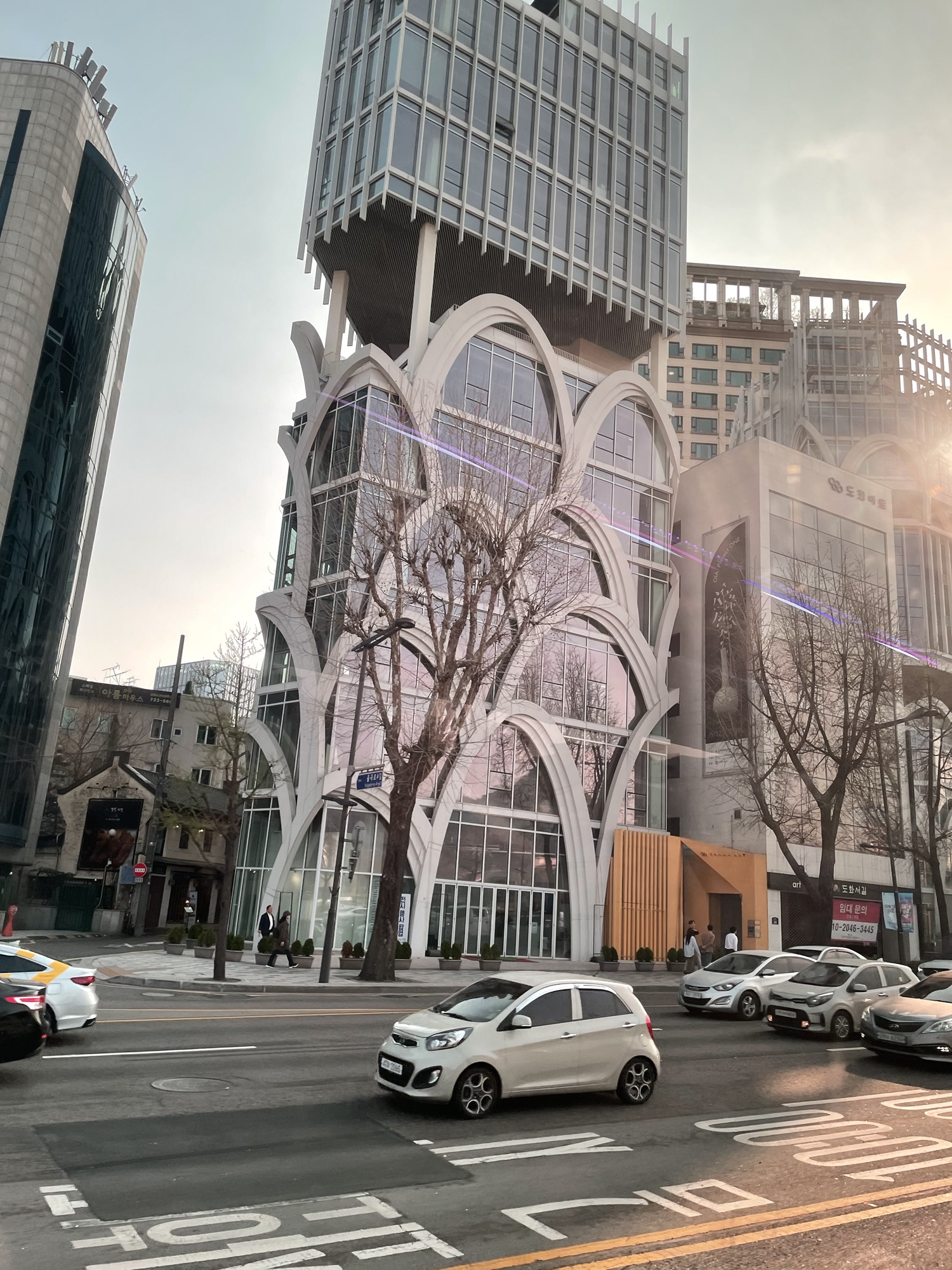


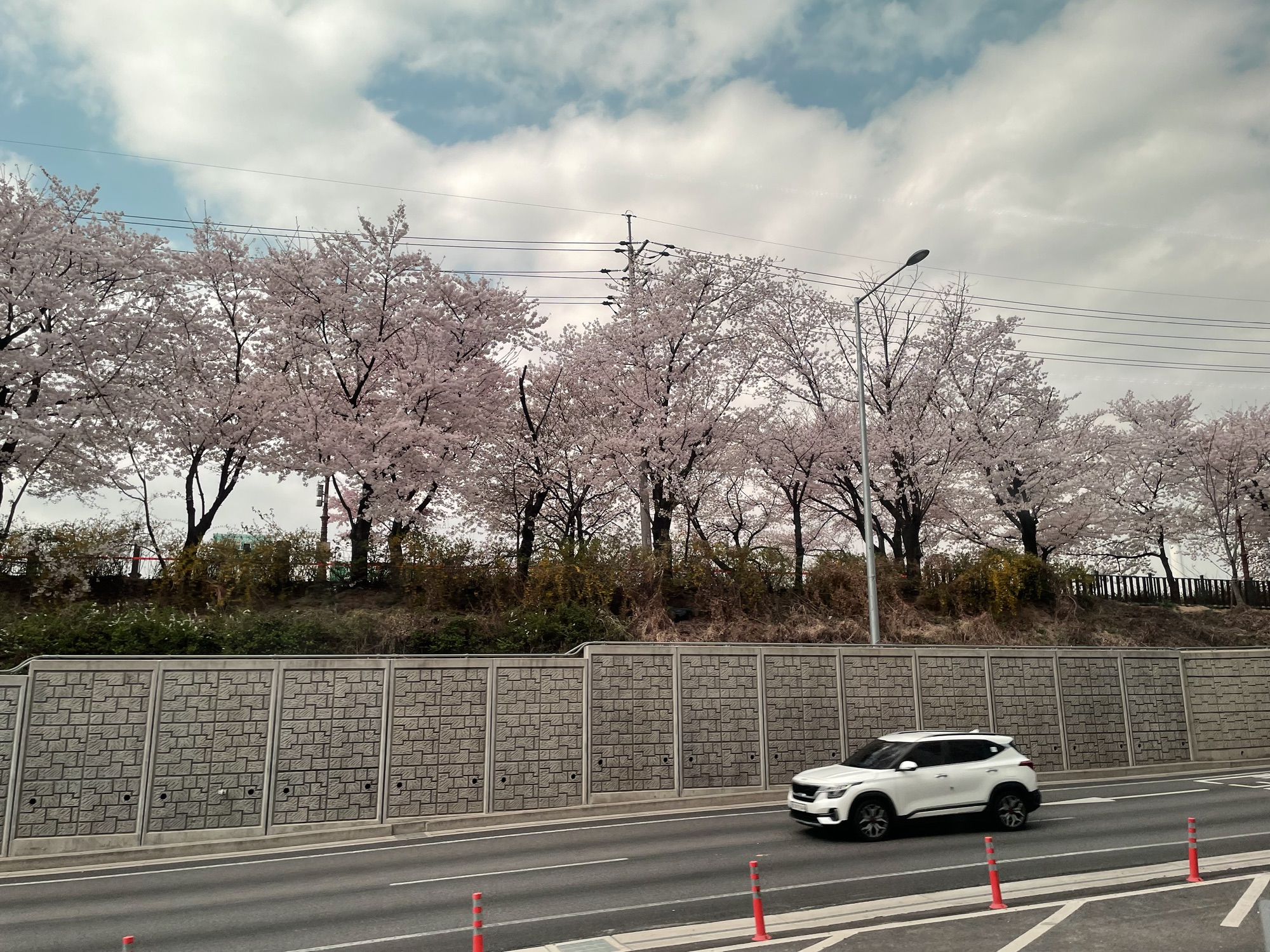
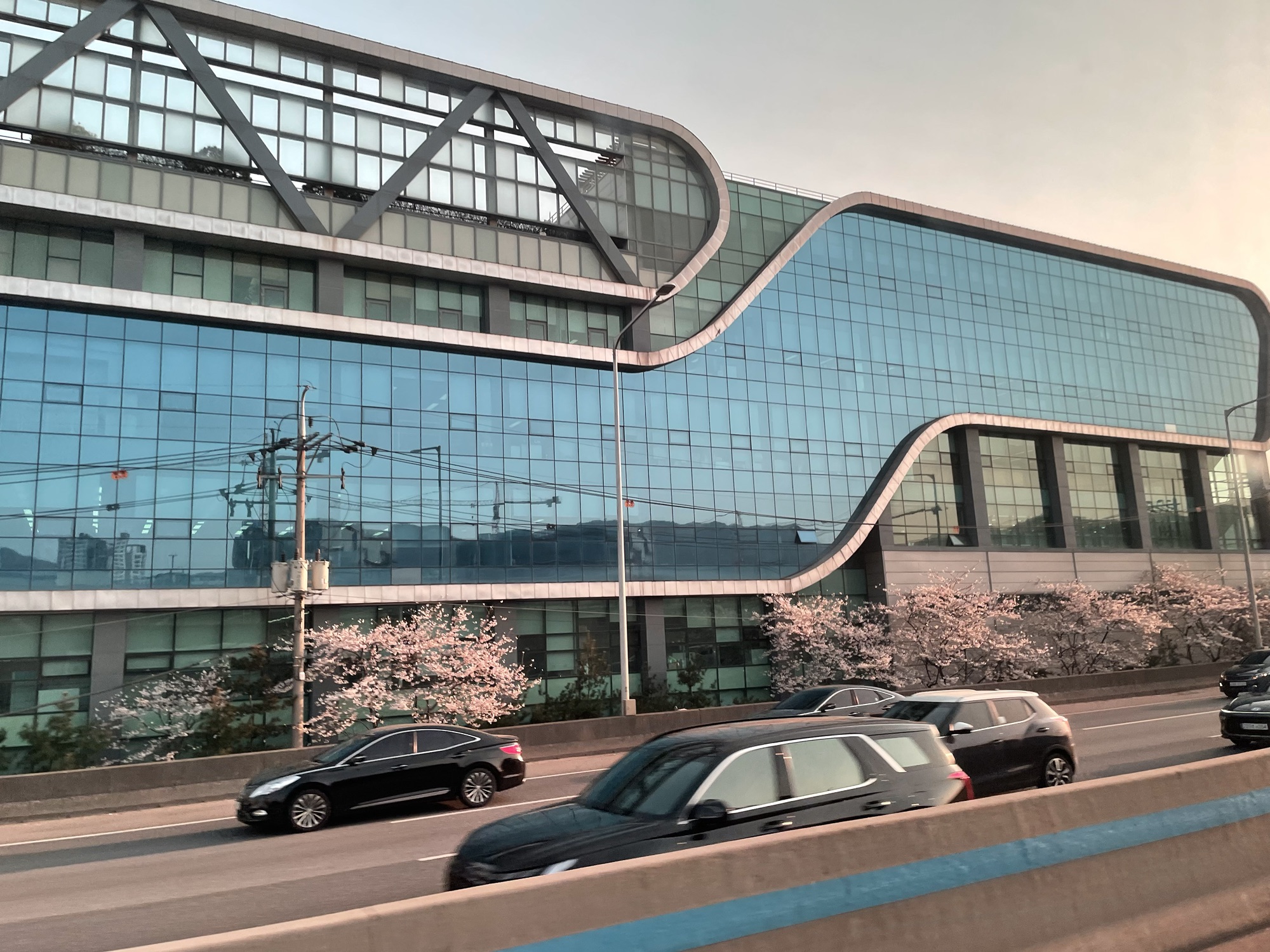


And that was the day, honey. Thanks for keeping an eye on me, and I guess I had fairly good luck here, as well. Still, if you could keep it up, I’d appreciate it, as I’m sure I still need it.

 Letters to Rachel