Dearest Rachel –
I deliberately brought my old journal from 1989 (which I think I might have directed at you by using “Querida” as the name I was addressing. The more things change, eh?) so that I would have a certain amount of reference in terms of certain ports we’ll be stopping at. Unfortunately, with these notes being thirty-five years out of date, I’m not sure what any of it might be worth, in terms of actual research. At the same time, these things were written to be re-read at some point; this may be the first time that’s happening at all.

I can see that my first day’s notes include a complaint about the prices of stuff in the area, although even then, I recognized that it was in comparison to several prior stops, such as Singapore and Bangkok. After having just traveled from Indonesia and the Philippines, I suspect that I’m going to arrive at a similar conclusion. Then again, it all depends on where you shop, and for what; I’d also noted that I had been wandering through shops by the Peninsula Hotel, where we were staying. That would likely have made a difference, in much the same way that the Greenbelt complex in Manila would be different from the Mall of Asia; it’s geared toward a vastly different clientele.
My second day’s notes included tales of a shopping trip to the Temple Street Market to help a classmate find a replacement camera – hers had gone missing in Bangkok (poor girl; I can certainly relate, especially with the loss of photographs already taken and lost) – and a comment on how the Chinese were supposedly getting interested in American football at the time, because trying to make one’s way through the crowded streets required running back skills like Walter Payton himself. And back then, Hong Kong contained 5.5 million people, which has since swelled to 7.4 million. Guess all that talk about people fleeing was just that, huh? Either way, it’s still among the most densely populated territories in the world (after Macau, Monaco and Singapore).
Back then, the Hong Kong dollar was worth one-seventh of a yankee dollar; at present, it’s closer to one-eighth. I don’t know if that will give it an edge in terms of pricing power; it rather depends on if I even plan to do any shopping here. To be sure, my excursion tomorrow morning (and it will be early tomorrow morning – I’m to meet in the theater by 7:15, so I really should call an early night to everything tonight) will take me to the Stanley Market (where I’d gotten that one sweatshirt I’d kept until the purge, when Jan pointed out it was getting threadbare. I’d also been suggested to look for angora or cashmere there; this must have been before I discovered that you didn’t like either of those), so I’ll have a chance to find a few things, if I only was actually looking for something. On the other hand, I doubt I’d find anything at the Aberdeen fishing village – my notes indicate that, had I not worked for a summer at Burhops, I’d be as grossed out by their wares as the rest of my classmates – but just as much because I wouldn’t be allowed to bring anything from there aboard the ship, I’d assume. It’s been that way with every other destination, and as part of China, the rules here are likely to be orders of magnitude stricter than anywhere else.
And of course, that’s the main difference between the Hong Kong then and the Hong Kong of now. Back then, they were counting down to the handover from the British to the Chinese eight years in the future – but still with trepidation, as Communism and capitalism don’t get along very well. Fears weren’t assuaged when, later on that year, the that the CCP denies having happened back up in Beijing happened:
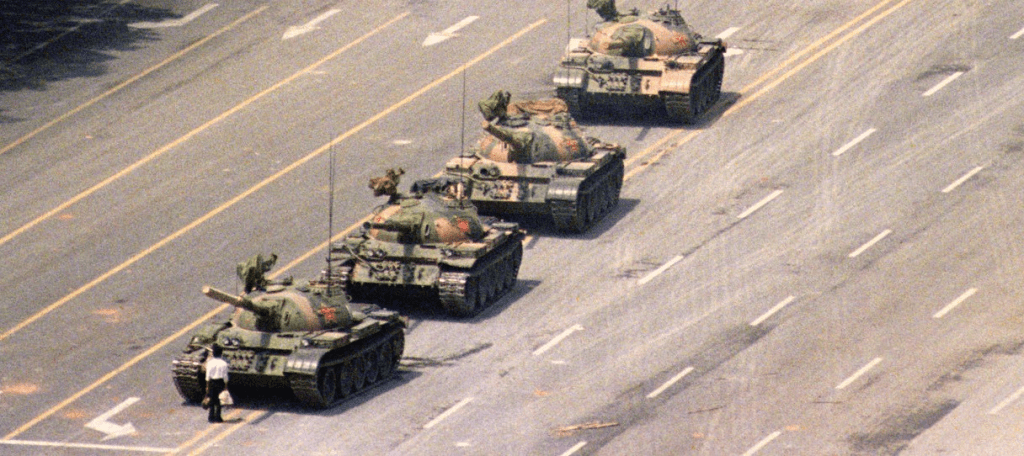
Free markets only work well when they’re, well… free, you see. But for a long time, things seemed to be working under the “one China, two systems” policy, where Hong Kong was allowed to function in accordance with its own, previously established rules, the Basic Law, theoretically under 2047 (fifty years after the handover of Hong Kong by the British). However, in response to widespread protests throughout Hong Kong in 2019 and 2020, the National People’s Congress created a national security law for Hong Kong, arresting pro-democracy legislators and leaving the Legislative Council essentially composed of pro-Beijing lawmakers. One would expect this to have a rather chilling effect on the population of Hong Kong, and indeed, talk of democracy and freedom has all but disappeared from the headlines.
But there is more to life than politics, and one must earn one’s living. Hong Kongers soldier on, despite the clampdowns, as far as I can tell. I don’t remember much more than the things I wrote down, so I don’t expect to be able to notice the differences between the city I visited then and now, but presumably, for the sake of the tourist dollar at least, it will put on a brave and happy face and claim everything is just fine and wonderful. And maybe I’ll even be able to believe it. But I wonder if anyone who lives there does, or if they wonder if it ever will be again.
In which case, perhaps you ought to keep an eye on the folks we’re about to visit, and wish them luck instead. They need it more than I.

 Letters to Rachel