Dearest Rachel –
I mentioned at breakfast about how I still had two hours before I needed to report to the theater for Sunday’s shore excursion. Even as I was heading there, as per the scheduled time listed on the ticket, we seemed to still be moving. Not only hadn’t we been cleared to get off the ship, the ship wasn’t docked to allow them to check with the authorities in the first place. Not that this is a big deal for me; these administrative hassles will happen, after all. And as Dad has instilled in me from childhood, it’s always better to be early than late. Eventually, though, after a wait of nearly an hour, we’re finally let out, with the usual flow of passengers down three flights of stairs to the gangway.
Novem, our guide, warns us that our particular tour won’t be taking us through Old Manila, or in the order as advertised. Since all the buses are leaving at more or less the same time, she believes that for all of us to go to the same destinations in the same order would just add to the congestion at each location. On that topic, she talks about how certain cars are forbidden from driving on certain days; cars with license plates ending in 1 and 2, they can’t be out on Monday, license plates ending with 3 and 4 on Tuesdays, and so forth. I’m not sure if this actually serves to reduce congestion, like Novem suggests; it sounds like it would simply encourage folks to have a second vehicle with a different license plate. Then again, that might serve to stimulate the economy, assuming there’s a local automotive manufacturing economy (and, given the popularity of jeepneys, that might not be far wrong).
She talks about the prevalence of Filipinos throughout the world in professions such as nursing. Many of those who go abroad had actually been teachers here at home, but have found it more lucrative – and easier to support their families back home – by going overseas and getting work as nurses and caregivers. She promises more on that as we go on.
As we pull out of the port area, and make our way through the entertainment district of Manila, it’s hard to miss the fact that there are a lot of hotels and casinos being built these days. This seems all well and good, but it seems that very few of these properties are being developed by nationals. Is any of this money really going to benefit the locals, I wonder, or is it just ultimately flowing overseas to line investors’ pockets?

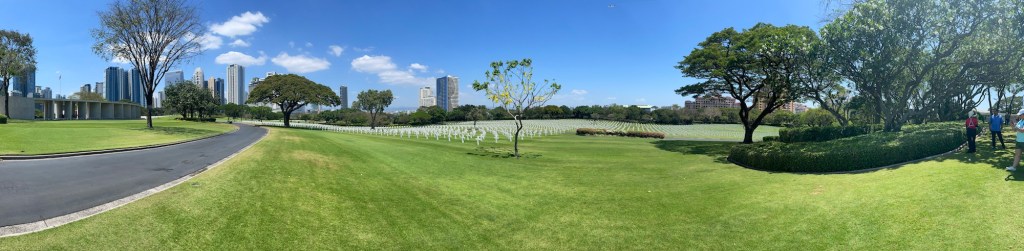

Admittedly, not having served in the armed forces (and having no family who’d served in this particular theater), this particular stop doesn’t carry quite the same significance as it might to those who do. In fact, I find myself mildly confused after the relationship between America and the Philippines. If nothing else, I always assumed it being somewhat fraught, as they wanted to be liberated from Spain at the end of the 19th century, and we promptly put them under our banner instead, as opposed to liberating them. What would their great hero and martyr, Dr. José Rizal think of us Americans, anyway? Sure, we eventually did grant them independence, but it took nearly half a century before that happened. Although it could be argued that, were they not still under our aegis during World War II, we might not have fought quite so hard to protect and liberate them this second time. But it’s still challenging to reconcile the unquestionably asymmetric relationship between the two nations and people.
Then again, there is the history between Japan and the Philippines. For all the soldiers buried here, there are several times as many civilians who perished under Japanese rule, particularly as Japan realized that the walls were closing in on them, and the war was being lost. Those of us with a little bit of history under our belts might be familiar with “the rape of Nanking” in 1933, but the “rape of Manila” in February 1945 was news to me – and the fatalities (never mind lesser casualties) outnumber that of either of the atomic bombs, just for the sake of reference. This sits with mild discomfort with our guide, and she acknowledges this, as her teaching certification is in the Japanese language. It’s difficult to accept the need to be so dependent on a neighboring country that has treated them as badly as they once did. Still, people (and the nations that they make up) change; if nations held grudges against every other nation that did them wrong once, there would be no trade, no cooperation… no peace, in fact. Sometimes, things have to be set aside for the sake of the betterment of all parties.
Makati is not the original central business district of Manila; the center of trade was once Chinatown, especially prior to the Spanish occupation of the archipelago. Manila, in fact, boasts the oldest Chinatown in the world. However, with the Spanish conquest, the Chinese were expected to convert to Catholicism and take Hispanicized names if they wanted to stay in the Philippines and do business. Many of them did; indeed, it so happens that the family behind the Jollibee fast food empire (which is to the Philippines what McDonald’s is to America) traces its roots to one of those naturalized Chinese families.
Our main stop in Makati is at the Ayala Museum, which appears to be not unlike our own Field Museum, in that its focus is on history (and, in Ayala’s case, Filipino history in particular – because why not? Where else would there be a museum with such a focus?), but also contains a great deal of artwork and other displays; and that it was founded by a family that made a commercial fortune and saw this as a means to give back to the community in turn.


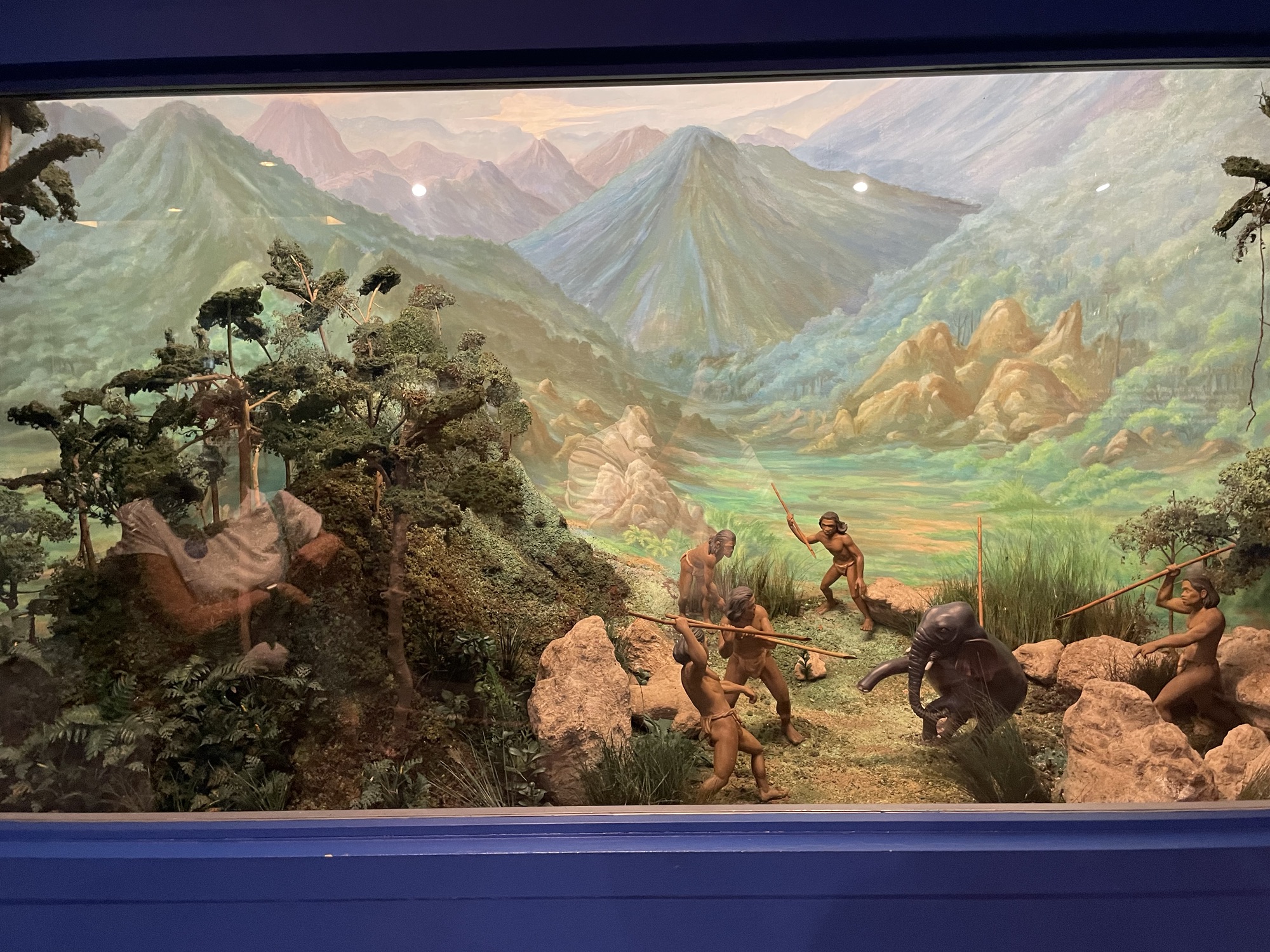
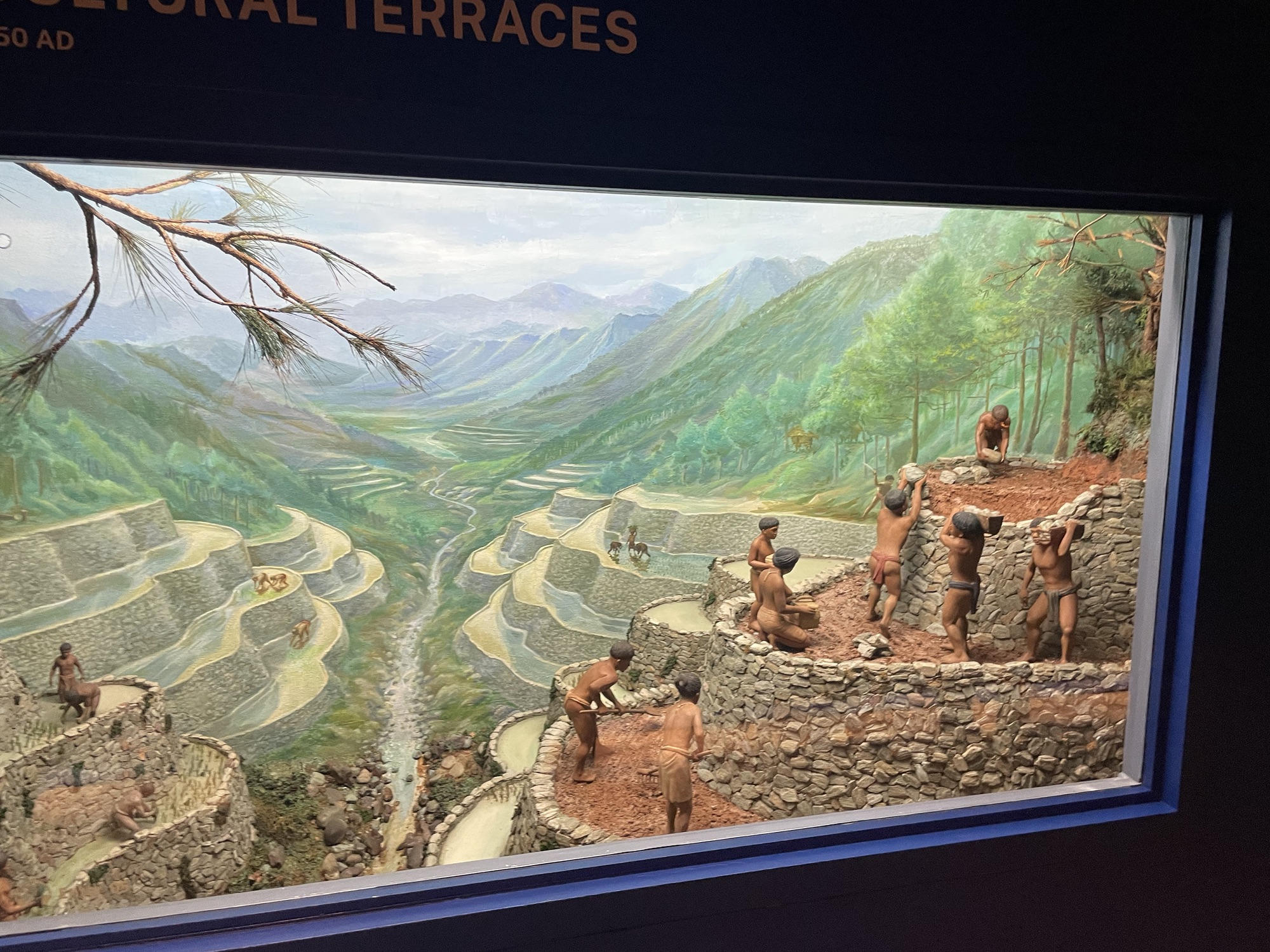
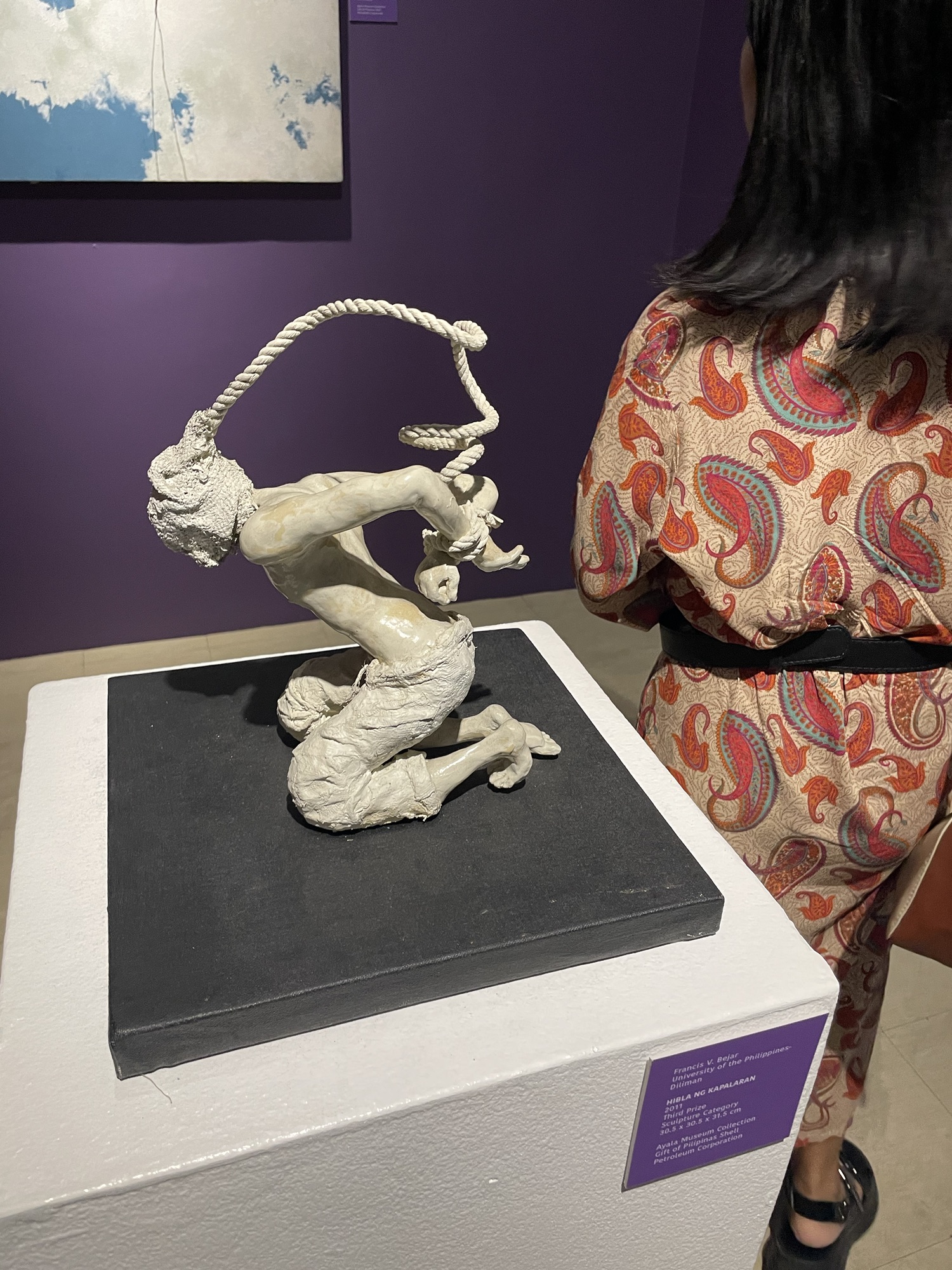
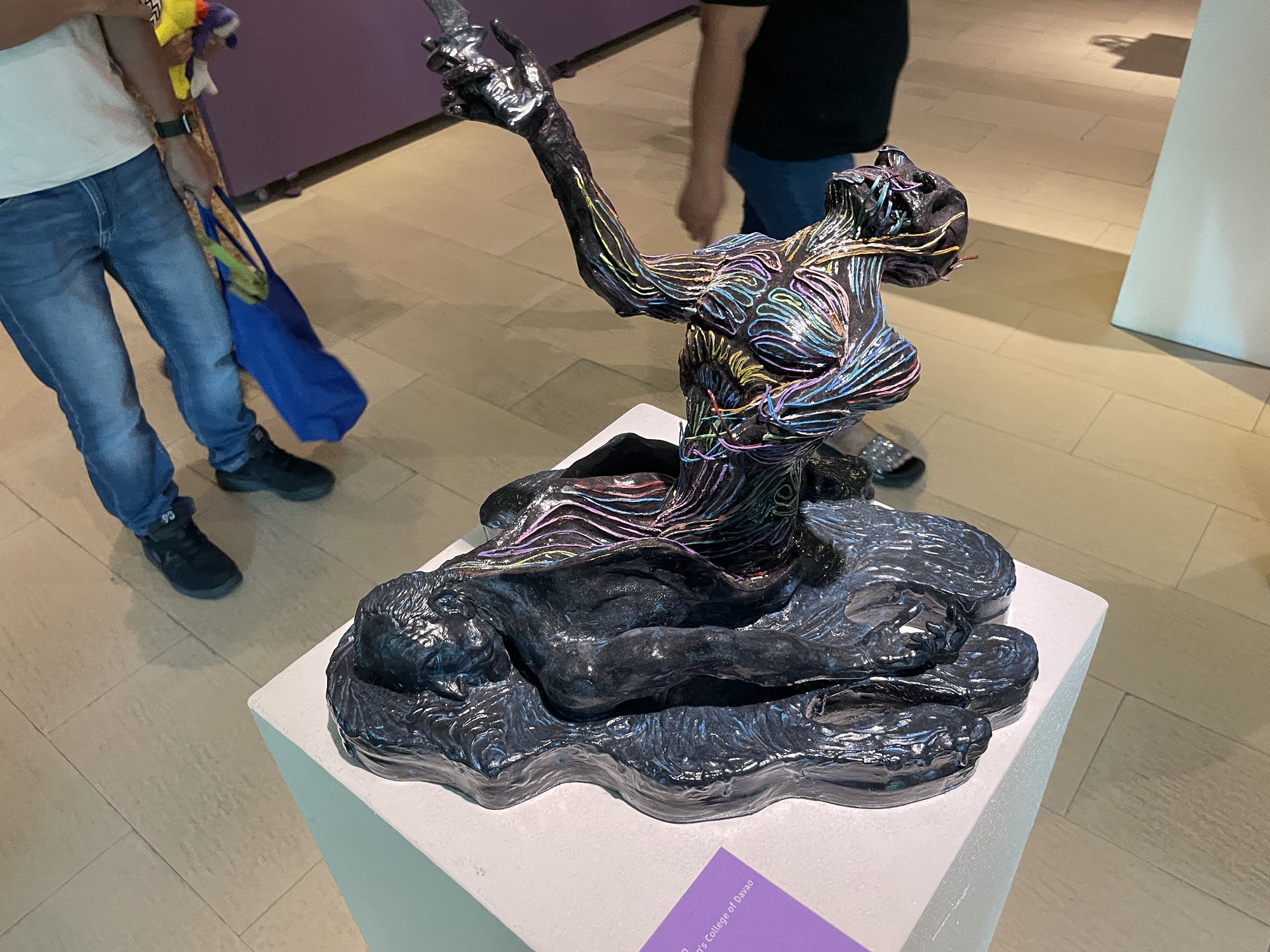
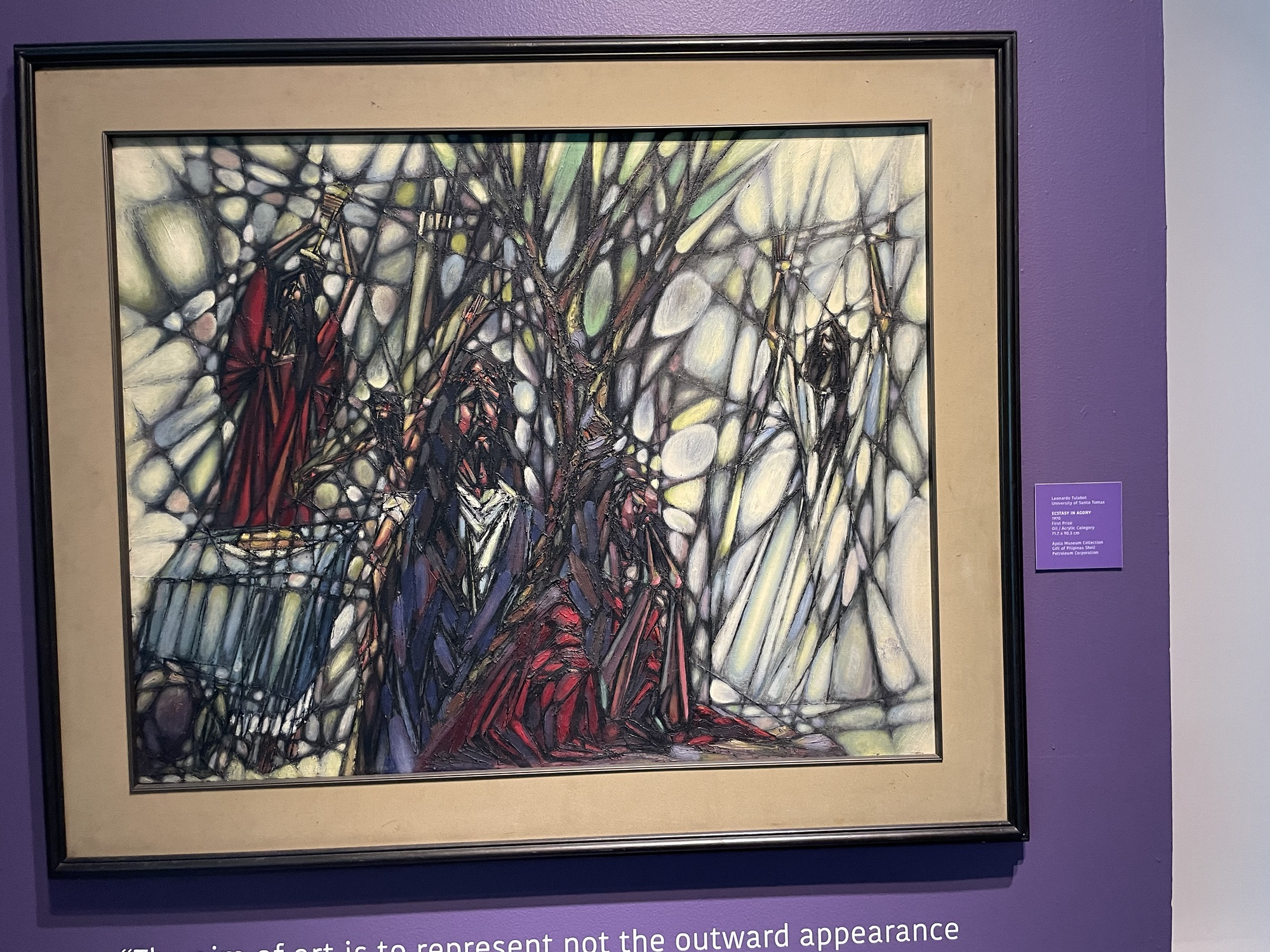
One of the things about having a museum in the middle of the commercial district is that one can leave the museum and be on the skyway connecting one to shopping centers throughout the district. There’s even a chapel amongst all of this; some people are making their way around, holding palm fronds from the service they’d attended an hour or so previously as they view the artwork of revolutionary-era (which, for them, is in the years just before the Spanish-American war) Filipinos, or shop for high-end fashion and other goods.

For all there is to see, and do at both the Ayala and the Greenbelt malls, I don’t actually get much shopping in; it’s more like sightseeing. Most of the shops don’t interest me, and the ones that do, I’m not sure I have time to pick something out, stand in the lines for the cashiers, and actually make my purchases. Eventually, I give up, and return to the entrance of the Ayala to wait for the bus.
The bus is actually late in getting to the front of the museum, but not so much so as a couple on our group. Half an hour goes by as we wait for them – this isn’t a thing that ever happened to us, back in the day. Finally, Novem leaves what information she can with the security detail at the museum, for them to contact her to return and presumably retrieve them later, and we head out to our next stop…
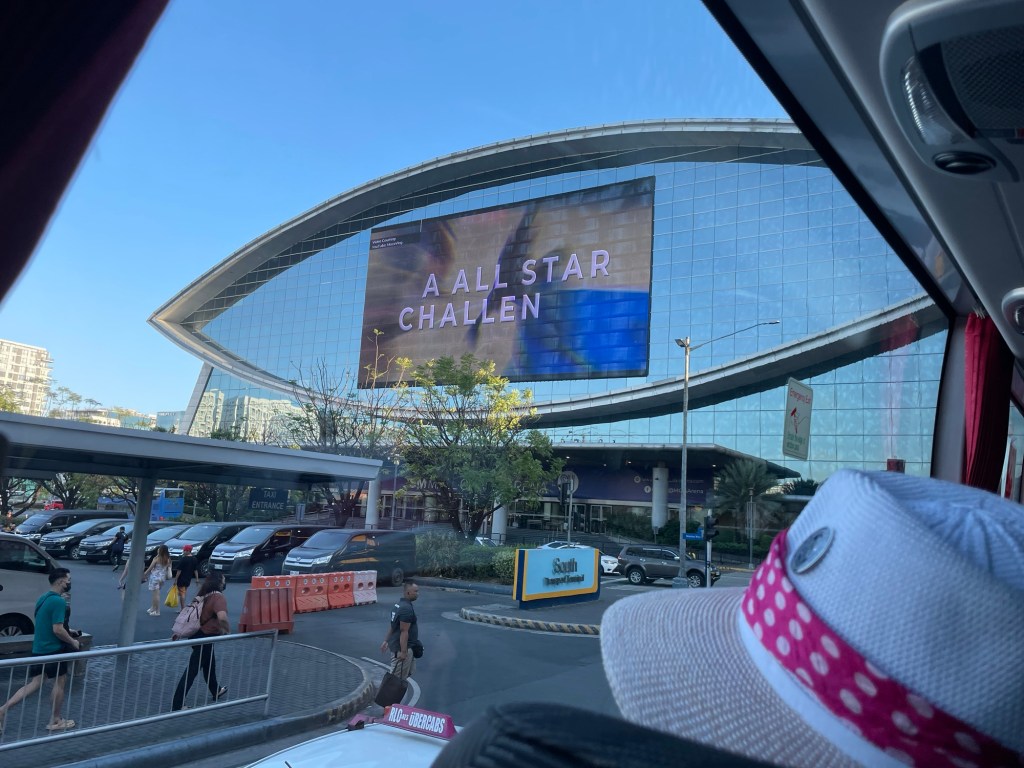
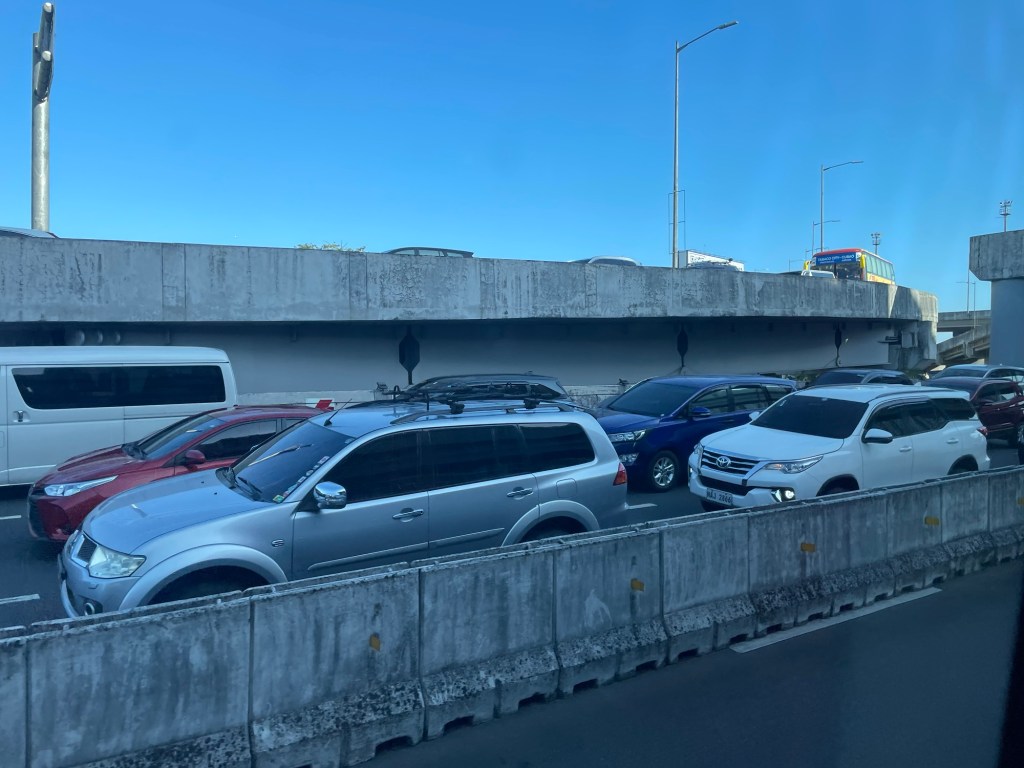
But while we’re able to actually drive past this mess, we’re running late as far as getting back to the ship is concerned. We’re going to have to skip our stop in Rizal Park after all; if nothing else, trying to find a place to park would be well-nigh impossible.
But on our way ‘home,’ Novem points out a homeless encampment, and mentions that Manila’s problem with them is due to their coming from other islands within the Philippine archipelago, only to find that there isn’t work to be found without at least a high school education. Even a worker at Jollibee needs to have a diploma, and better yet, a couple years of university under their belt. And all this for an average wage that comes to about six hundred pesos (not even eleven dollars) per day. No wonder Filipinos do their level best to leave and find work overseas; it just pays better. Employers here are behind the times; but if that’s the going rate, what’s to be done about it?
It’s not the most pleasant note to end things on, honey, so I might as well throw in the video of my personal experience as a palate cleanser.
Anyway, I’m going to get some rest before I move on to Subic Bay. For now, keep an eye on me, and wish me luck. I’m going to need it.

 Letters to Rachel
One thought on “Running Behind Time”