Dearest Rachel –
For all that I’m looking forward to visiting (and revisiting) certain places along this particular cruise, there are others that I’ve given rather short shift to. I clearly didn’t know anything about French Polynesia, and I really haven’t done my homework on anywhere in Australia either.
Which is pretty unfortunate, as Australia seems insistent on doing its homework about all of us; not only did we have to apply for a visa electronically beforehand, but we’ve had to fill out a separate form about a week ago, as well as present that form and our passports to immigration authorities (quartered on the ship since Auckland – nice work if you can get it) for a face-to-face ‘interview’ prior to disembarking into the country. Of course, there is the standard joke that they ask whether or not you have a criminal background, but are still willing to let you in if you don’t have one. I actually asked my interlocutor whether Ned Kelly had to jump through these kinds of hoops in order to get into the country; he smiled, and acknowledge that ‘no,’ he probably didn’t.
The consensus around our dinner table is that all this bureaucracy might have to do with the fact that the journey (for some people) ends in Brisbane (it’s the first of the five legs that make up the Asia/Pacific portion of the Royal Caribbean Ultimate World Cruise), so the authorities need to know where everyone’s going once that leg of the journey is over; much like having to deal with customs whenever we return home to the States from one of these types of trips. Be that as it may, since there’s a sea day between Newcastle and Brisbane, you’d think they could squeeze the process in then, but whatever. At least it’s taken care of, and we can get on with the sightseeing in our first three ports in Australia before I figure out how a turnaround is taken care of for the first time.
Anyway, Sydney.
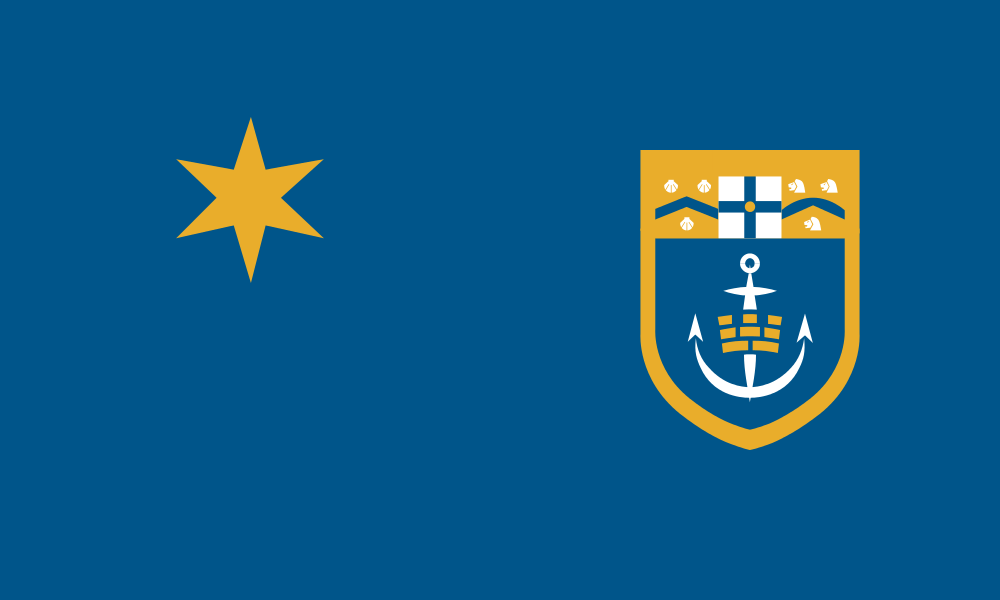
It’s the capital of the state of New South Wales, and the largest city in Australia (and Oceania, for that matter), although as I study it, it’s hard to tell what exactly constitutes Sydney proper. Greater Sydney, which for the purposes of demography is usually what is meant when the city is referred to, covers some eleven hundred square miles and is home to nearly 5.3 million people (making it only a quarter as densely populated as home), which amounts to nearly two-thirds of the population of the entire state. However, this Greater Sydney is in fact made up of a whopping 658 suburbs (Los Angeles should be so well-appointed), of which the City of Sydney is but one – and even it is technically made up of several ‘suburbs,’ and has even changed boundaries five times since the beginning of the twentieth century; the only consistency being that the Central Business District (the CBD, which I expect our visit will, ah, center on) has always been a part of the City.


The way I read it, some of these so-called suburbs would be akin to various neighborhoods that make up the crazy quilt that is, say, Chicago. The confusion lies in referring to them all as both suburbs (suggesting a separate incorporation from the city proper) and part of Greater Sydney (suggesting that they’re all merely part of this one great big city). As far as I’m concerned, you can’t have it both ways, but whatever.
To be sure, the city center has moved from where the original British settlement took place. Sydney happens to also be the oldest city in Australia, from both perspectives; Aboriginals tribes have inhabited the Greater Sydney region for at least 30,000 years, while Captain James Cook made landfall on his first voyage in 1770 in Botany Bay, ten miles south of where Sydney Harbor and the CBD are today. Only eighteen years later, the First Fleet of convicts established the city as a penal colony. After World War II, Sydney experienced mass migration and by 2021 over 40 per cent of the population was born overseas, coming from places such as mainland China, India, the United Kingdom, Vietnam and the Philippines. Given the hostilities between certain
As with Auckland, it’s an expensive city to live in, but also a particularly livable one, based on various quality-of-life surveys. Oceania is remote from nearly everywhere else in the world – and even the continental cities of Australia are pretty well spread apart – so whatever they don’t produce locally (and sometimes, even that poses an issue, as our guide in the Bay of Islands pointed out about New Zealand meat prices) has to come in from a long way away, and as a result, it costs that much more. Still, once you’ve adjusted to the cost of the place, it’s beautiful, the people are friendly, and it’s influential within the region from an economic and cultural level, with strengths in finance, manufacturing and tourism.
And on the subject of tourism, let’s focus on the things that I might be seeing tomorrow. Since my excursion is basically a hop-on/hop-off bus tour – and for whatever reason, I can’t see to get a map of the route the bus takes – I’ve gone and asked ChatGPT to help me identify points of interest I should be looking for. The iconic Sydney Opera House is a no-brainer, and in fact, our tenders (yes, that makes it even at four apiece at this point, although by mid-afternoon, I understand that the ship will be making its way to the quay and actually docking) will be dropping us off at the Man O’War steps, just to the side of the Opera House. The steps pay tribute to a thoroughbred horse that raced undefeated in the late teens and early twenties, only missing the Triple Crown by not making it to the Kentucky Derby, that was native to Sydney, illustrating the city’s impact on sport that well precedes its hosting of the 2000 Olympic Games.
On our way in, we’ll be passing the Sydney Harbour Bridge (in fact, the passengers have been informed multiple times about waking up early in order to capture our passage into the Harbour, and the sights we’ll see along the way. I think I’ll have little trouble in doing so, given past performance thus far), another must-see item on the list of Sydney landmarks. Then – and understand, this is in no particular geographic order, as I don’t know how they’re arranged – there’s the Circular Quay, a bustling transport hub and waterfront precinct located at the northern end of Sydney’s central business district (CBD); The Rocks, Sydney’s historic and atmospheric neighborhood, filled with charming cobblestone streets, heritage buildings, galleries, boutiques and cafes; the Royal Botanic Garden, located adjacent to the Opera House, with its lush gardens, scenic walking paths, and iconic landmarks such as Mrs. Macquarie’s Chair and the Sydney Tropical Centre; Darling Harbour, a vibrant waterfront precinct with entertainment, dining, shopping, and cultural attractions such as include Sea Life Sydney Aquarium, Wild Life Sydney Zoo, Madame Tussaud’s Sydney, and the Australian National Maritime Museum; and the Sydney Tower Eye observation deck, located in the heart of the CBD, with 360-degree views of the city skyline, harbor, and beyond.
Wow; that’s quite the list. I don’t know how much of this I’m going to be able to take in over the course of a single day. On the other hand, we will be in port until practically midnight (not that I expect to be able to stay up and out that late), so who knows? Obviously, I’m going to have to ask you to keep an eye on me, and wish me luck; I’m definitely going to need it.

 Letters to Rachel