Dearest Rachel –
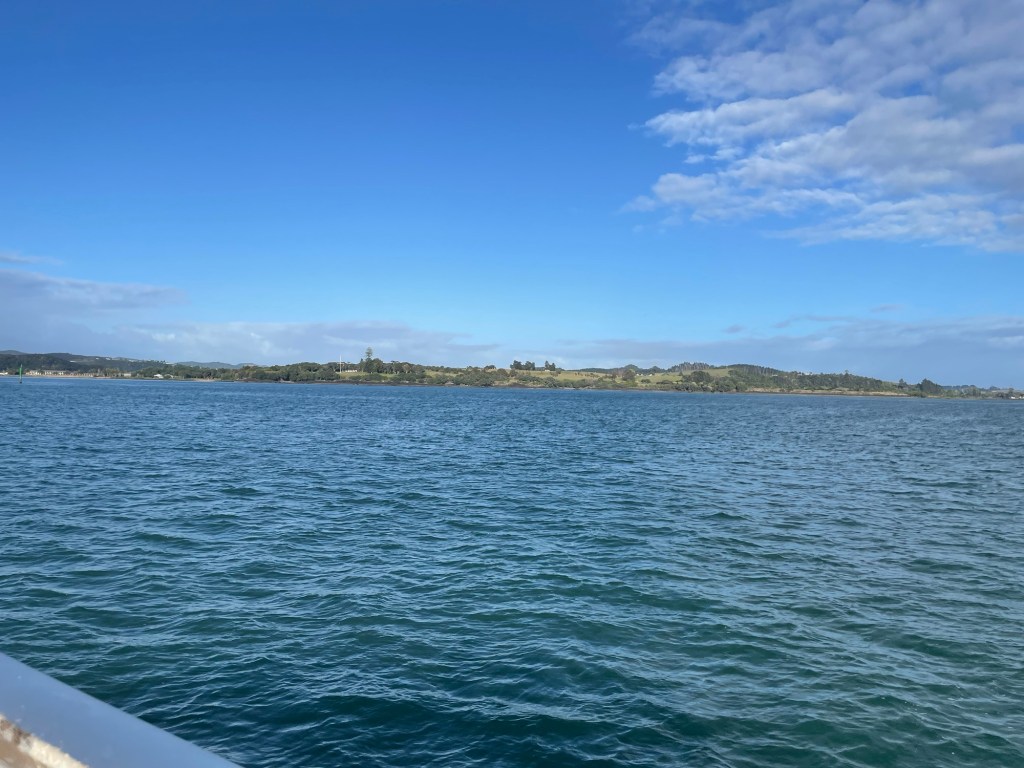
The sun eventually rises, and we find ourselves looking at a much calmer day than yesterday. Even the tender over to Waitanga is fairly smooth; although we do hit a brief stretch of wake that I can’t help but comment upon in that instant (because I know you would be exulting in a rare moment of real motion on the ocean), it passes rather quickly, leaving us to ease into an apparent “no-wake zone” as we reach the docks.
Incidentally, I always found the concept of a “no wake zone” rather amusing, probably because we always found ourselves docking first thing in the morning. The wake that a boat makes is not the first thing that occurs to a landlubber like myself; I think of the fact that the noise the boats make would wake up those vacationing in the area, and that the boats were instructed to slow down and cut their motors in order to avoid waking them.
But that’s just me being a wee bit silly.
***
Once ashore, those of us in this particular excursion locate our bus and driver, climb aboard (albeit strangely disconcerted by walking over what we’re used to thinking of as “his” seat – British Commonwealth driving rules and all that, don’t you know), and listen to the variety of facts and stories he has for us as we make our way to our various destinations.
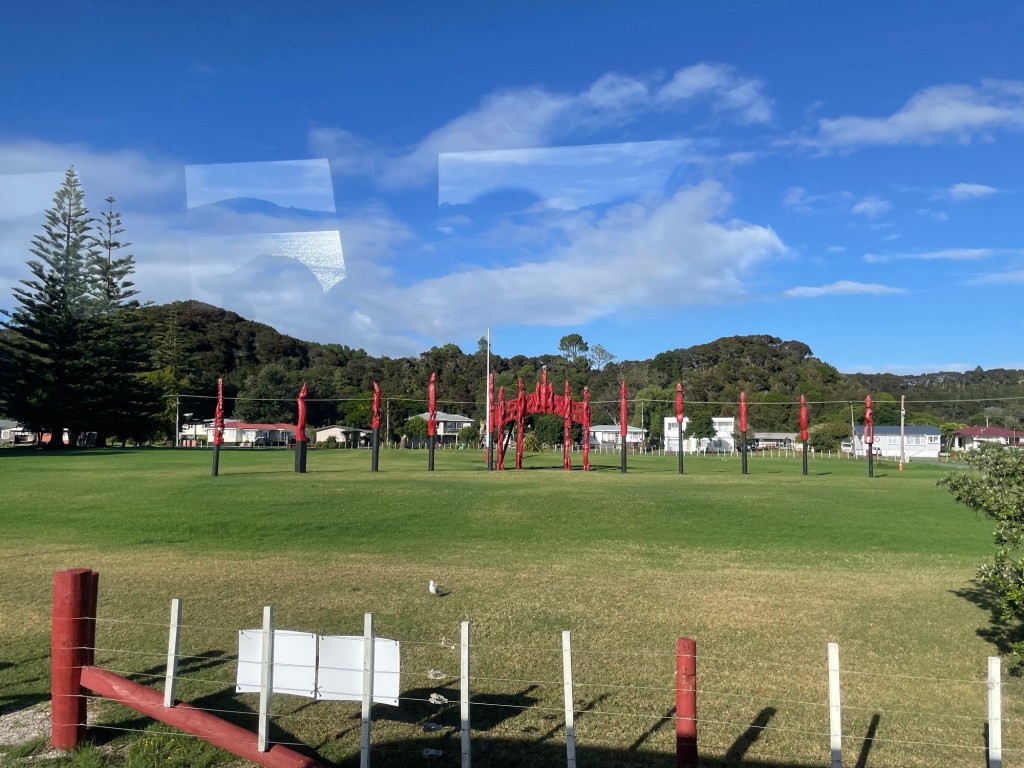
Five thousand people call the Bay of Islands home, although that increases tenfold during the summer (which, we have to be reminded, is now, although it’s coming to an end; Easter is approximately the last hurrah of summer). Easter aside, you’d find that familiar with regard to the Bass Islands, too.
Given the topic of our first stop, he explains about the significance of the kauri tree; they were prized by the initial colonists for the fact that they grow straight and tall and free from blemishes such as knots; they were used for furniture (and their gum used for varnish) and housing material. However, unlike most trees, they don’t heal themselves (or, since they’re a very slow-growing tree, the healing process is so slow as to be imperceptible), so any damage they take is deleterious to their health. These days, kauri trees are a protected species.
Industries in the area include (after tourism, of course) forestry (not kauris, of course, but beech and pine flourish on both islands), farming and livestock. While sheep outnumber people in New Zealand four to one, the town of Kerikeri that we find ourselves driving through is more involved in beef and dairy production. Sheep are more predominant on the southern island.
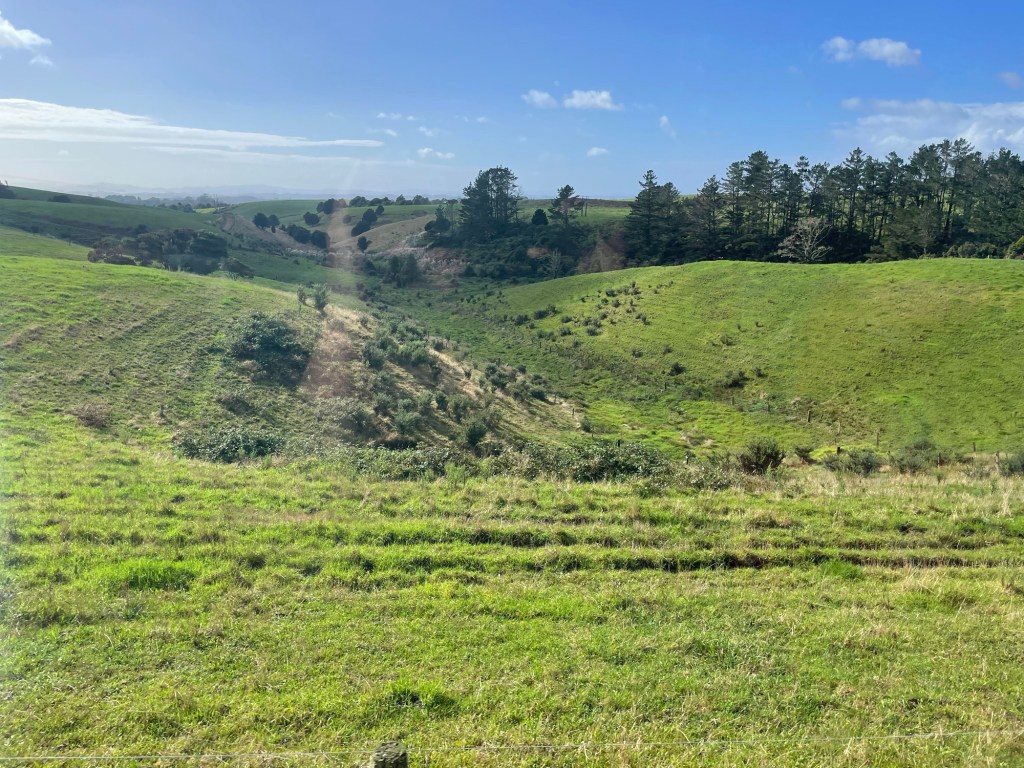
What’s odd is that, while New Zealand ships its meat to America and the U.K., the price of meat in New Zealand is nearly double that of the U.K. Even the driver expresses irritation at this situation.
He also talks about the ease with which one can live “off the grid” here in New Zealand. While I can believe and accept that it’s possible, and imagine it’s so much more appealing than it used to be, I will say that it’s not the life for me.
We’re getting high enough into the hills and mountains that we can actually see the ocean if we’re lucky (which, for the most part, I’m not). Our driver mentions that there is nowhere in New Zealand that is further than a hundred miles from the sea, and if we were to go a bit further up, we might be able to see the ocean in either direction; the land is just that narrow this far north.
When we come to the kauri forest, our bus has to squeeze up against the edge of the road as another coach makes it way past us in the opposite direction. According to our guide, the Department of Conservation only allows a certain number of people in the forest at a given time; about sixty or so. This could be a problem, depending on the number of cruisers signed up for one such tour or another like this. Sure enough, there are a couple of other buses here; however, one of the local guides boards ours in in order to give us a little bit of a warning about handrail on the lake and by the time she’s done, at least one more bus is cleared out.
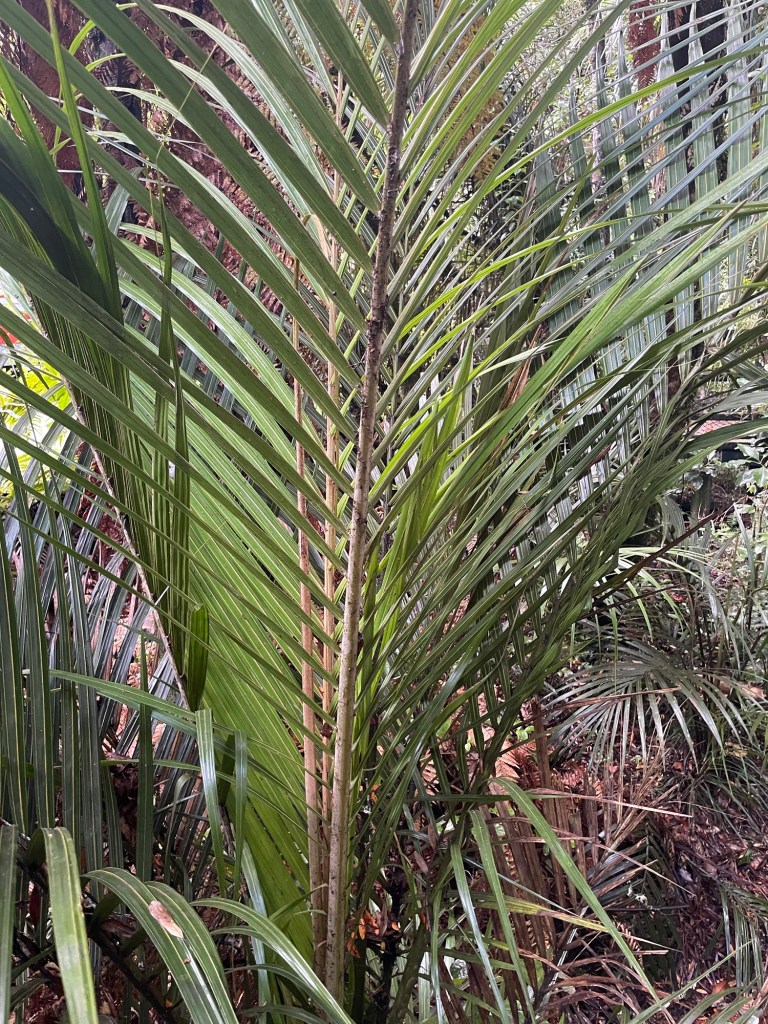

They say they can tell the age of a kauri tree based on the diameter; it grows a meter in girth every five hundred years or so
The odd and interesting collection of flora and fauna in the islands can be attributed in part to the fact that New Zealand doesn’t have any indigenous mammals. Without the malign influence of certain predatory creatures, birds scavenge off the ground with minimal fear, and plants that couldn’t cope with the onslaught of ‘civilization’ could thrive for thousands of years. They are trying to eradicate many of the pests from New Zealand, including possums and rats, in order to bring back the birds and other indigenous fauna from the brink of endangerment and extinction.
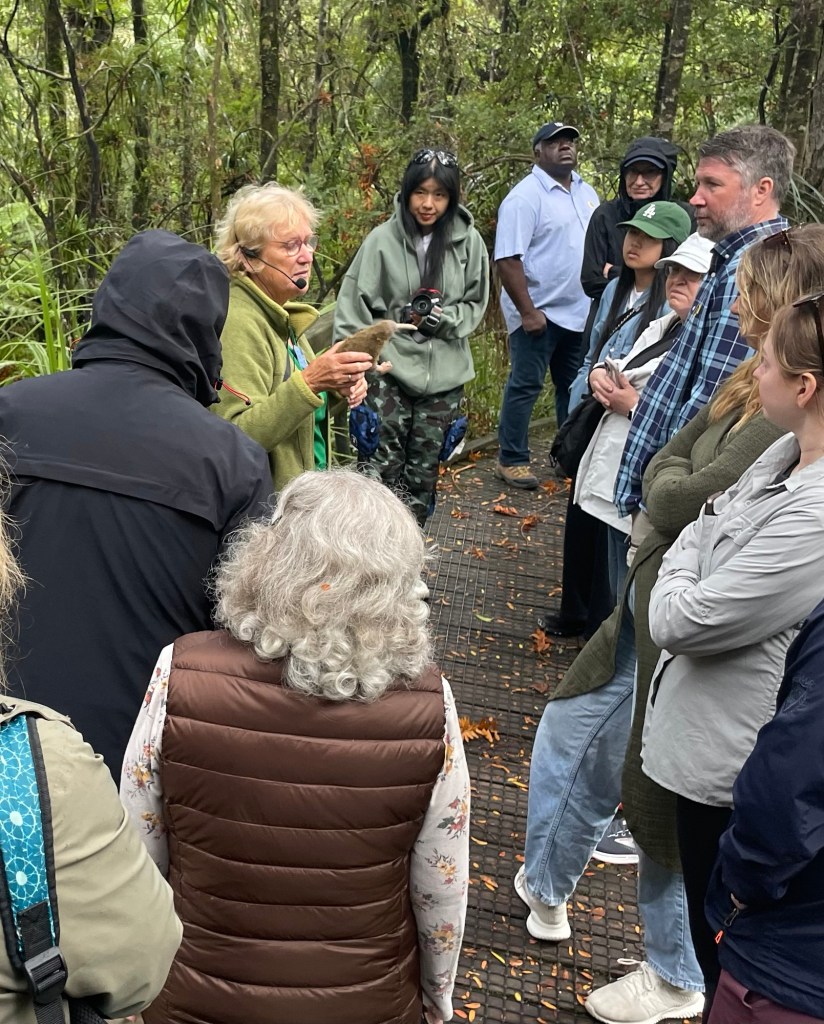

The Bay (which supposedly, we might be able to see from the coach on occasion) contains over a hundred islands, defined in this case as any land visible above water with vegetation on it. Our driver claims that some of these are therefore no more than rocks, but would rocks actually support vegetation?


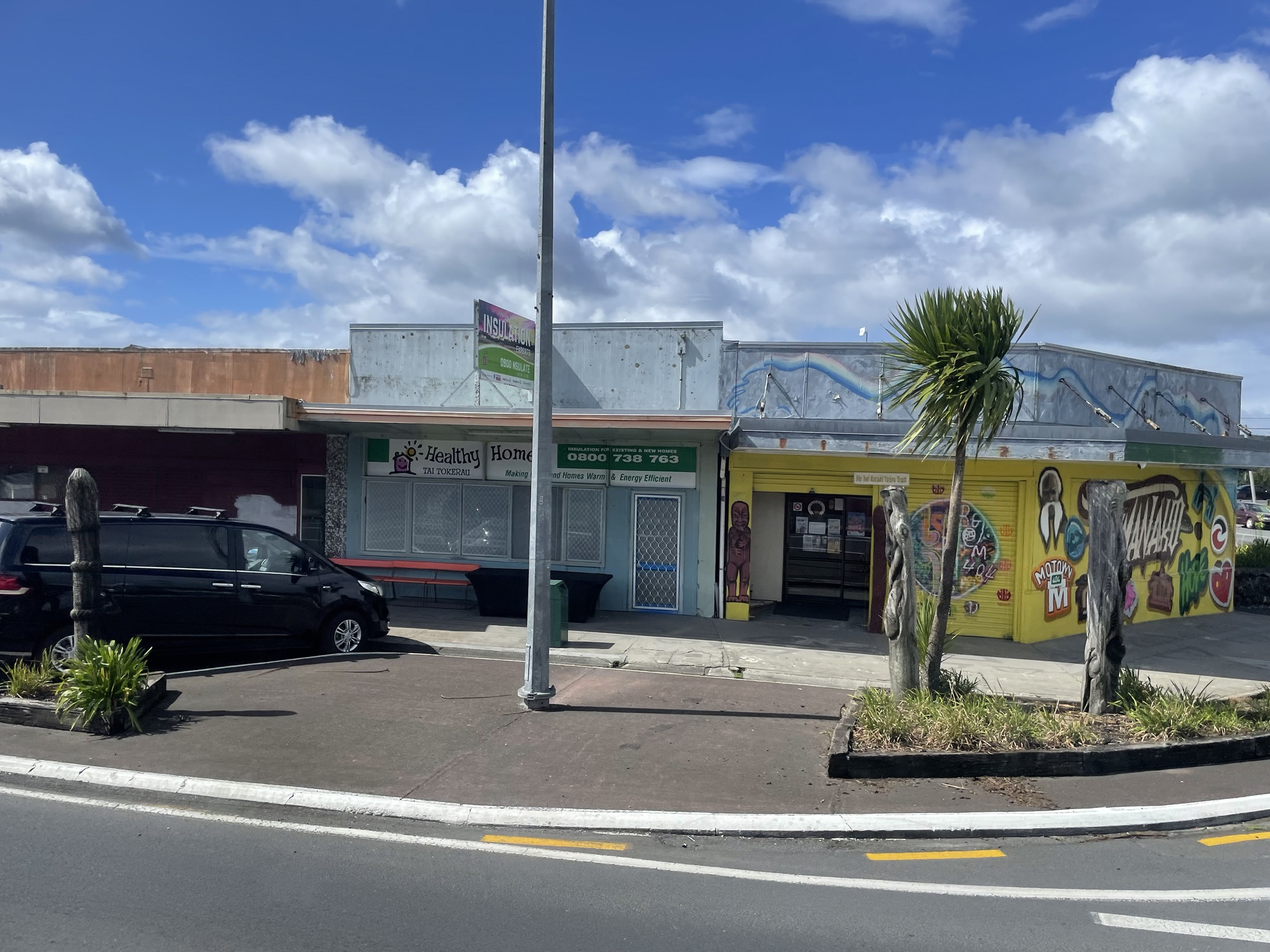
Making our way down Route 1 (which runs the entire length of both the main islands that make up New Zealand, over two thousand kilometers) through the Kawakawa valley. It’s a somewhat depressed area, economically speaking, but the driver has nothing but good to say about its inhabitants, having had has vehicle break down in the area once upon a time and treated very well. Kawakawa’s main claim to fame is that it was where the first railway in New Zealand was built.


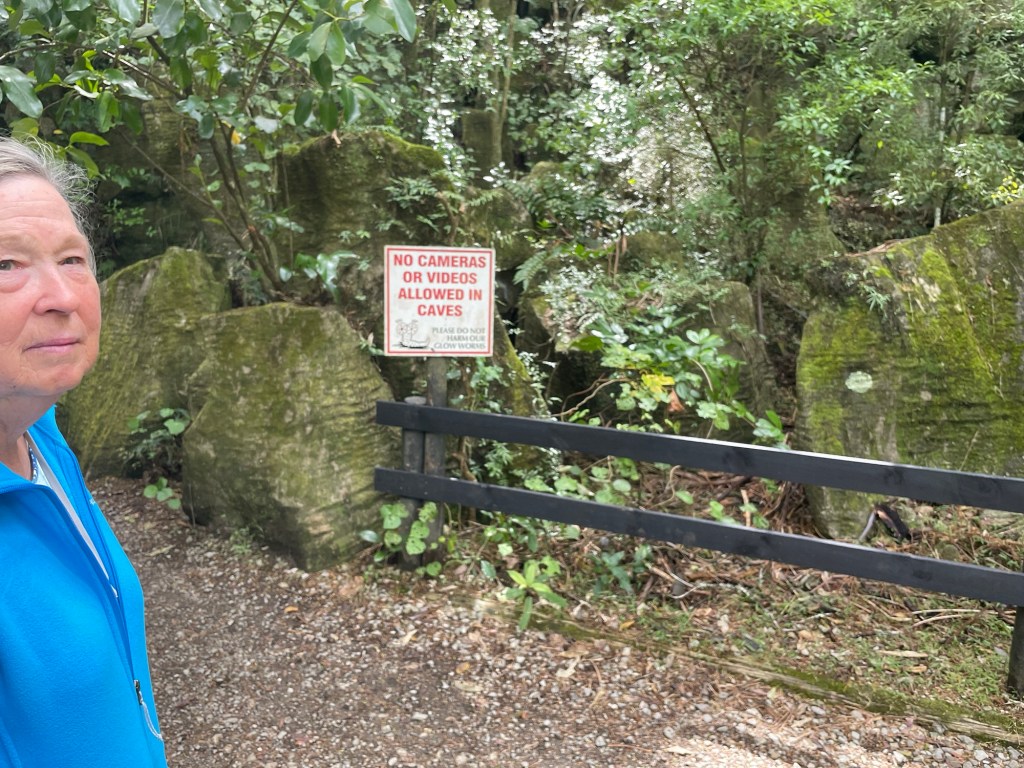
I do, however, regret not being able to take terribly good notes about the titiwai (the Māori word for the glowworms) as our guide, a college age Māori girl (who acknowledges being a distant relative of the Kawiti family) walked us through the cave. I do recall her describing the fact that the worms are, in fact, larvae, who survive for approximately 11 months in that form, before wrapping themselves a cocoon for three weeks, and bursting forth as a fly for their final three days. The bioluminescence of the larvae changes over time, with the newborns giving off a white light, which eventually fades to blue, and finally green before they wrap themselves up. Their final form has such a short life span because, while the flies have mouths, they have no digestive system. Their only purpose of their existence at this point is to reproduce.
Apparently, these worms were originally aquatic creatures, until New Zealand and Australia (yes, there are some that exist in Australia, but not nearly as many as are here) came into existence, draining most – but not all, as they need water to survive – of the water out of their caves. They are meant to look as if they are stars in the sky, thereby misdirected various insects that fly into the caves into thinking that the ceiling is the sky, only to find themselves trapped in the sticky (and toxic) fibers that they dangle from their webs, which are built like hammocks for them to live in throughout their larval existence.
As we make our way back, we pass by the resort town on the opposite side of the bay. Apparently there are shuttles running from there to the dock, and some of the tour guests decide to get off here and take a shuttle later. I’m briefly tempted, but I’m not sure what I expect to find that might be that much different as opposed to my walk through Kailua-Kona. So I take the bus all the way out to the dock after all.
Just as well; there’s a long queue of people waiting to get onto the tenders. I don’t want to be the last one on, so – after dropping a few of your ashes into the rocky beach by the docks (which should look very familiar) – I get into line.
It’s at that moment the wind whips up fiercely, blowing a spray of water onto us, despite having the shelter of a roof over our heads. At this point, members of the crew start walking through the line, informing us that we’ve been instructed to suspend the tendering process, due to 35 mile an hour winds. Of course, the ship isn’t going to leave without us, but it is uncomfortable we just standing here waiting to get on board. But what else is there to do? We continue to wait.
Finally, a tender arrives and docks, but since it has been underway, when the order came down to cease the process, there’s no guarantee as to when it will takeoff. Still, it’s a place, a seat, and it’s on a (if not the) boat; these are baby steps, but steps nonetheless. About a hundred of us or so pile in, and wait for about fifteen minutes for the ‘all clear,’ at which point we are back on our way to the ship, where will be for another couple of days straight.
Weird that I’m in such a hurry to be there, given that. Still, we are running out of time; while the ship will wait for the passengers who it can only move back-and-forth a hundred or so over at a time, the fewer that they have to move at the last minute, the less delay to our eventual arrival in Sydney, I guess. Might as well be a cooperative little passenger; it has been a busy day, if a short one.
Anyway, it looks like we’re cleared to leave the dock, now, so I’ll talk to you later. Keep an eye on me, honey, and wish me luck. I’m going to need it.

 Letters to Rachel
One thought on “Facts and Stories”