Dearest Rachel –
I promise this will be my last reference to Peppo’s Pidgin To Da Max, but this morning has me remembering a cartoon of a bright and cheery bus driver addressing his load of tired tourists with a clearly booming “Aloha, keiki! Get da kine makapiapia outta you eyes! We get plenny fo’ spahk today!” (translation: “Good morning, kids! Wipe the dust from your eyes, because we’ve got a lot to see today!”).
It’s not that I’m exactly tired this morning – in fact, I’m up before six yet again, and wondering why tourists would have this problem since everyone from America would still be several hours ahead of the locals – but I’m finding myself unable to get a lot of traction today. I managed to put together another video from yesterday’s activity – and get started on a letter regarding it, to boot – but I’m a long way from being finished with it, and suddenly that two hour lead time was cut in half without me realizing it. I barely had time to do a short intro to today, run upstairs for a quick breakfast, and report to the theater by eight.
Given this sudden time crunch, I don’t pack as much for this morning as I have for the past couple. After all, this is only going to be for the morning, rather than the whole day. What could possibly happen in three hours? And yes, I realize I’m saying this knowing full well that the ill-fated Minnow took off from here, right out of Waikiki Marina. So I know I’m probably tempting fate.
Still, it leaves me wondering: whatever happened to ‘Hang Loose,’ the laid-back ethos of Hawaiian culture? It appears that, as long as we’re on the ship, it doesn’t apply. The ship isn’t part of Hawaii, despite being in and surrounded by it, and as such, we have to be places on time yet.
You’d think that the same thing would apply to most of the people who call Honolulu home; even the guide admits that just about everyone here is a tourist to one extent or another. He asks for a show of hands as to who’s here for the first time, and he gets a dozen or so, who he greets as guests. To those who raise their hands, as having been here once before, he says, “we call you ‘kama’aina.’ That means you’re one of us; you’re a local, now.” And for those of us like myself, who are here for a third time (or more), he says “we just call you ‘rich.’” if it weren’t for the fact that it could be considered relatively accurate, I might take offense; it’s not like I’ve even spent the equivalent of two weeks here in Hawaii, among all my visits. That shouldn’t even count me as a kama’aina, let alone anything more. But why let that stand in the way of a good joke?
We pass through Waikiki, and he points out that this area was once nothing more than a swampland. Much of the sand on the beach was actually imported from elsewhere – Australia, New Zealand, other places in Polynesia – to build it up. These days, as the beach suffers from erosion (which is nothing out of the ordinary; all beaches deal with it over time), the sand is replenished relatively locally from the ocean floor beyond where the sea floor drops out.
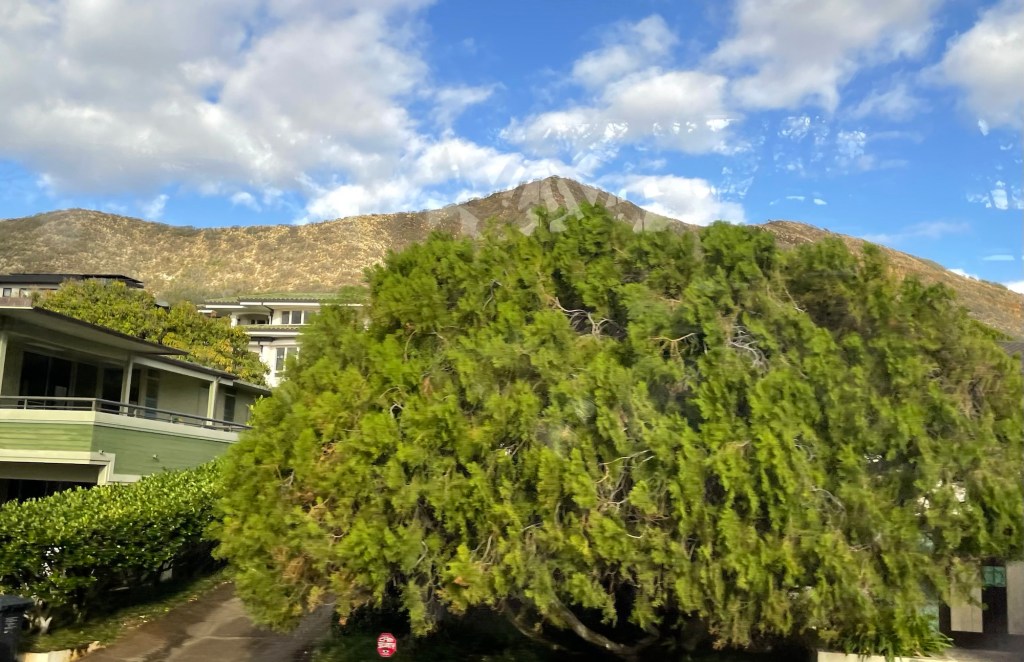

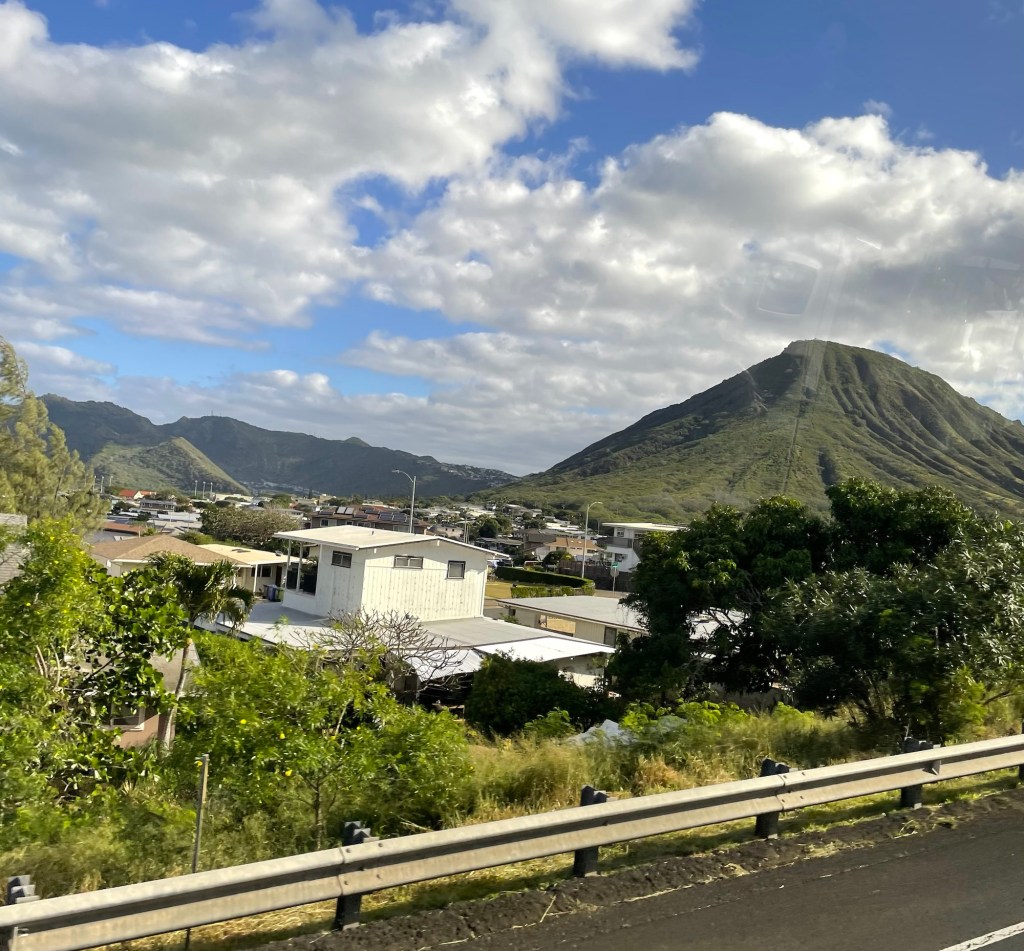
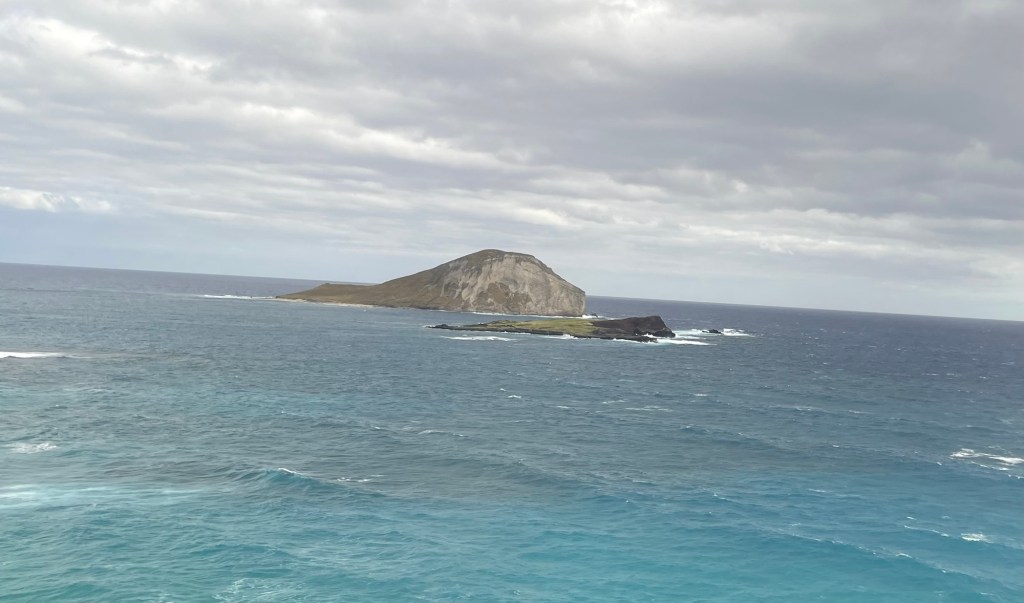
Our guide is particularly chatty, and full of all sorts of tidbits about the places we’re passing, both in terms of past history and present-day culture. Which is all well and good, but at 30 miles an hour, it’s hard to take it all in, let alone write it all down. So I warn you, the rest of this letter is going to be fairly disjointed, as I put in pictures and captions based on what I could catch of what he had to say.

I’m not sure what brought it up, but our guide informs us that gambling is not allowed in Hawaii, not even the lottery. It would seem that local groups don’t want the criminal element that gambling brings, whether through a casino or scratch-offs. The conclusion seems to be that they do reasonably well with the tourism industry – barring any future pandemics – and besides, if they want a criminal element, the government seems to have that locked down.
By way of example, he tells us that there used to be a ferry system running between Oahu, Maui and the Big Island, not unlike the Miller ferry in Lake Erie (complete with auto transport and what not). However, the airlines were losing business to the ferry, and made a claim to the government that it was harming the whales and dolphins, and convinced the Supreme Court to shut them down, after which they raised the prices on their inter-island flights. And good luck getting your car from one island to the other.


Living here on the islands poses some particularly interesting challenges. Our guide talks about how, for all the cattle that exist on the islands, none of them are dairy, because that would require a certain amount of industrial installation. Industry, such as factories and the like, are – to put it mildly – frowned upon by the indigenous population in particular, and the government in general. The consequence of this, however, is that most things are very expensive here, with milk being particularly so – a gallon will run you good nine dollars. Such is the literal price to be paid for keeping Hawaii beautiful as it is. As he points out, beer is actually cheaper; but I wouldn’t advise putting it on your breakfast cereal.
As we drive by one of several Air Force bases on the island, the guide points out that the military is the second biggest landowner in Oahu, after the state itself and before the Kamehameha School (the richest school in the country, funded by the Bishop family estate, with over 600 acres in Oahu alone)
At this point, we make a quick pit stop (hey, such things are necessary, as you would remind me constantly), which you would have appreciated no end – not the least because of the little shopping center. A gentleman sitting across from me murmurs about how his wife is busy finding him another shirt. I can’t help but tell him to be grateful that she’s shopping for him; not all of us have someone to buy for us (or vice versa) any more.
It turns out they’re churchgoers themselves, and he’s even on the board of a Christian camp in North Carolina where they call home. It’s apparently a big camp, with literally thousands of attendees last summer, and counting the likes of NASCAR legend Richard Petty among their supporters.
As we make our way up the cliffs of Pali (which, now that I think about it, is a redundancy like “ATM machine,” as I understand that ‘Pali’ means ‘cliff’ in Hawaiian, as well as being the name of a local goddess), we get a torrent of information about the Battle of Nuʻuanu, where Kalanikūpule was defeated and Kamehameha won rulership over the last remaining island of the Hawaiian archipelago, but I again can’t seem to write down fast enough. I tried to tell you about it, but you can see that the results were somewhat disappointing, thanks to the wind.

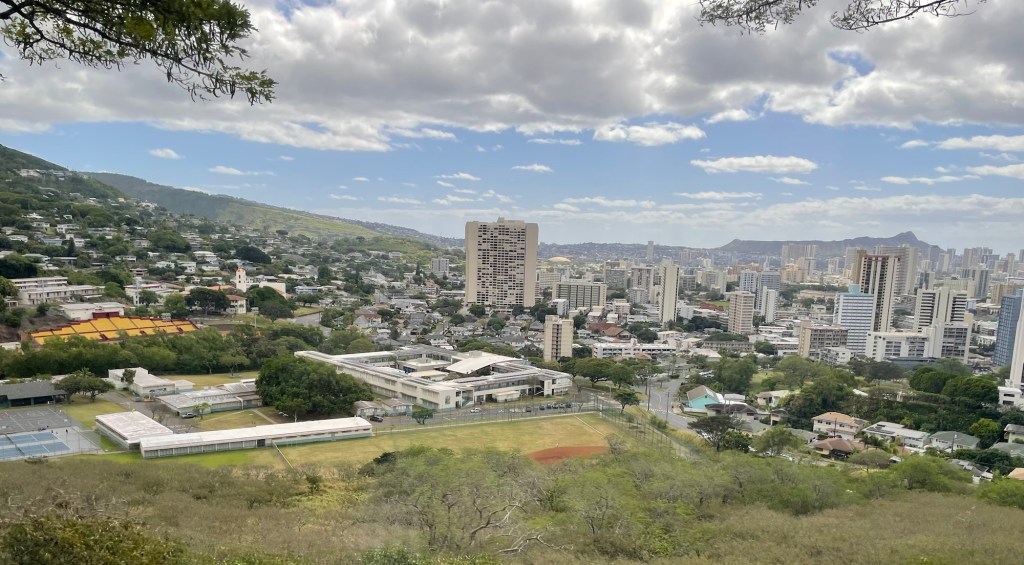
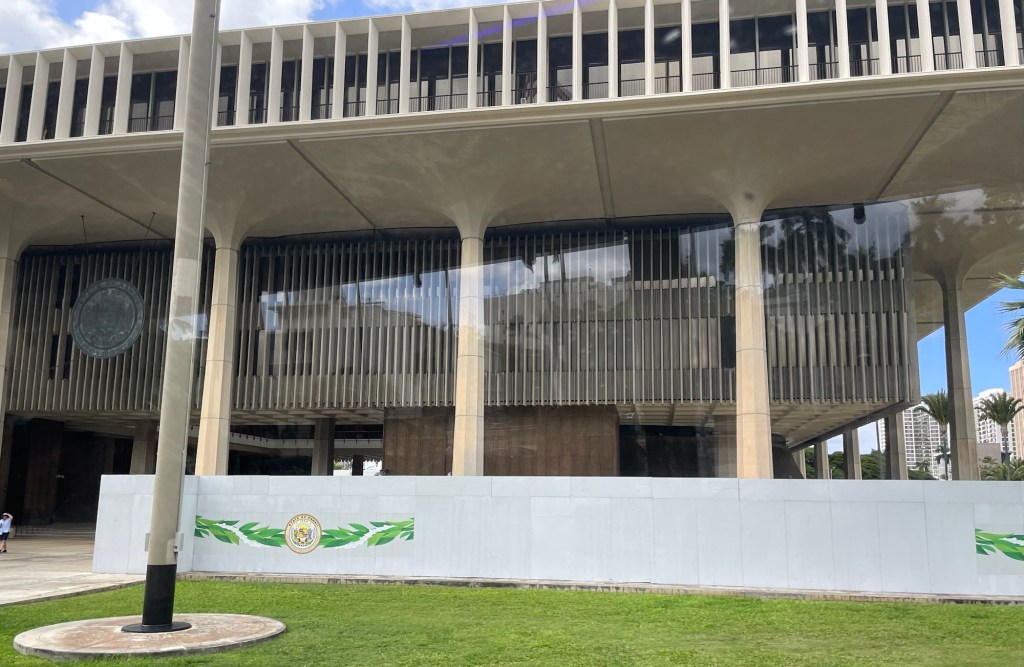
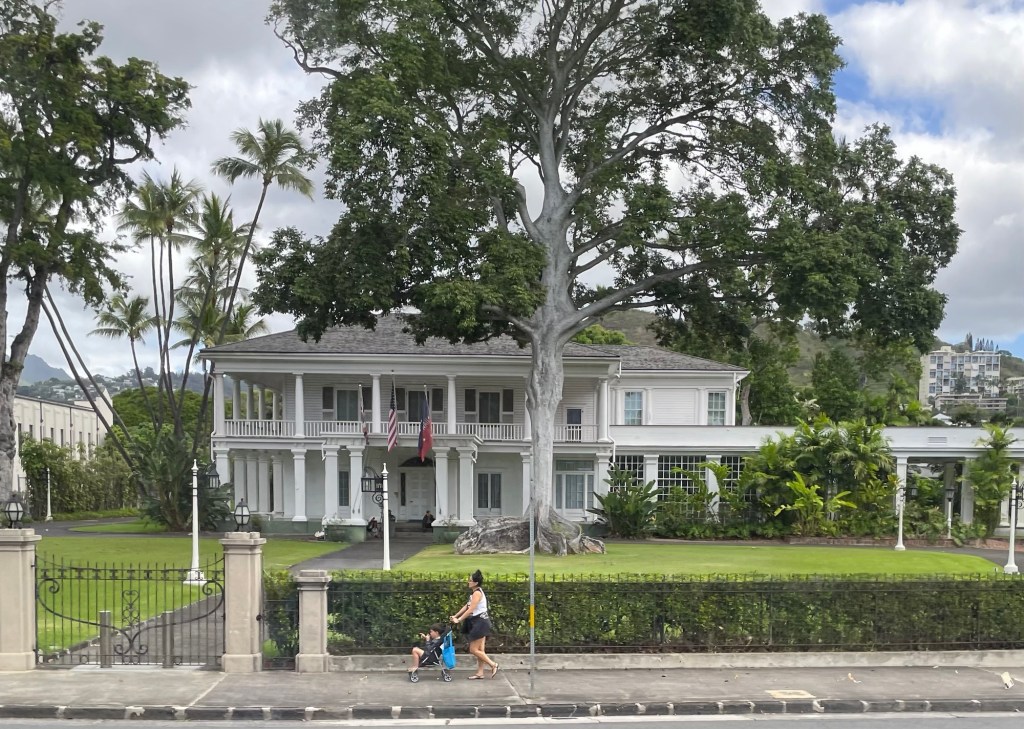
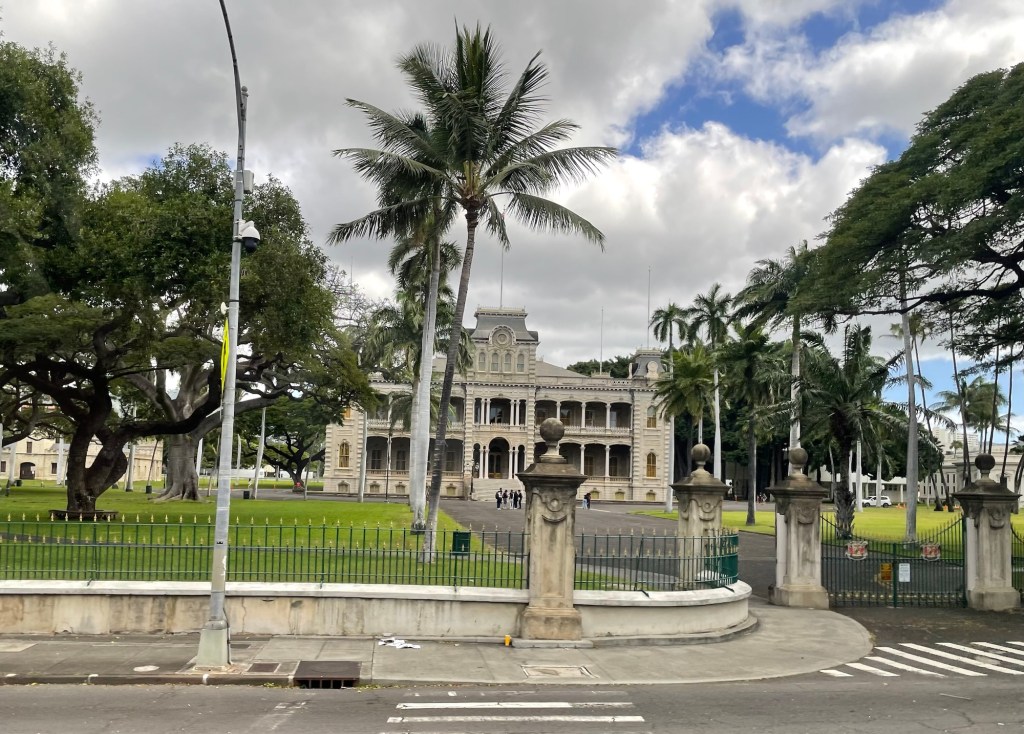
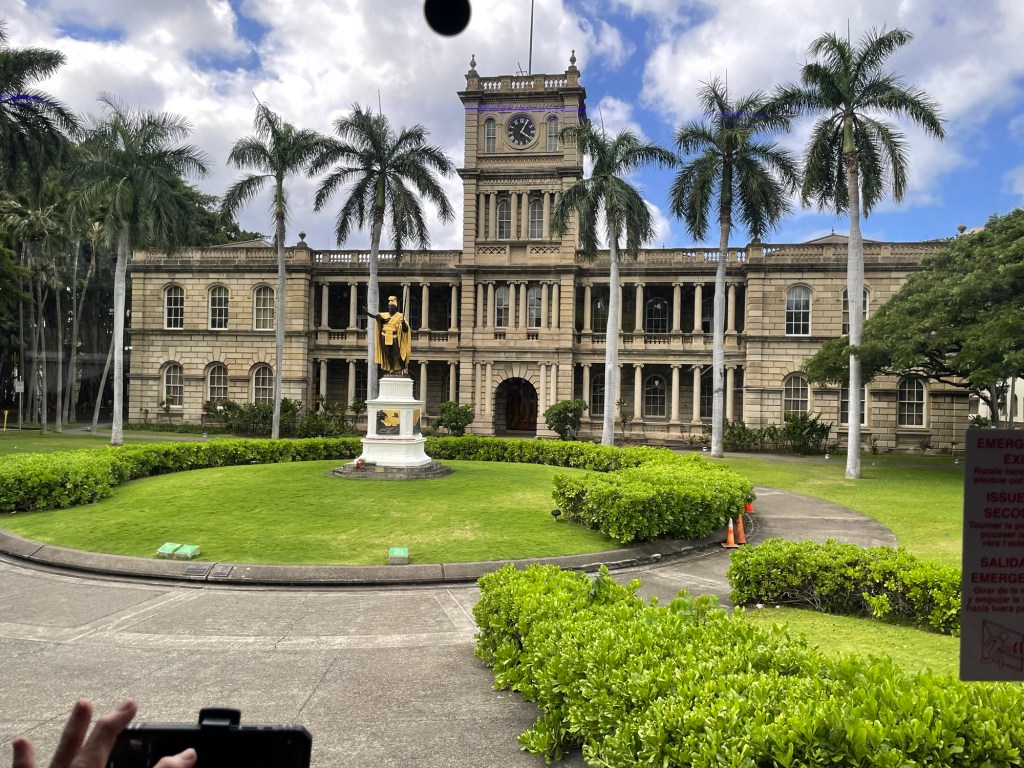
I would say that was the bulk of our my day, honey, but this was just the morning; it literally doesn’t cover half of what I did yesterday. So I still need to get on with that, and you’ll hear from me shortly about it.

 Letters to Rachel
2 thoughts on “Trying to Keep Up in Oahu”