Dearest Rachel –
After five whole (and two partial, if you count Sunday afternoon and the wee hours of this morning) days at sea, I’m looking forward to getting back onto dry land. I realize that the term ‘dry’ is a relative term, given that the morning is expected to be rainy –maybe it could be better stated as ‘solid ground’?
In fact, we got within the 12-mile boundary of Hawai’i before dinner last night – one of the couples at dinner was mildly upset that, because of this, they had to shut down the casino early – in hopes of airlifting the passenger experiencing medical distress into town, where they could receive more thorough care, but between the rain and fog, the Coast Guard decided against sending a helicopter. I realize I’ve no right to know someone else’s story, but I certainly hope this situation turns out well.
In any event, I find myself unable to stay asleep for as long as I would like to be this morning, finally acquiescing to wakefulness by four a.m. Well, it is already eight in the morning back home, although I really should have that put behind me by now. I’m starting to doubt if I’ll have the stamina to go out and wander amid the nightlife by the time we get to Honolulu and put in there overnight.
At least it gives me time to clean up and finish assembling myself for the day; after all, I have to report to the theater for today’s excursion by a quarter to eight, and there are actually things that I didn’t assemble yesterday afternoon to bring with me:
One thing in particular, however, continues to elude me; I could have sworn I packed the portable iPhone charger for this trip, and while I don’t use it much in my daily life, it bothers me that I can’t seem to find it now. Well, if I can’t find it, there’s nothing to be done about it, I suppose. I actually have plans to pick up another piece of equipment while we’re still in the States; maybe this will have to go on my shopping list as well – assuming I have the time. I mean, this is going to be a seven-hour tour, with a lot of stops along the way.

Our guide is a kama’aina – which is the native term for a local (which, now that I think of it, is a bit obvious; you wouldn’t want a tourist leading a bunch of tourists, now, would you? It’d be like that old proverb about blind guides). However, he’s clearly not a native, having grown up in Oregon. In fact, he admits that he’s only lived in Hawaii for the past three years; however, in a previous career in wood product sales, Hawaii was part of his territory, so he has familiarity with the area going back more than just those three years of residency. He claims that his hometown has more rainy days than Hilo, statistically speaking, “because most of the rain here falls at night.” He acknowledges that, when it does rain here, it comes down in torrents, but the steady noise makes for great sleeping weather. It also doesn’t soak into the ground so much as it flow straight toward the ocean, creating dozens of intermittent waterfalls throughout the area.
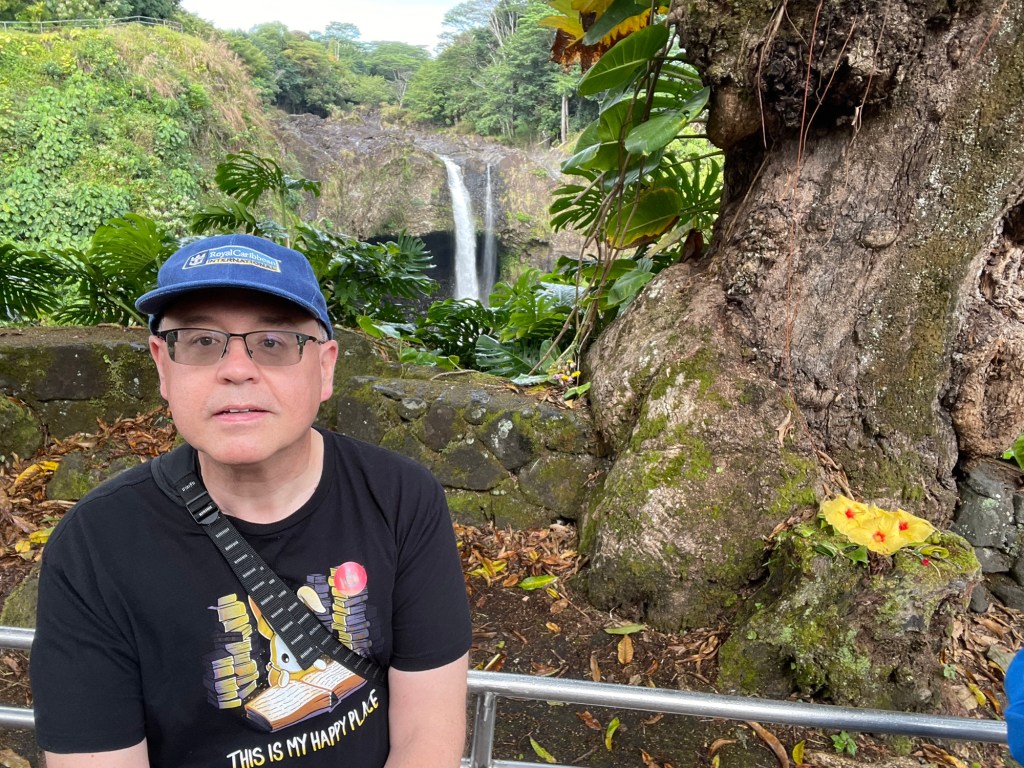
While our first stop, the Rainbow Falls at Wailuku River State Park, isn’t one of these intermittent waterfalls, it is a relative trickle in comparison to phone footage his co-pilot shows us from a few days previous, displaying a flood of murky brown water cascading over the precipice. What we’re seeing today is cleaner, but considerably tamer. And neither day seems to be producing rainbows; an overcast day tends to preclude that, even as the older footage clearly kicks up a greater amount of spray.
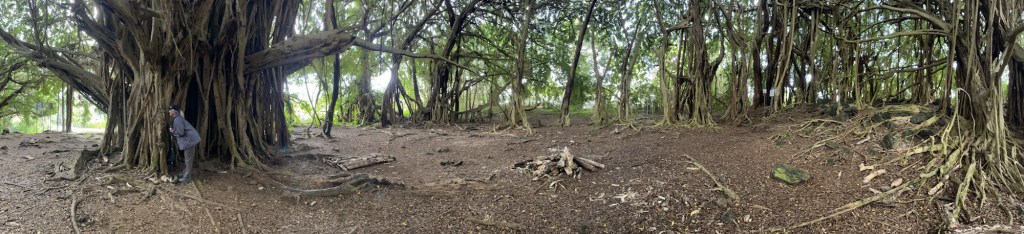
On this, the windward side of the island, it’s essentially a rainforest that we’re driving through upon leaving the community of Hilo. However, as we head up – and I mean that in both senses of the word that you might imagine; we’re both driving north (which is customarily considered ‘up’ on a map) and ascending along the side of one or another of the volcanos that constitute the Big Island – the scenery changes. Oh, there’s still plenty of plant life, but it’s less of a jungle and more a series of orchards, with fields of grass in between them; grass so deep that herds of cattle can (and do) hide within them – at least, until such time as they can eat their way through the grass and having done so, move on to greener pastures.
Much of this change in flora is due to our increasing elevation; by the time we stop for a coffee break, we’re 1,300 feet above sea level.
The cattle here, by the way, is for beef as opposed to dairy – the climate has proven to be unsuitable for daily cows, which (among other things) require almost industrial-sized milking barns, which the uneven terrain precludes – but they get shipped to the mainland for processing; apparently, the FDA doesn’t allow any processing plant within 50 miles of water, due to the possibility of contamination. Apart from the Big Island, there’s nowhere in Hawaii that’s that far from the ocean; and the tiny area here that might qualify is probably right where the volcanos are. You’d get your beef cooked almost instantly – to a crisp – but that’s about it.
***
It’s impressive how much space there is here on the Big Island. Our next destination, Waipo’i Valley – in which King Kamehameha spent his formative years, hiding from other chieftains concerned and envious that a prophecy claimed he would eventually rule all Hawai’i, and training to one day do battle against them – is a good forty miles north of Hilo, and an hour by van (there seems to be no place for the huge coach-style buses that I usually associate with shore excursions).

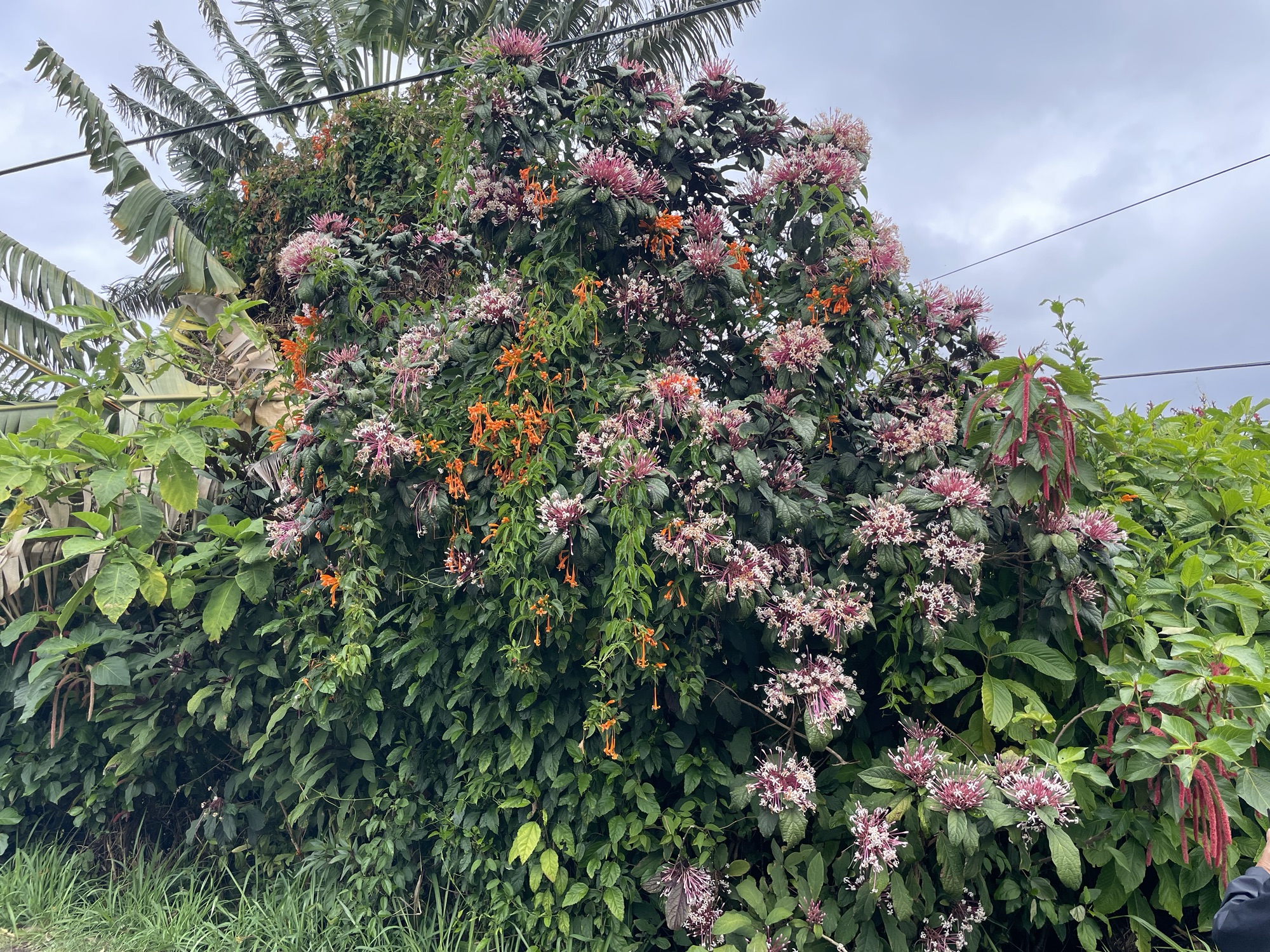
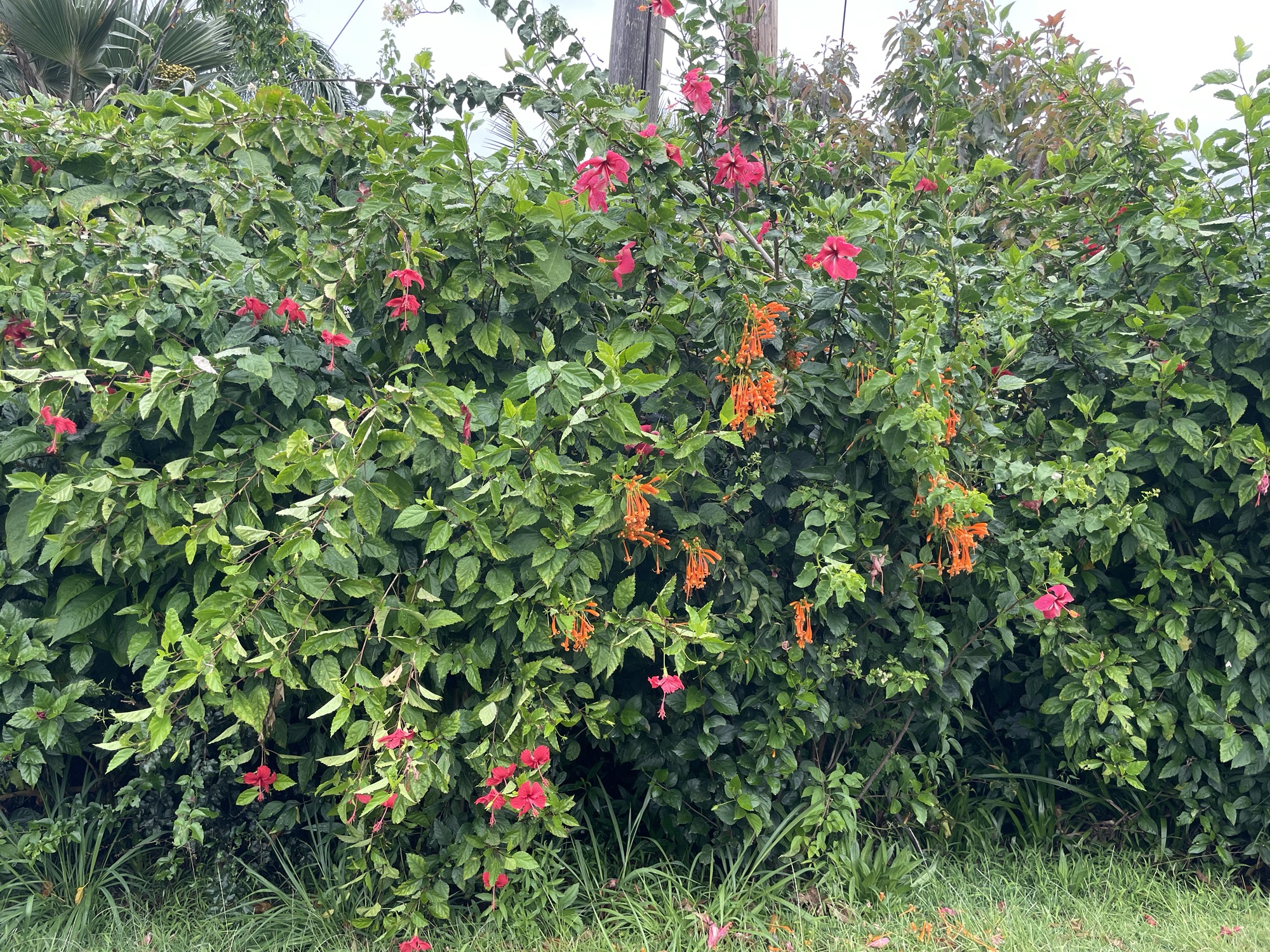
Meanwhile the roads are lined with all manner of lush flora, including these flowering plants at the head of the trail leading into Waipo’i Valley:


Our next stop, Laupahoehoe, is described by our guide, as the side of a tragedy turned into a public park; when the great tsunami of 1946 hit Hilo, the school here at Laupahoehoe was almost completely demolished, taking a number of children and teachers with it (although not as many as could have been, had the school day started at the time). At least one teacher survived by clinging onto a door of the school and drifting through the ocean for several days before being rescued by someone whom she later married – so at least some good came of it.
Our final scenic visit is to ’Akaka Falls State Park:


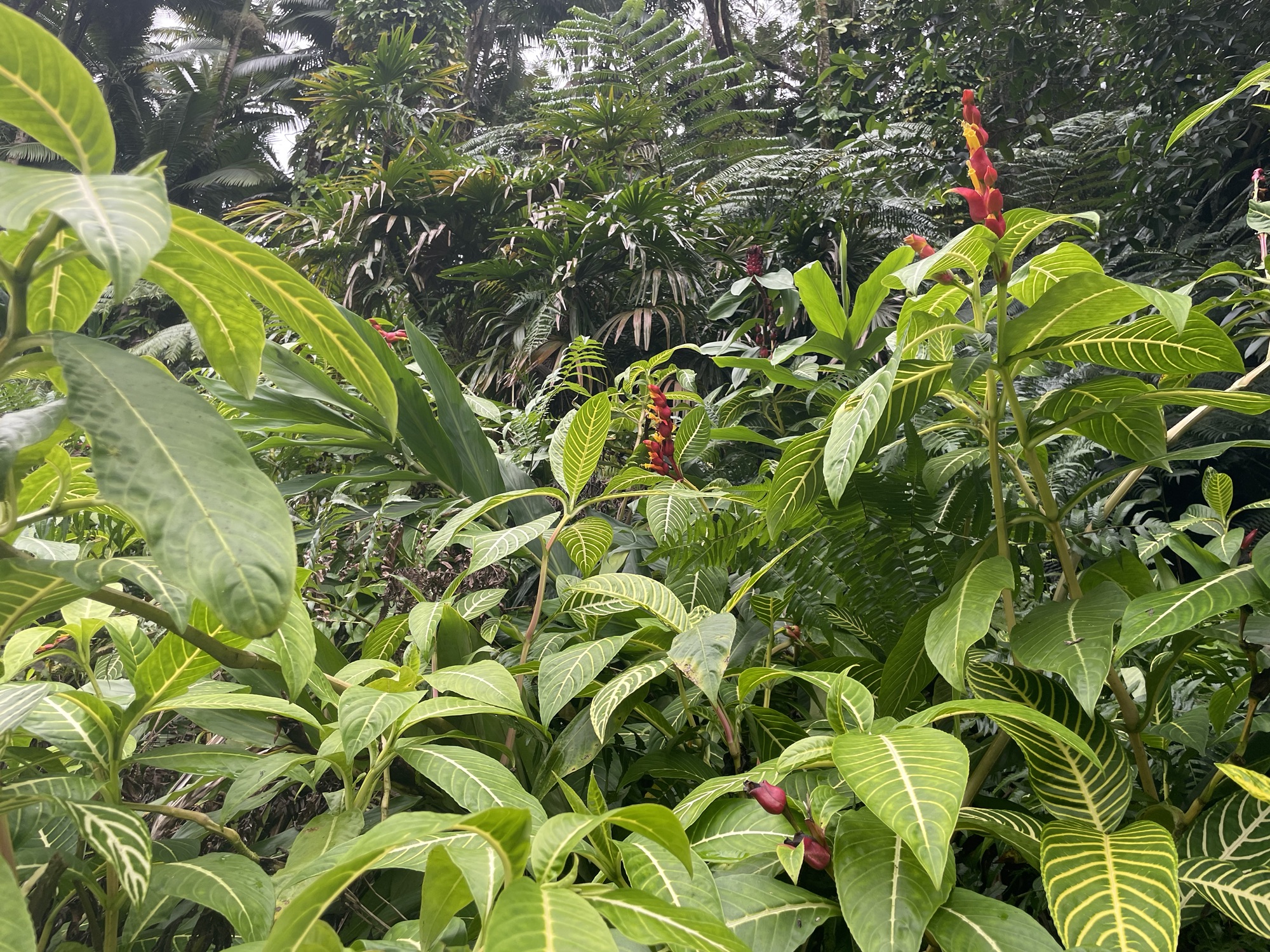


As we walk the trail to the falls, our guide describes various flora to us; having been in the wood and logging industry, this seems to be his main emphasis throughout the course of the tour. And no doubt, there’s an impressive variety of plants, especially flowering ones, to see and understand. You would be particularly impressed with the various different breeds of ginger that grow wild throughout the island; as Victor points out, we only get to see the roots on the mainland, but there’s so much more to the plant than that.
Unfortunately, I don’t seem to be the best listener, and by the time I try to film myself reiterating the pearls of knowledge he’s dropping, they roll away from me, and I’m left staring at the camera, wondering if I’ve lost my marbles. So I’m not going to turn that sequence into a video log for now.
On the other hand, our final actual stop is at a hotel at the edge of the community. Banyan Drive, where the three hotels in Hilo are located, is scenic enough, but it’s rather removed from any actual shopping apart from that which you could do at the hotel itself, and why would you do that? So allow me a quick epilogue to the trip before closing today’s stories out.
And as I say, keep an eye on me, honey, and wish me luck. I’m going to need it.

 Letters to Rachel