Dearest Rachel –
“Tomorrow at this time…” Daniel’s voice trails off as we ascend the escalator into Tokyo’s International Port building. He doesn’t need to finish the thought; we both know we’ll be taking this same route through the building thirty or so hours from now, as we prepare to make our way to the airport and home. Like with Kobe, this is a ‘dry run’ for a later walk-through – not like that did us much good back there.
The last day of a trip is always like this; everything is colored by the knowledge that this is the last time you’re going to be doing this. The last time walking through a new (although for once, it’s not new, as we were here a little over two weeks ago), the last time getting on a coach tour, the last time testing the ‘whisper’ headsets to follow along with the guide’s information. Every step, no matter how seemingly trivial, is imbued with that much more weight for being the final such act.
It’s probably why, among other things, we’re not informed about our time of final departure in life; it’s up to us to decide whether or not to make every action count. Although, there’s always the danger of making every move too deliberate if we literally treat it as it might be our last. Too much caution leads to inaction, after all, and you can’t truly enjoy anything, for the fear of losing out.
And with that having been said, let’s get started.
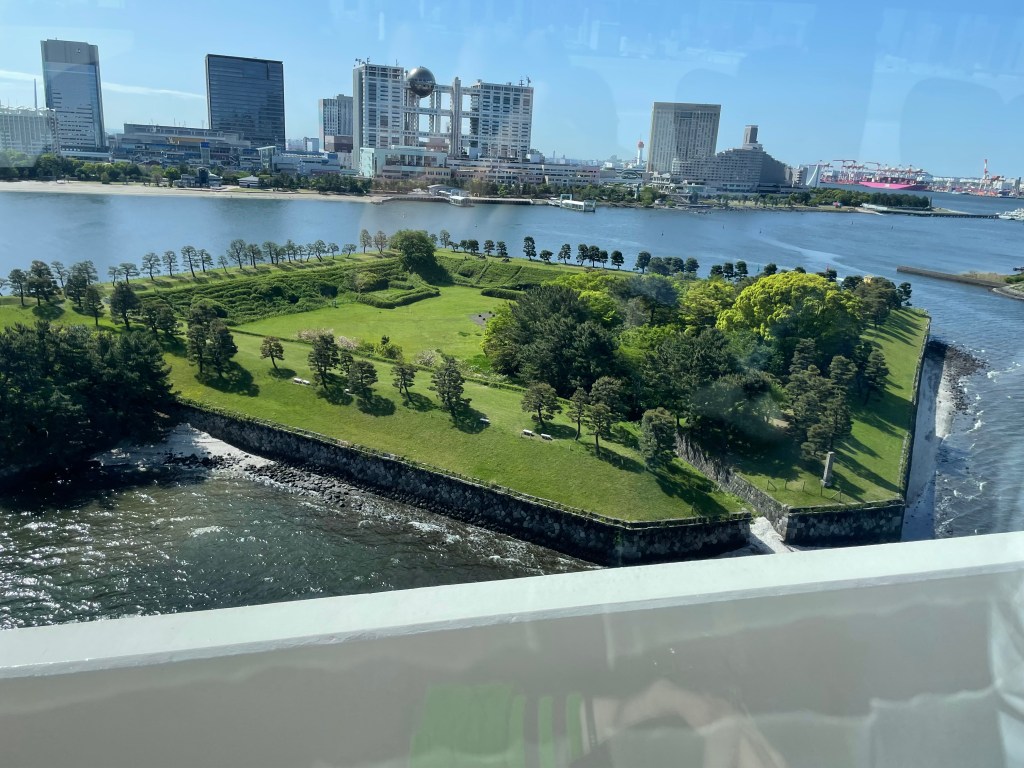
As we pass by the New Otani Hotel (although from the expressway, it’s shrouded by its garden forest), our guide, Hiro-san, informs us of Shouhei Ohtani, the star player for the Los Angeles Angels (indeed, Hiro-san wears an Angel’s cap, in honor of his countryman). It’s not quite the same family name, but now I realize why the hotel name seemed familiar; I’d heard about the baseball player recently, and my mind made a connection that I couldn’t place until now.
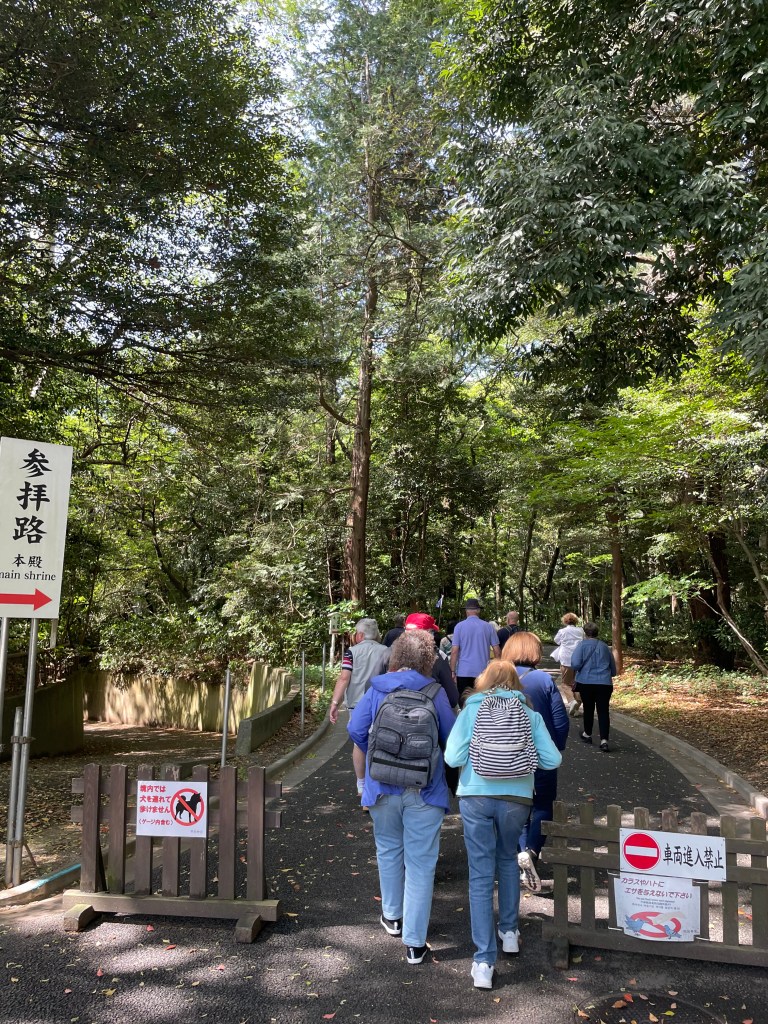
Of course, at the time, he wasn’t considered to be merely a man, but a deity in and of himself, descended from a long line extending from Ameratsu-o-kami, herself.
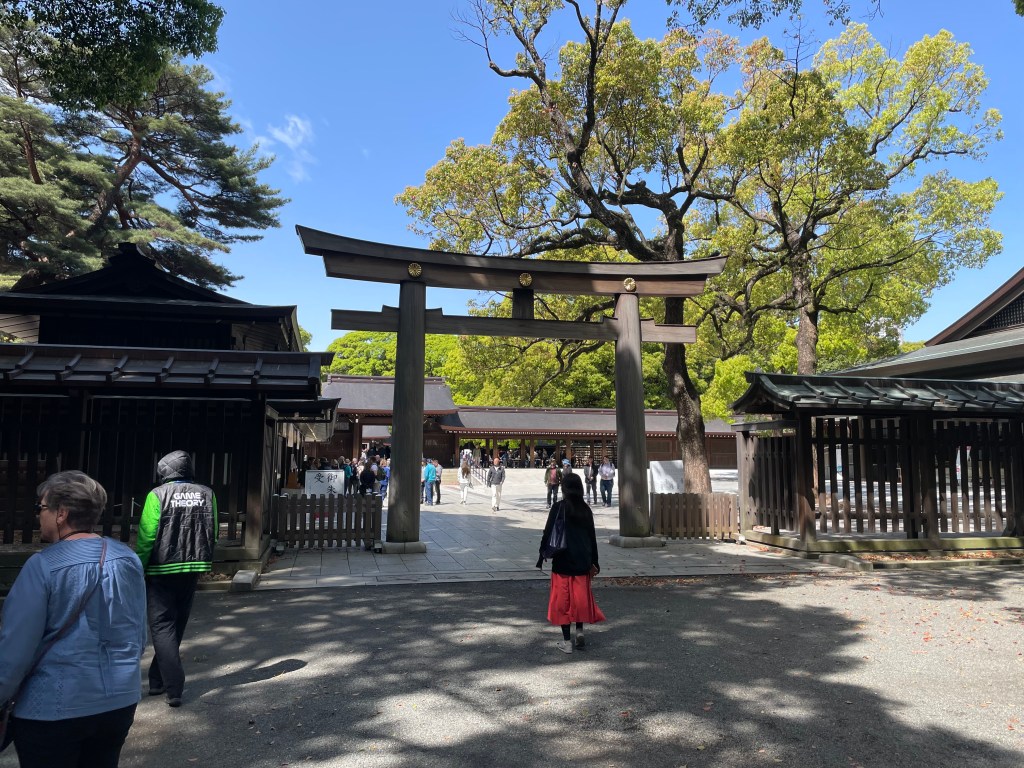
By custom, those who walk through the torii gate are expected to remove their hats and bow before entering. Daniel is reluctant to do so; not unlike his Biblical namesake, he refuses to ‘worship’ the former emperor. I suggest to him that it’s not really a matter of worshipping as such, but rather a form of greeting as we enter ‘his’ home. I don’t think he’s convinced, but I don’t look behind me to check what he does or doesn’t do. Some decisions aren’t mine to impose.
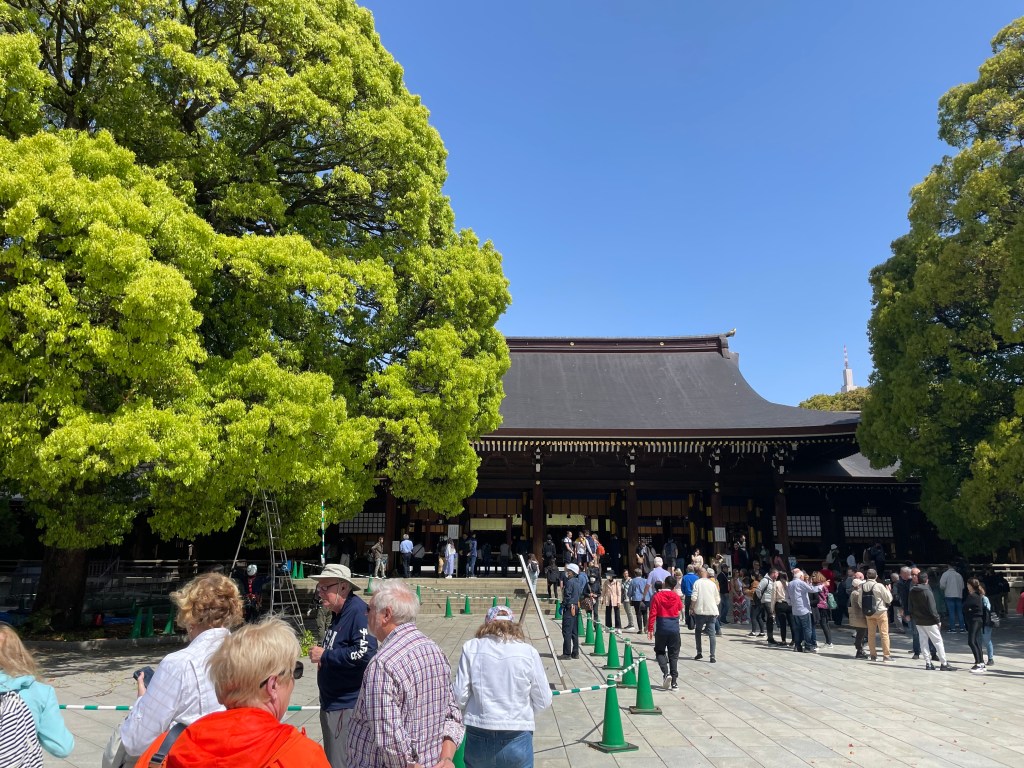
I also don’t insist that Daniel participate when Hiro-san explains how to pray in the Shinto manner: clap twice, bow, and clap again, while thinking silently of your wishes. In fairness, it’s not like Daniel hasn’t seen the ritual performed in various anime. If he finds it offensive to be instructed on how to ‘pray,’ that’s more than fair. Indeed, I stay away from the edge of the main hall as well, and on top of that, I momentarily consider asking Hiro-san whose attention the faithful are trying to obtain with this ritual, but think better of it, and hold my tongue.
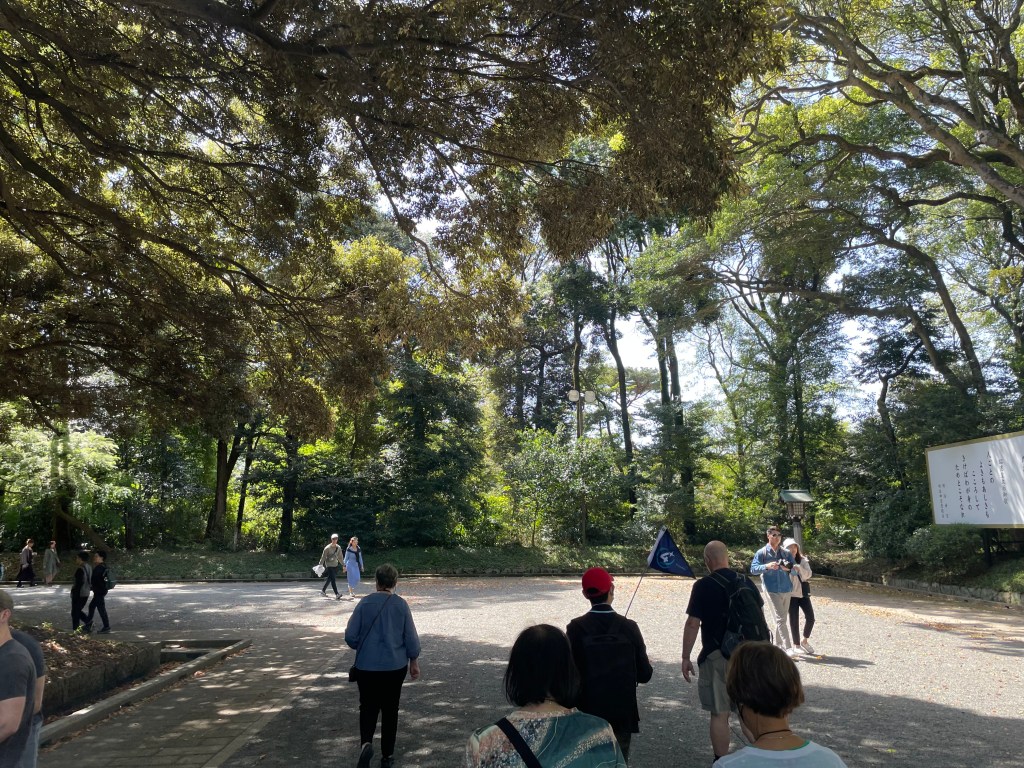
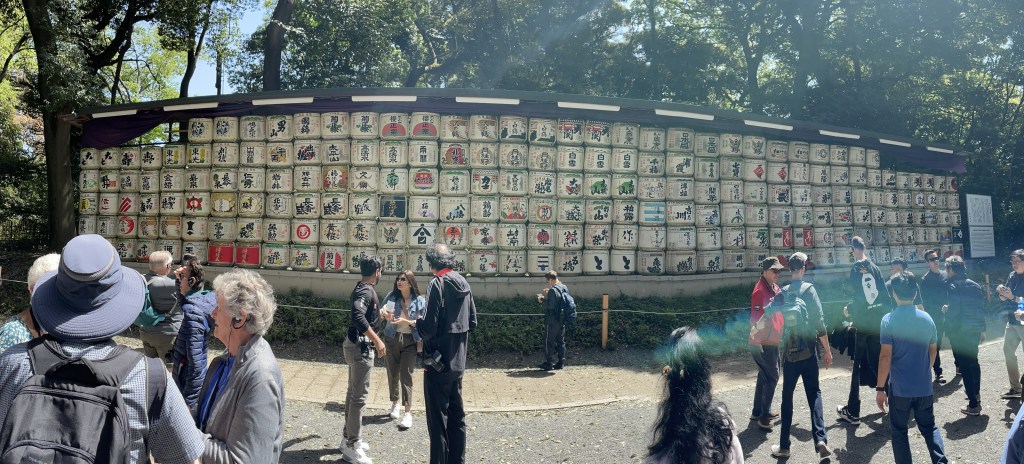
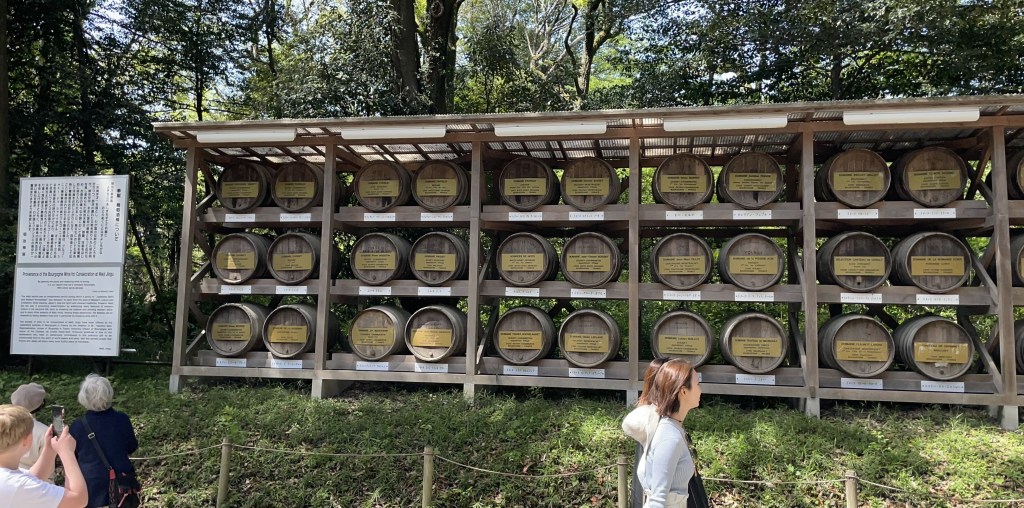
One of the other usual aspects is something they don’t sell here. Most major Shinto shrines sell fortunes to their patrons, with random results ranging from extraordinary to terrible luck. The former are usually brought home and treasured by the buyer, while the latter are tied to a tree within the shrine itself, in hopes of leaving the bad juju behind. Since that latter behavior would be inappropriate to leave at the emperor’s memorial, these fortunes are simply not offered for sale here. Instead, they sell various haikus and other poems written by Emperor Meiji and his wife in their lifetimes; however, as we wouldn’t be able to read them any more than the fortunes, we do not bother looking for them.
Personally, I might have wanted to purchase a fortune at some point. Hiroshima had a vending machine where a tiny robotic miko, or shrine maiden, would toddle over to the pile of fortunes within the machine, pick one up, and toddle over to the drop slot to deliver it to the buyer – honestly, the sight of it might well have been worth the price alone. But we were in a hurry to find an okonomiyaki place, and Daniel has been a bit of a morality chain on my more immersive (and on occasion, baser) instincts, so I couldn’t bring myself to go around him. Yes, he’s keeping me in line almost as much – if not more – than I am him.
Along such lines, I have to ask Daniel if he hears anything, because for my part, I am unable to detect any sound of the city around us, which is amazing. But then again, my left ear is mostly plugged up, and has been for several months, so my perspective is admittedly skewed. Still, he acknowledges that the city noise is fairly faint – at least, until we get to the parking lot, where we can hear a train rumbling across its tracks beyond the forest wall.
He also relates to me about overhearing several of our fellow passengers talking about it being the last time to do things here in Tokyo, but what they are going to miss doing seems very strange to both of us: they are looking forward to returning to the ship for their last margarita. Do they not have restaurants at home, where they can get such a beverage? For my part, I am still hoping to drop in on a Yoshinoya or some other cheap fast food restaurant they don’t have back home. That sort of thing makes sense, but a margarita? Really?
Daniel suggests it’s just a more sophisticated take on a traveler who insists on going to a McDonald’s wherever he goes, and I agree that’s a reasonable comparison.
***
It seems that Hiro-san misjudged the timing on our lunch appointment; we were going to go there next, but the reservation isn’t for another hour. So we change our plans, and head to the imperial palace first. At this point, I am realizing we’re duplicating sights; we’ve already been here two weeks ago. Oh well, it’s the last time we’ll be able to do this. Needless to say, though, I don’t take a lot of pictures or notes; most of the information Hiro-san expounds upon is familiar from our last time here.
***
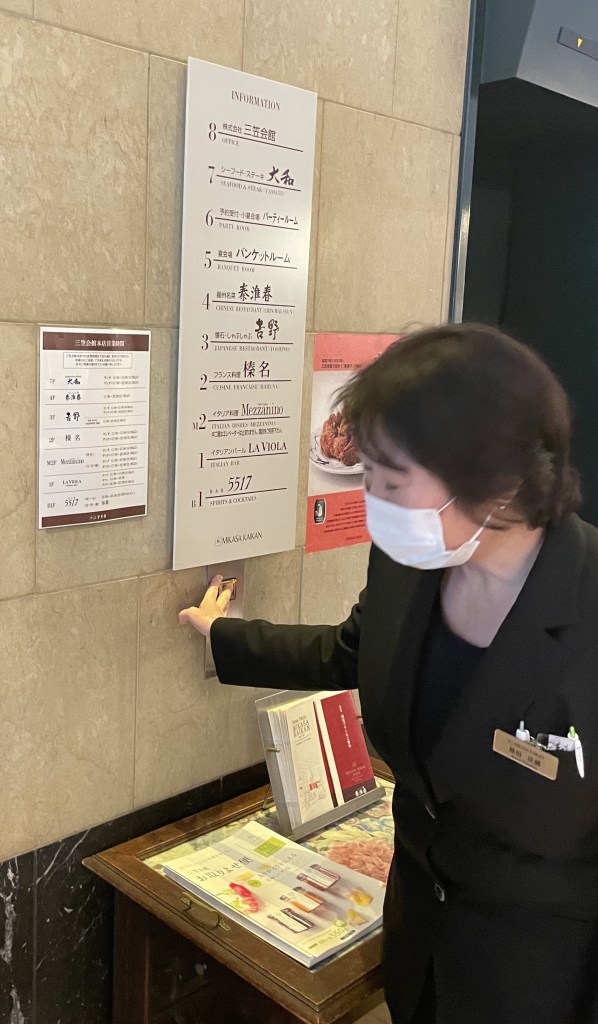
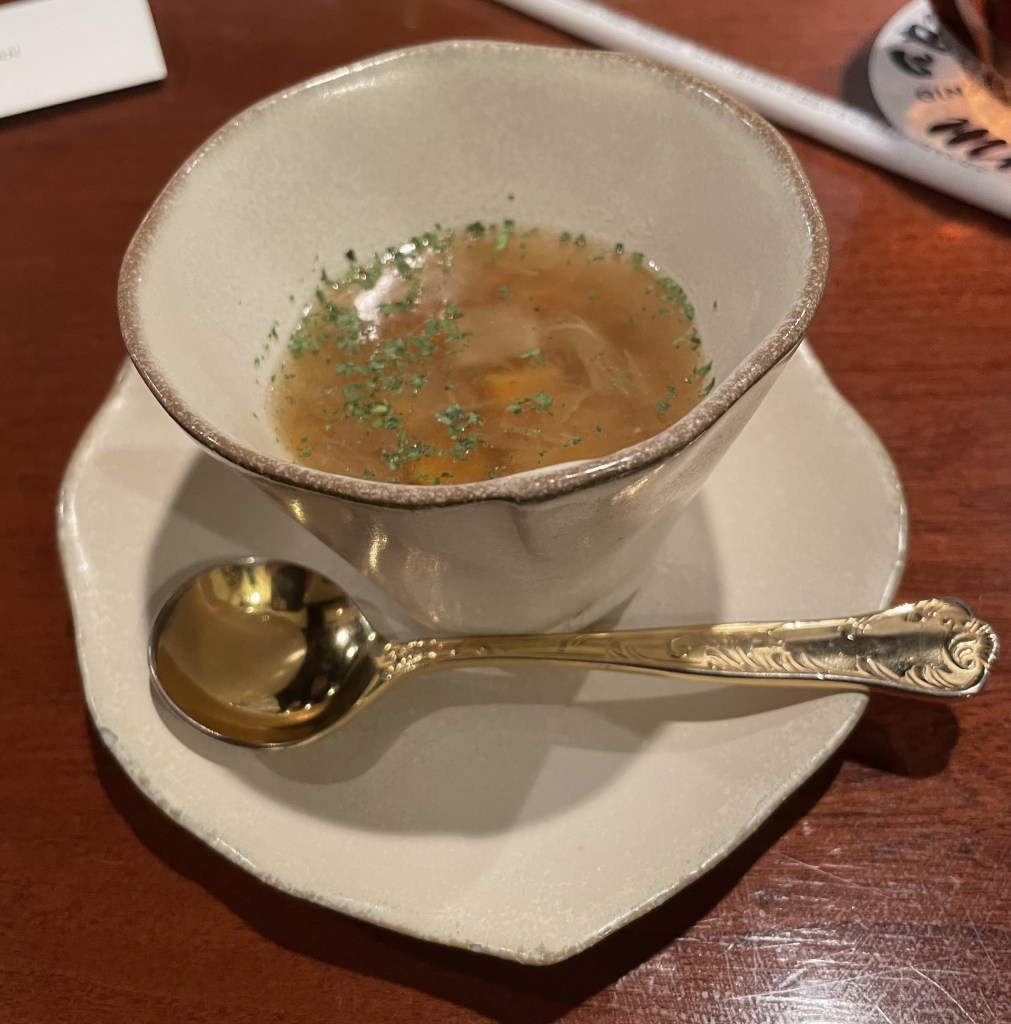
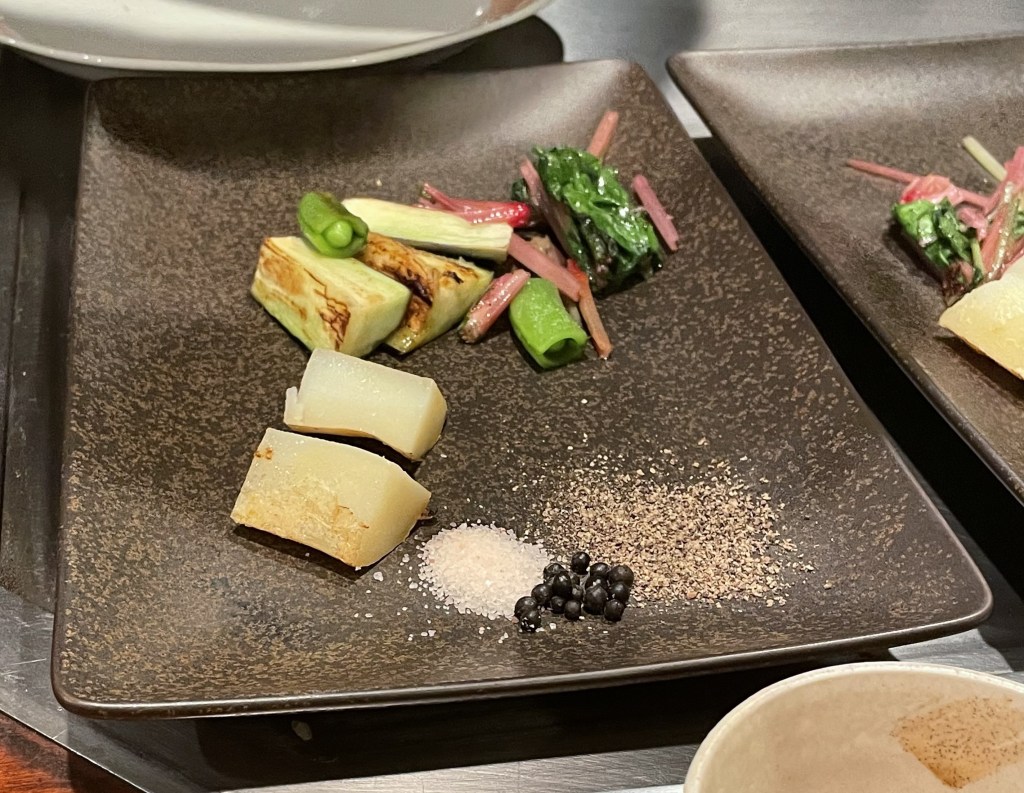
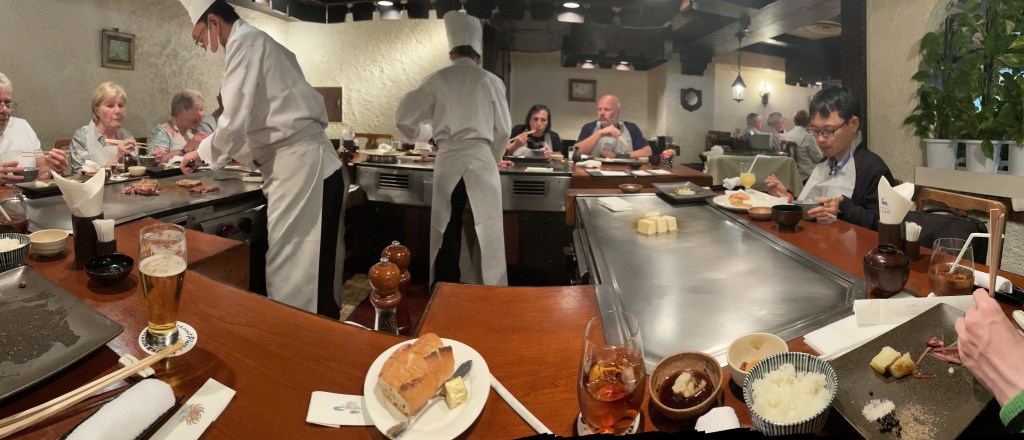
To be honest, it’s not unlike what we’ve come to expect from places like the Kampai (R.I.P.), Rokbonki and even Benihana, although this place is light on the showmanship, letting the food speak for itself.
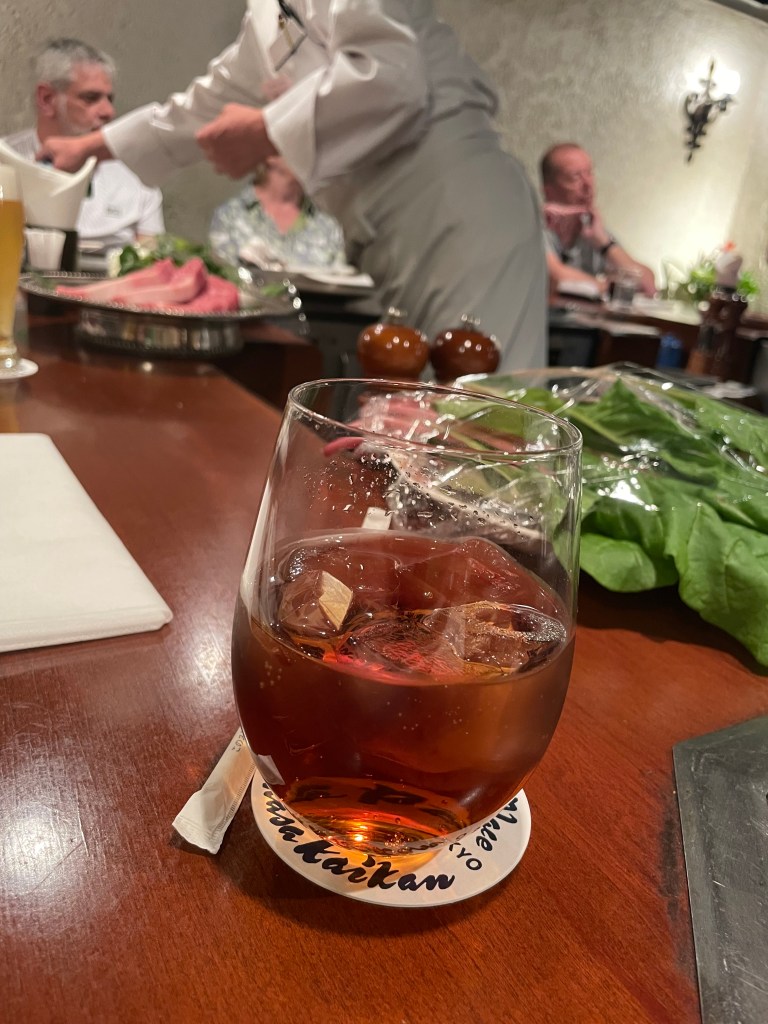
Hiro-san puts his napkin around his neck like a bib – actually, there is a hole in it for that very purpose – and nearly everyone else does likewise. I can’t bring myself to, however, and I’m not sure if Daniel even notices.
***
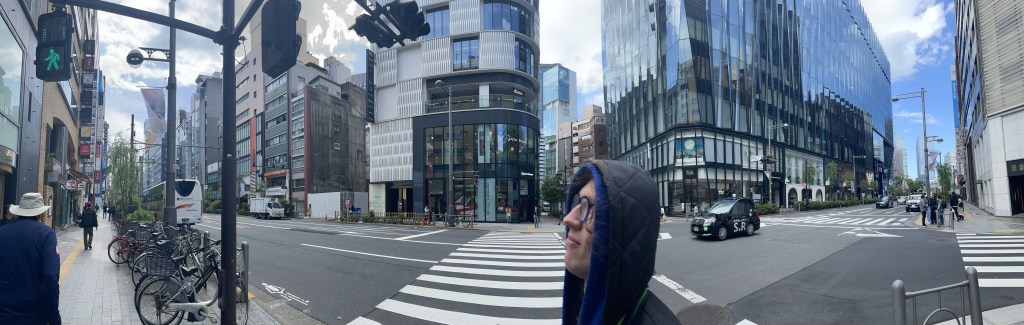
We’ve no time to stay and shop, and that’s probably for the best. None of these brands, trendy as they may be, mean anything to me. Meanwhile, some of the other husbands are likely to be even more grateful for the rush onto the bus than I. At least I could count on you to be no more impressed by brand names and fashionable labels than myself.
Our final stop is in Akasuka, another repeat. We even pass by the place where we had the tea ceremony a couple of weeks ago; I could tell because that hotel and its sign came into view first, but regardless…
Anyway, since we’ve been to Asakusa already, we’ve no taste for another lecture on the syncretism between Shinto and Buddhism here in Japan, so we are allowed to shop, at least for the next 45 – 50 minutes.
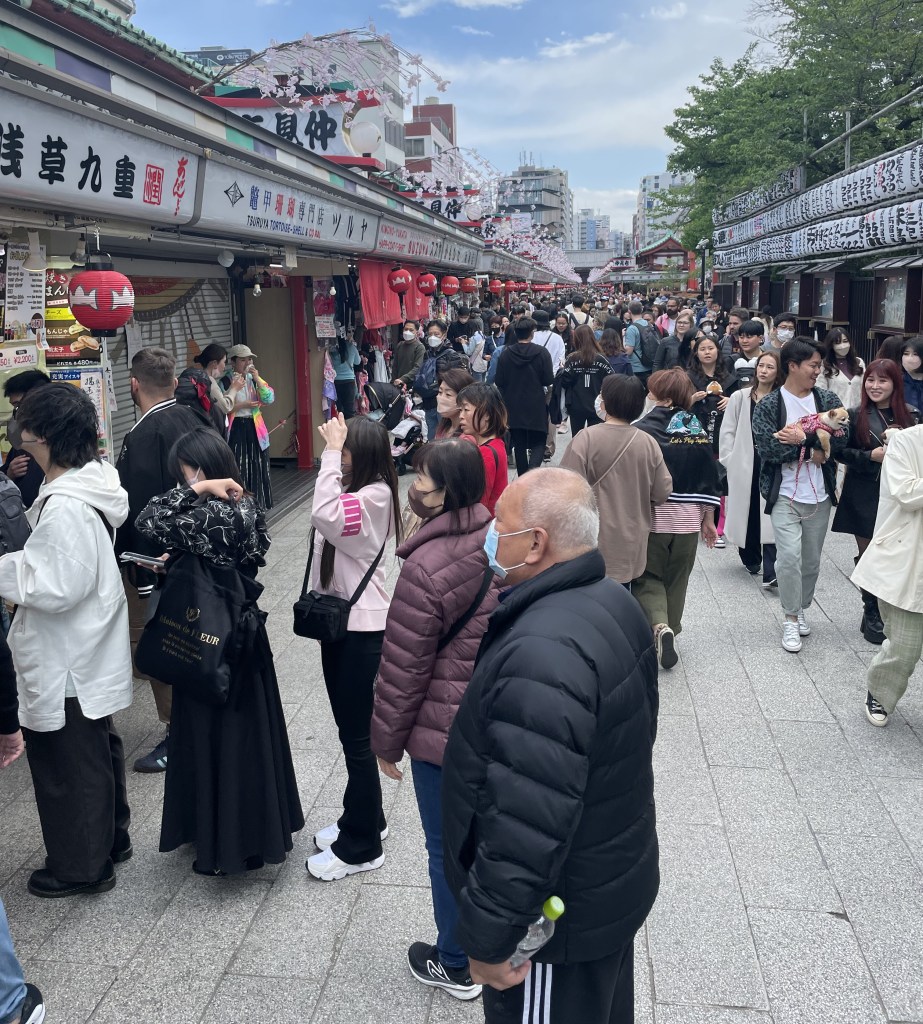
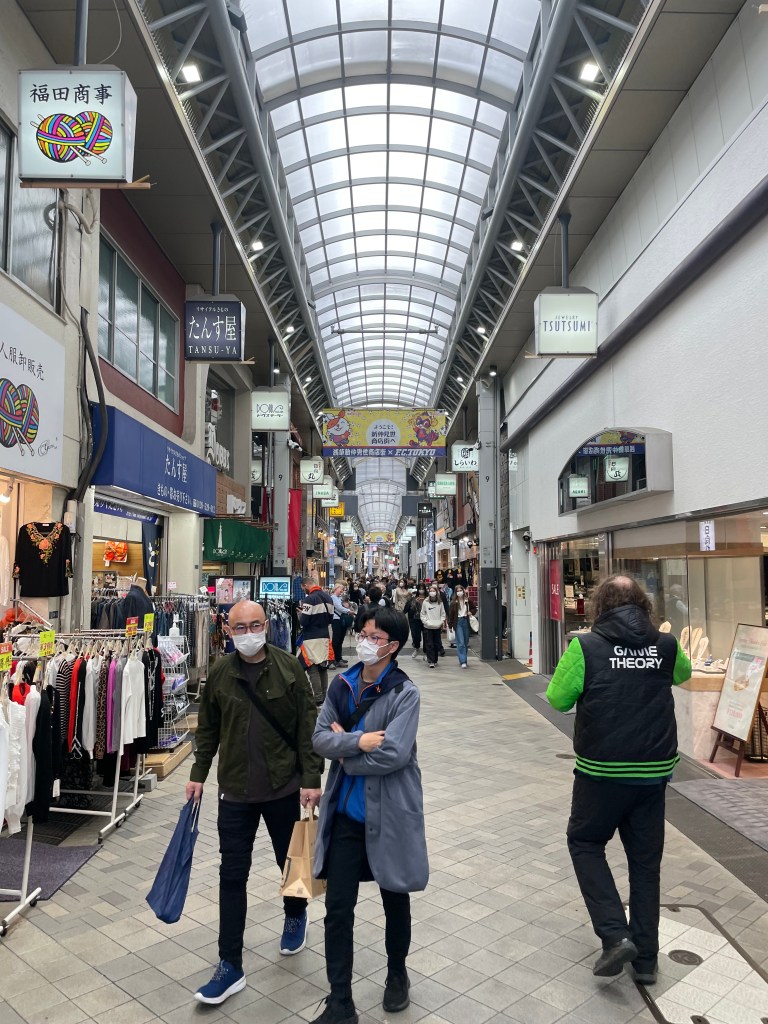
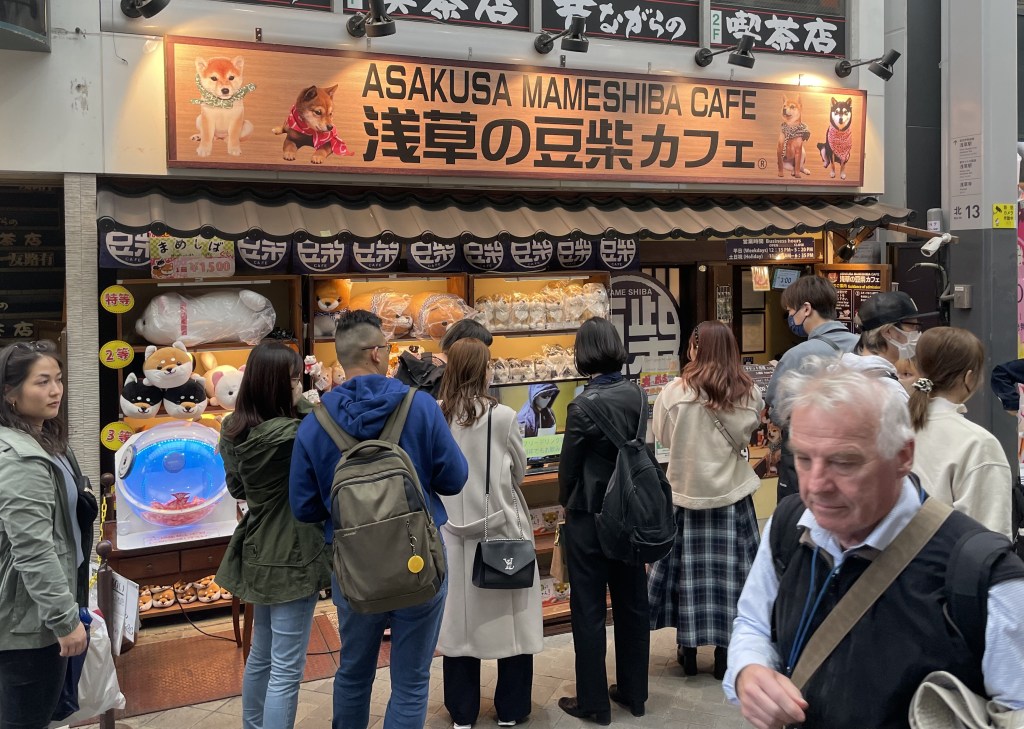
Daniel expresses his preference for being on our own schedule, rather than on a shore excursion. This way, we know our time is limited, and we have to make our choices in a hurry… or else, end up not making them at all, because our time has run out. The way he puts it, “story mode doesn’t do the place justice like sandbox mode.”
And that’s basically what happens to us; with ten minutes to spare, we acknowledge that we’re not going to bother getting anything… or are we? I know that Daniel will object, but I decide to run off and get something after all.
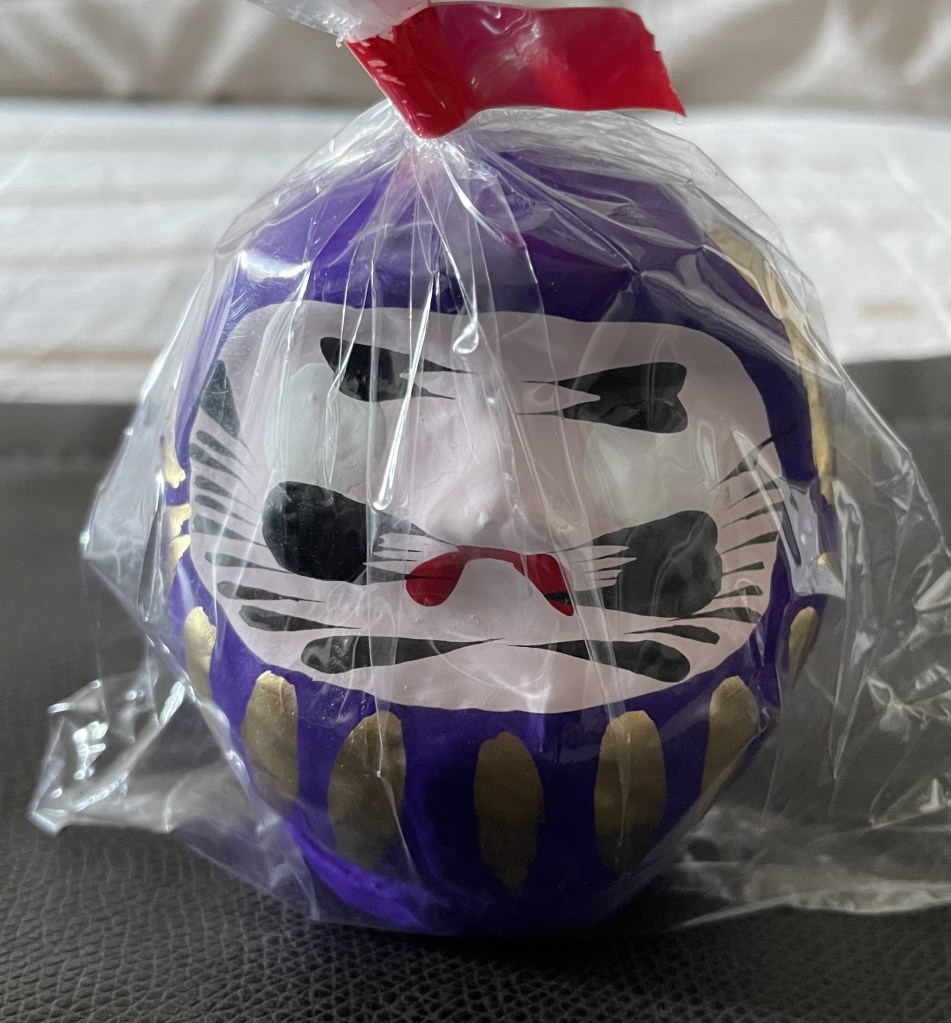
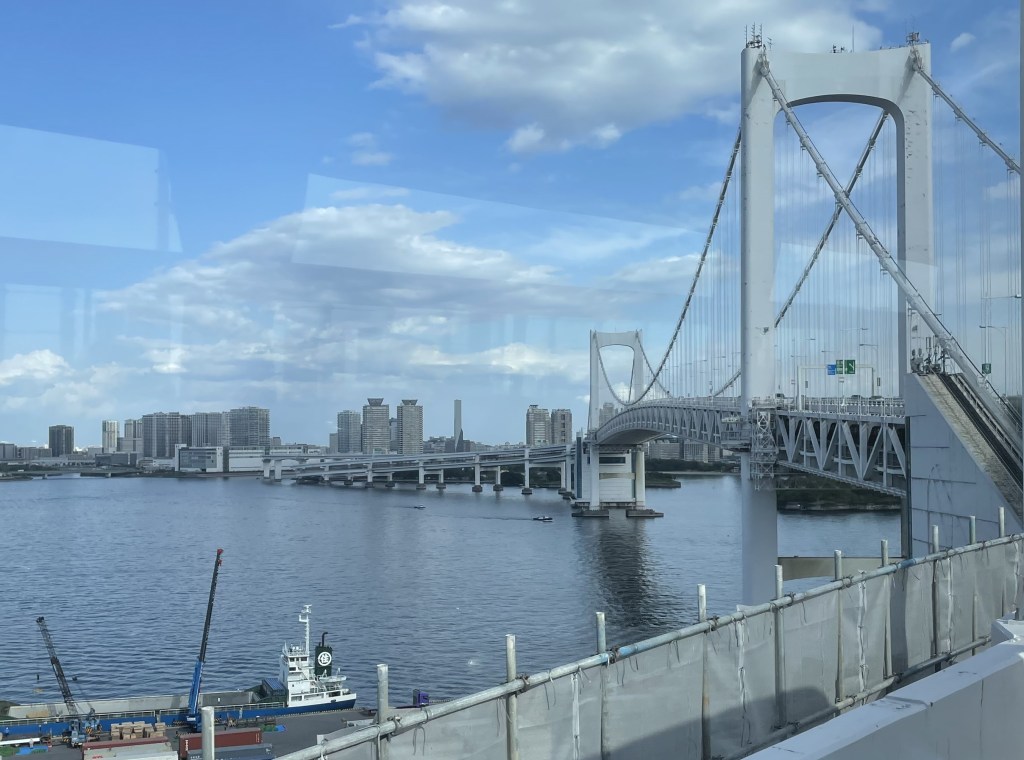
It’s strange to think of the possibility that the next crossing of the Rainbow Bridge for me might very well be the one returning me to you. But I’ll cross that bridge when I come to it.
For now, we have to get on with packing and other preparations for our departure. At least we know what we need to do, and can get on with it to smooth the process in a way we never get to do in life. And with that being said, honey, keep an eye on us, and wish us luck. We’re going to need it.

 Letters to Rachel
5 thoughts on “For the Last Time”