Dearest Rachel –
Eight a.m., and we’re eating breakfast overlooking the enormous (compared to most of our other stops, including Tokyo; the roof is even with the level of the upper-deck cafe) station at the Kobe harbor. We’re going to be here until five in the evening tomorrow.
Well, ‘we’ as in the passengers on the ship. The two of us aren’t staying here at all today, as we’re hopping on the Shinkansen to Kyoto. It’s one of the things I’d made a point of since determining to take Daniel to Japan in the first place. Like I said yesterday, I won’t be able to replicate my experience for him exactly (and considering what went on to cause it, I wouldn’t really want to), but I’d like to think he’s getting a good taste of it already throughout this whole trip.
Really, he has a much deeper familiarity with Japan than I did when I came here for the first time. Between classes in the language, various business establishments right where we live that offer an immersive experience (due to catering to a substantial expatriate population) and a childhood growing up adjacent to otaku culture, he’s known what to expect for a long time. Still, it’s different when you’re here as opposed to dipping your toes in from time to time. Indeed, it’s been a bit much, even for me.

The terminal is actually rather labyrinthine, in terms of making our way out. Tomorrow might yet prove to be a hassle getting to the shuttles, but at least we get practice today.
Once on the bus, I notice the rail line going over us, as if we were sitting under a roller coaster. We’d actually seen the train atop the port terminal during breakfast; I half assumed that there might be a Shinkansen station right here. The fact that we’re on a bus is almost a disappointment. But Yuki-san informs us that Shin-Kobe station is still a twenty minute drive away, adding that we’d best not leave our belongings on the bus when we get off, since we’re not staying put in Kobe… at least, not today.
As part of her educational schpiel, Yuki-san describes the Shinkansen. Built as part of the preparation for Tokyo’s first hosting of the Olympics in 1964, it’s been matched by several European countries – even surpassed in speed by some – but without parallel in terms of volume of traffic (with trains entering and leaving Tokyo every five minutes) and punctuality, only falling behind schedule by six seconds on an average day. The downside of this fact for us is that we have a single minute to get on it when it arrives at Shin-Kobe, and about that same amount of time to disembark at Kyoto. Easy enough for just a couple of people; much more of a challenge for a group of twenty or thirty.
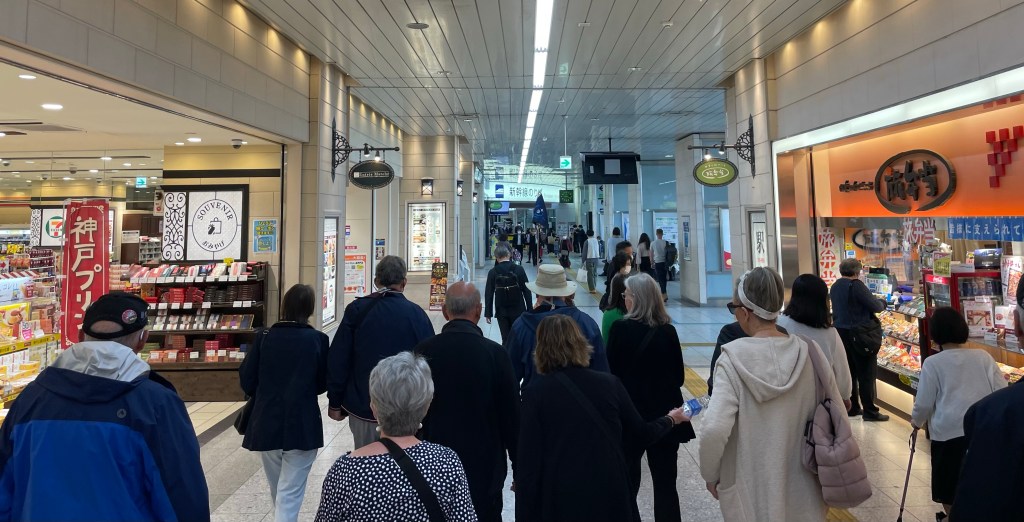

The place is called Shin-Kobe (New Kobe) station, but this does not necessarily mean it is was new since the 1995 earthquake that badly damaged the city and killed several thousand people. The station was heavily damaged, but it was repaired rather than completely rebuilt. So it’s not as new as all that.
For supposedly being in the last car, we seem to be in front in terms of the direction the train is going. However, for the first few minutes, we’re traveling underground, so there isn’t much to see.


You know how we used to joke about Macomb being an island in a sea of corn and other fields, while Chicago and its suburbs were like a continent in comparison, with one town blurring into the next? Well, that’s nothing compared to this megalopolis. From Kobe to Osaka, and from there on to Kyoto, the urban landscape simply bleeds over from one to the next. There’s no telling where one city ends, and the next one begins. Even the residential areas, with houses crowded together as they are, might be neighborhoods within one city or another, or possibly suburbs, but you really can’t tell, and the rare piece of open space is a ‘blink and you’ll miss it’ moment, before being filled with solar panels and the like.
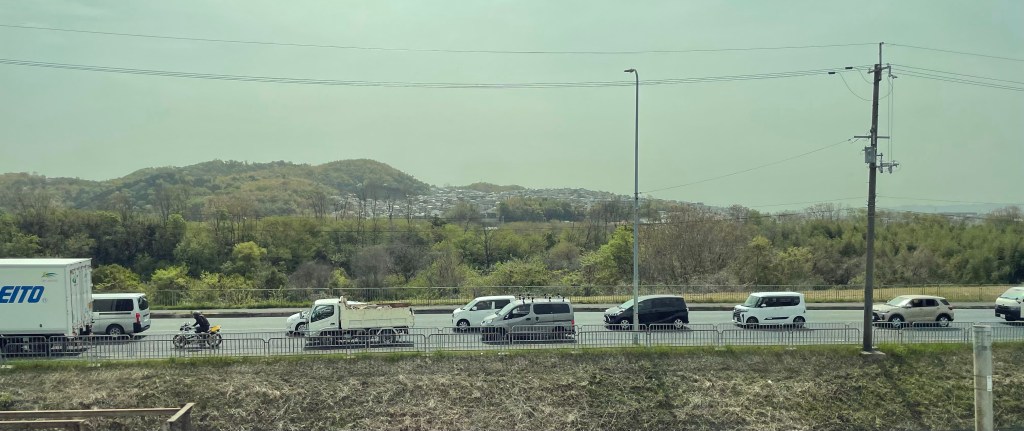
And to think, the largest of these, Osaka, is only third in terms of population; Tokyo is followed by its neighbor Yokohama with regard to the largest cities in Japan. Kobe is further down the line at number eight, and Kyoto is right behind it in ninth place.

Yuki-san herds us chickens through the station, down several escalators, and out to where our new bus is waiting.
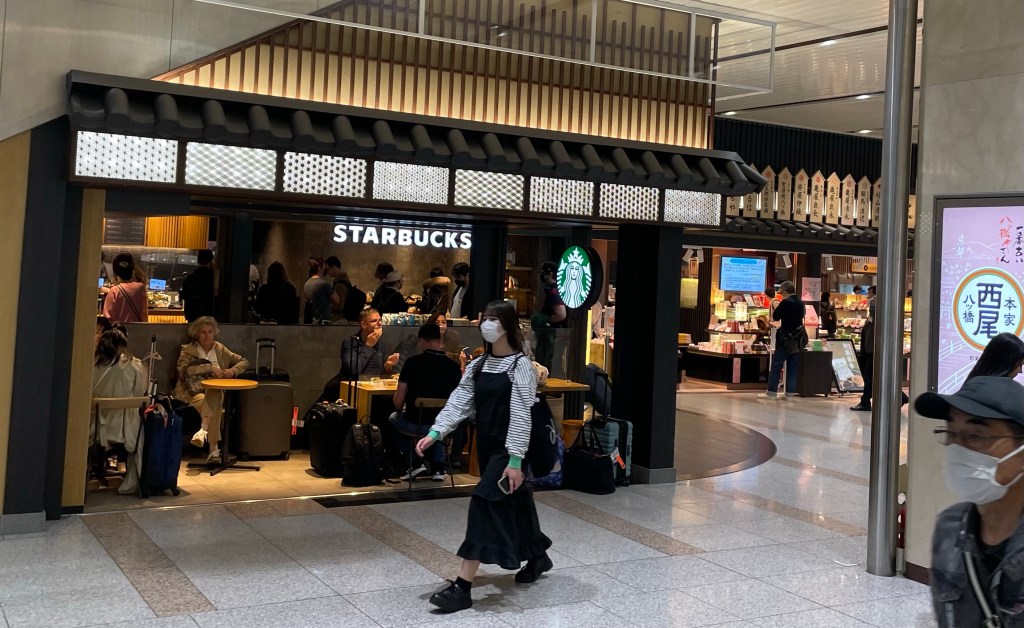
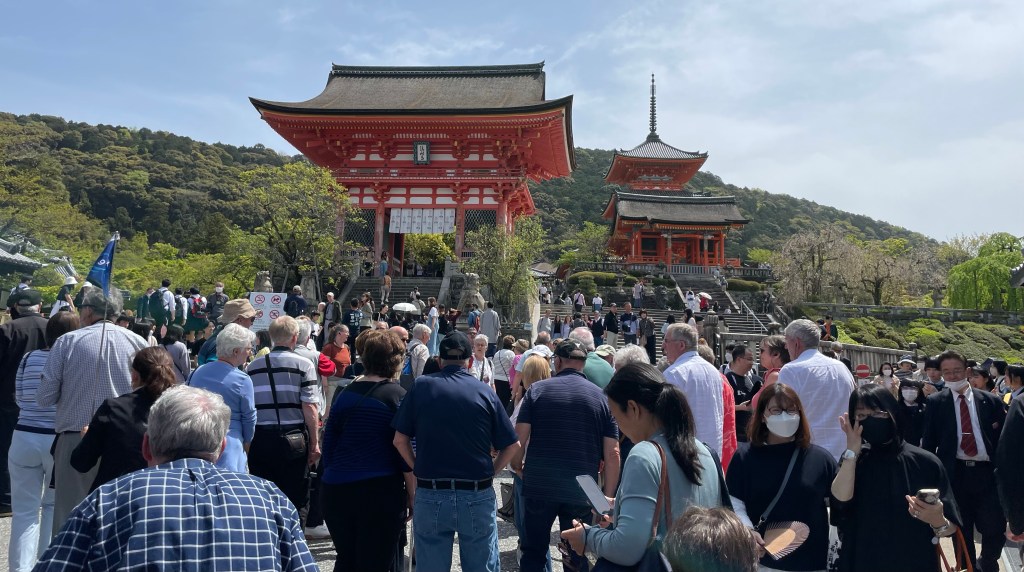
I don’t remember a thing about having busted this place, despite having certain memories about being in Kyoto. To be sure, I was here as part of a business class; we visited certain industrial and corporate facilities, as opposed to the usual tourist sites, so that may be part of it. And there was a day when it rained quite a bit, so many of my classmates stayed in their rooms and drank beer they’d gotten out of a nearby vending machine (a ¥1,000 bill would get one a liter-sized can, as I recall). But I don’t remember certain sights as well as I ought to.

Then again, you left one behind, so…
***

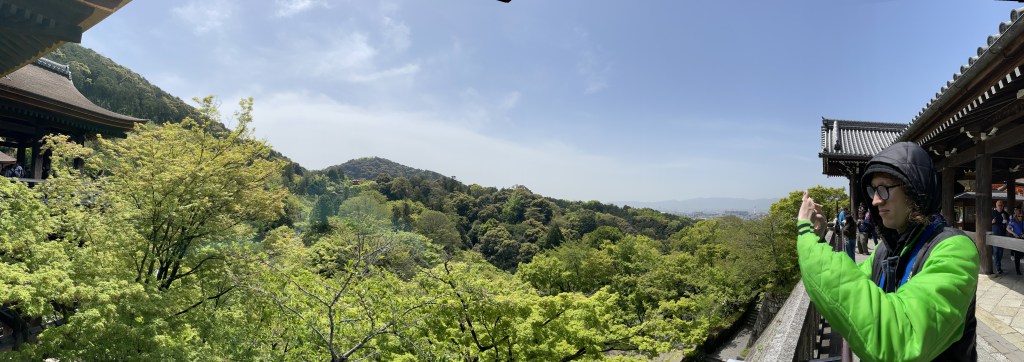
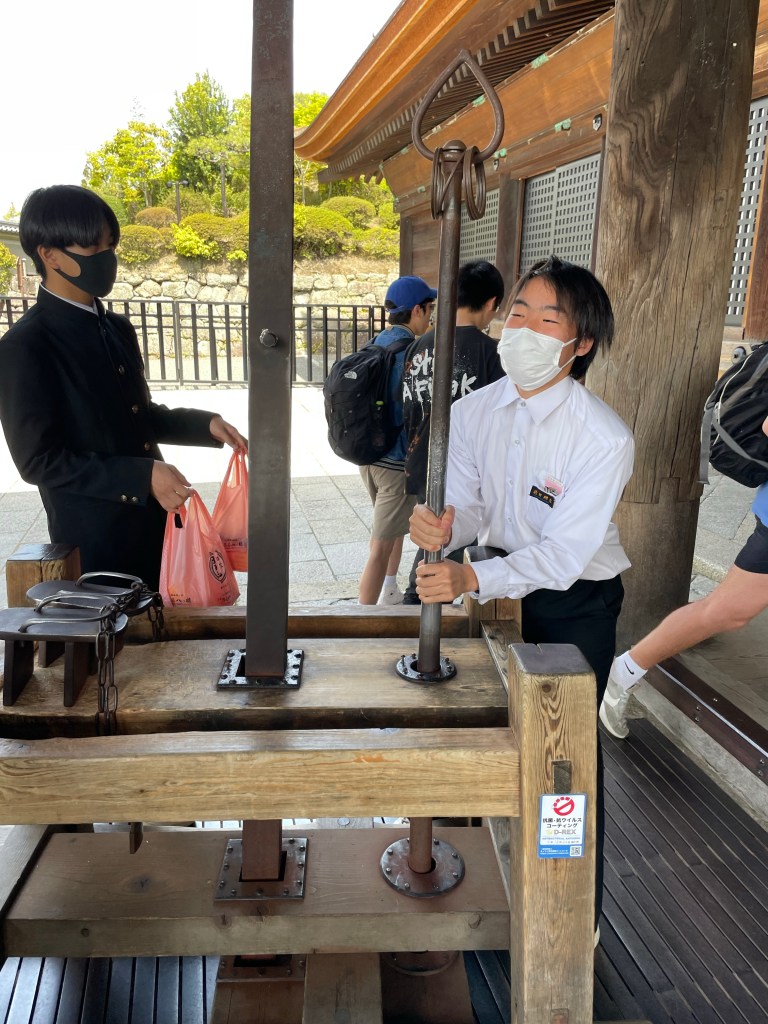
Yuki-san informs us later that being able to lift it and ring the bell at its base can allow one’s dreams to come true. I hope she means wishes; my dreams are weird enough without becoming reality.


We’d actually seen the soda flavor advertised at a shop in Takamatsu but, not seeing a tray of it available, we passed on it at the time. Here, we get a second chance at it.

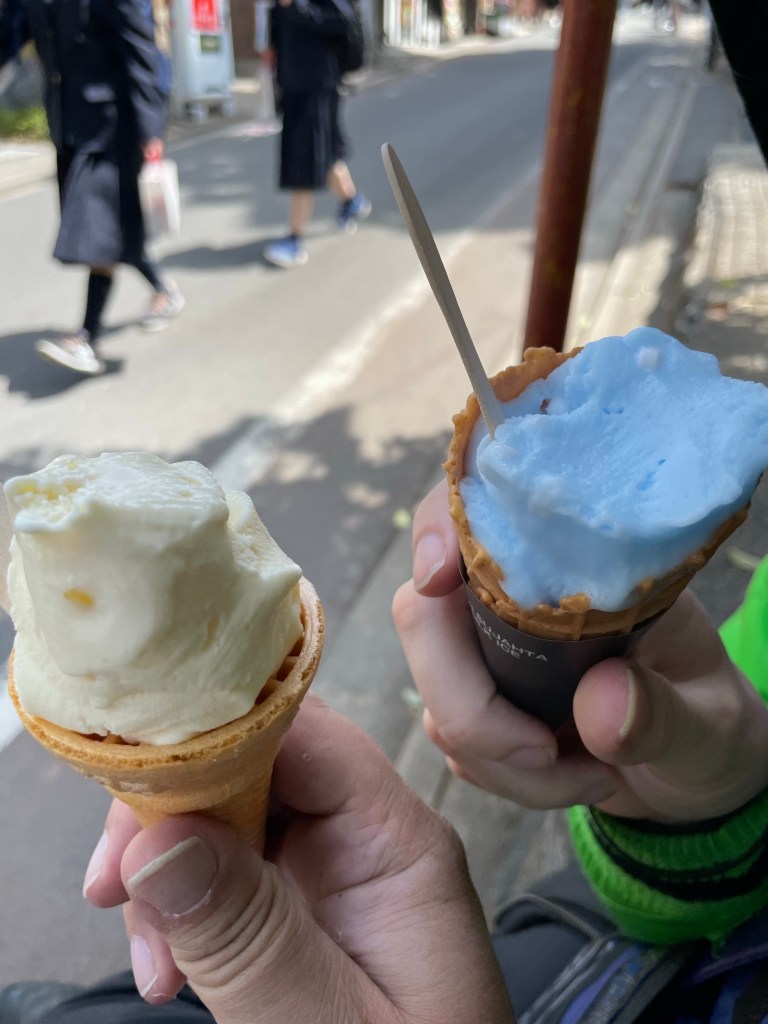
The chestnut flavor is actually much like what I think butter pecan might taste like, if I could have a scoop of it with the nuts removed. It’s buttery, and ever so slightly woody in flavor. It makes me want to find a place selling hot chestnuts or chestnut manju buns, should the opportunity arise again. As for the soda flavor, it’s sour and fruity, kind of like Smarties candy. In fact, it has bits of candy mixed in it. It might be comparable to BR’s Dacquiri Ice from back home, but that may also be a bit of a reach on my part.

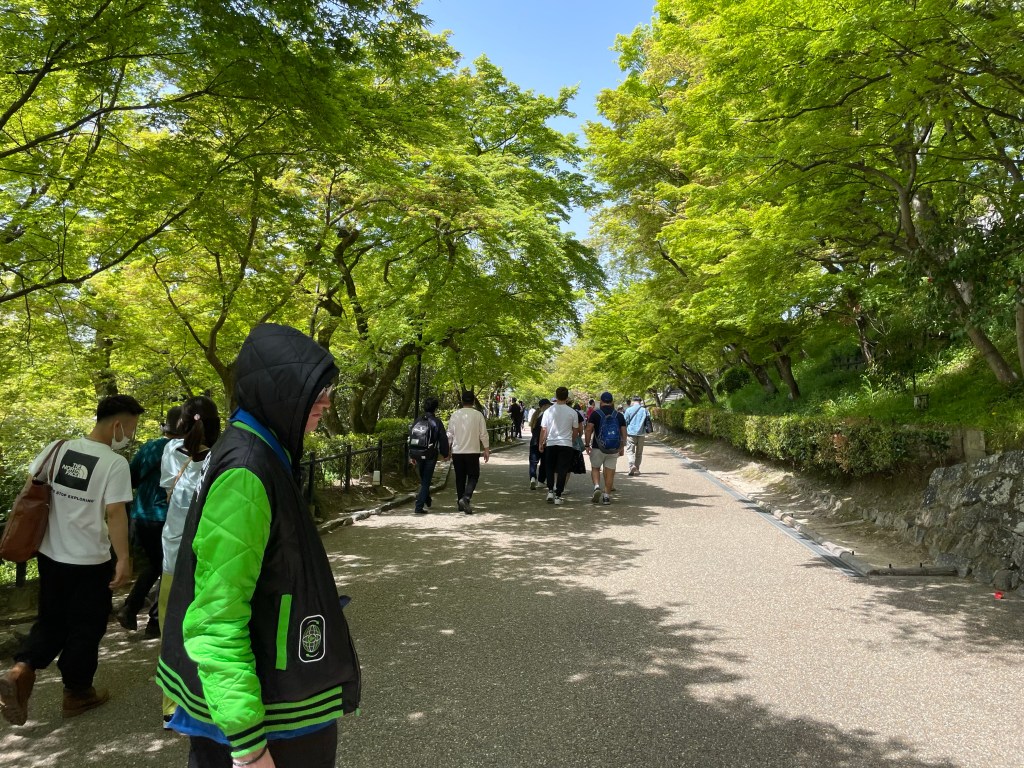
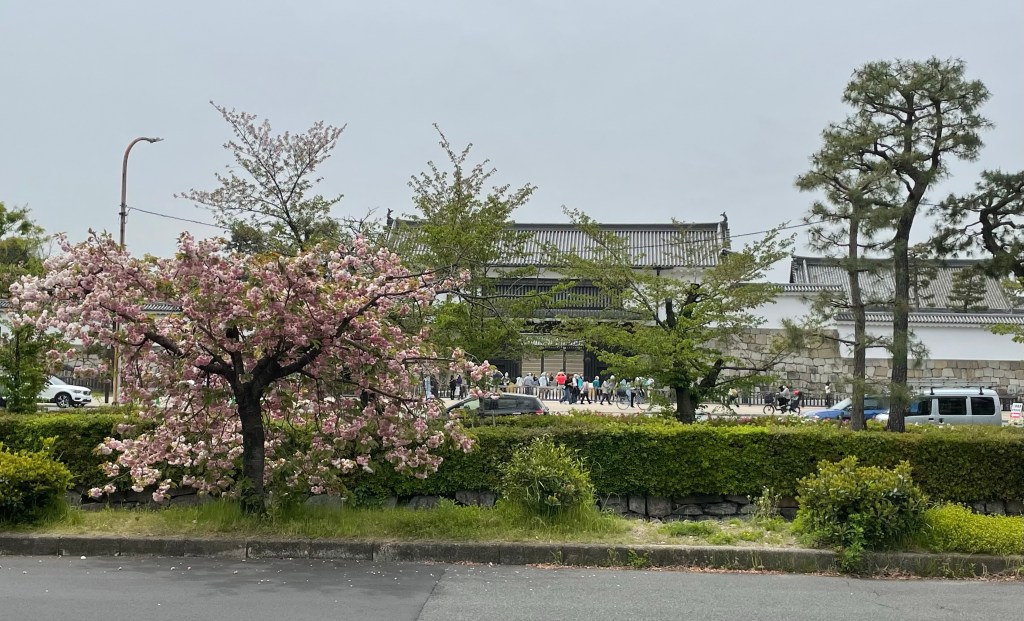
And so we spend most of our free time at the temple thus, crowd watching.
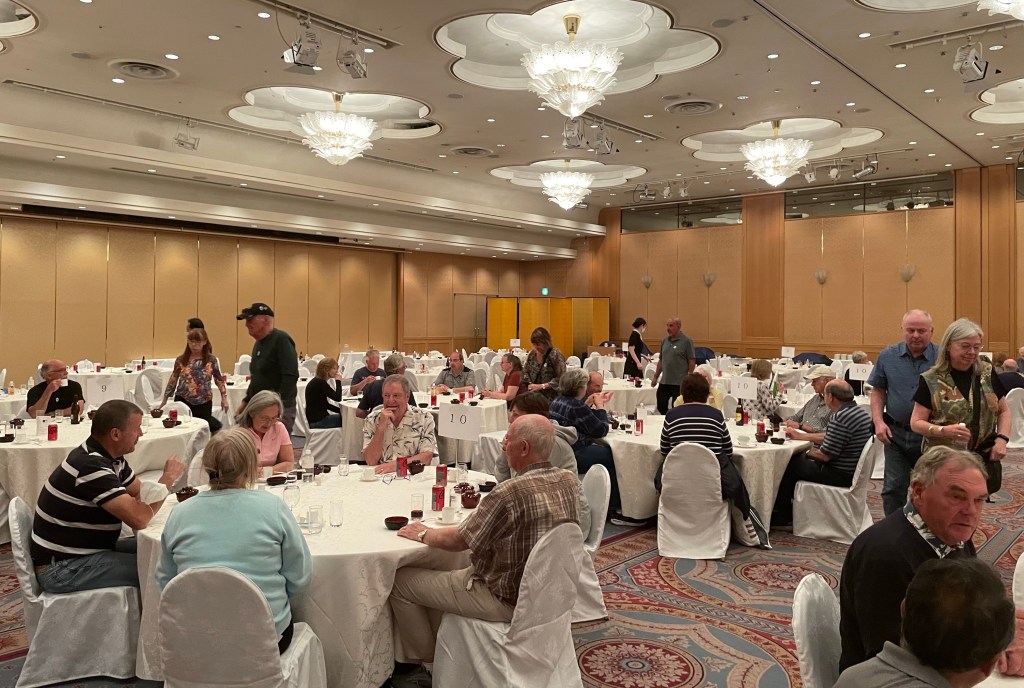
I will say that the lunch, however, was different from other Japanese fare we’ve been served. This was more Western-style, with a soup course, a meat-and-veg course (teriyaki chicken) and a dessert of a cube of gelatin and a matcha sweet. The truly interesting thing was the conversation between myself and the two other couples at our table; one from Edmonton and the other from Perth. Both of them were on their first cruise since the pandemic, but were veterans on the cruise line (unlike us). It seems I shouldn’t have felt compelled to skip out on White Night last night, among other things. Oh, well…

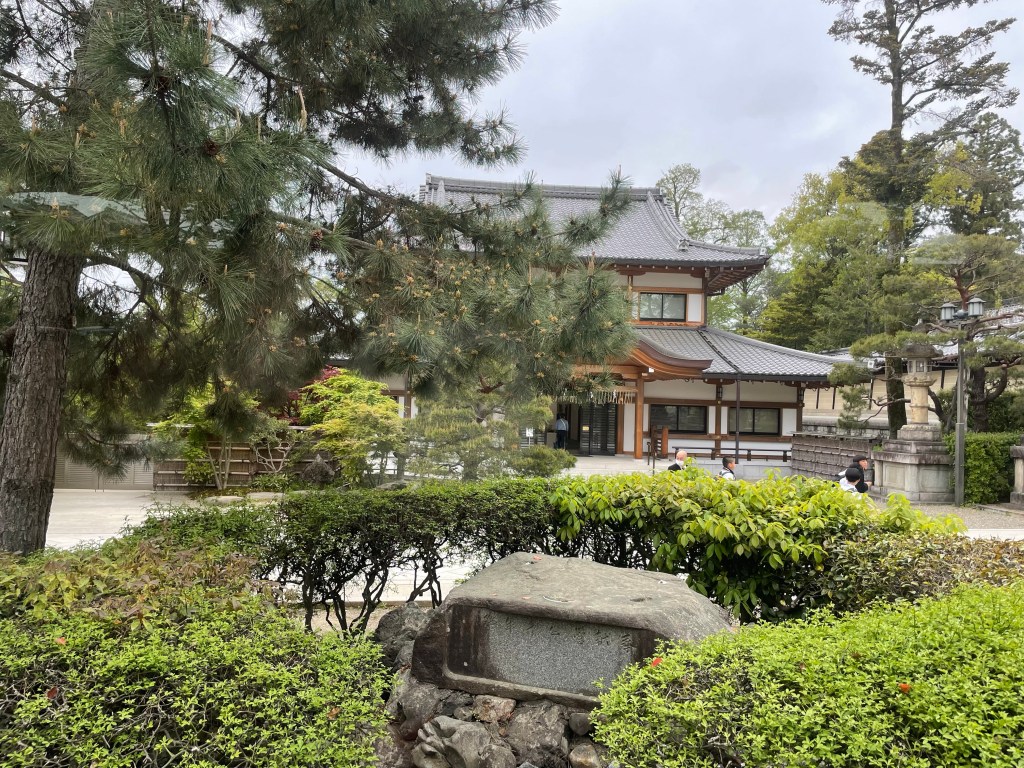


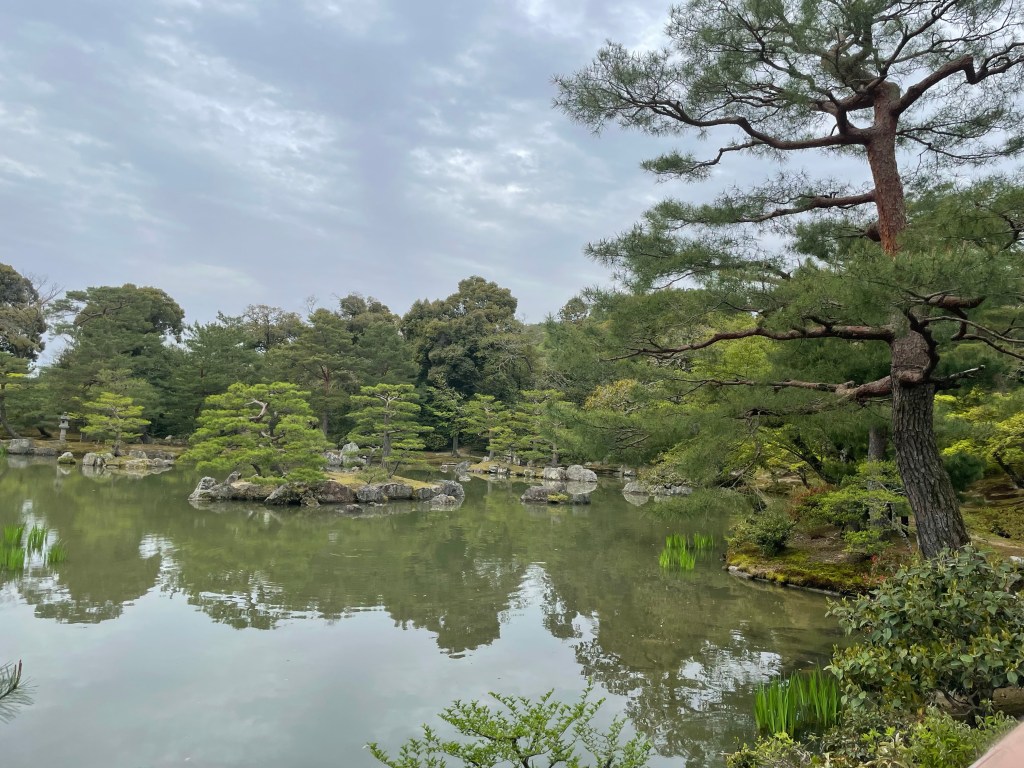

Again, the religious aspect of our stops seems to bother Daniel. He prefers the modern, materialistic, irreligious people to those who sought small ‘g’ gods through so many wrongheaded means. To a certain extent, I get where he’s coming from; the blatant syncretism is particularly alien to me. I mean, if one of these two faiths is the One True Religion, don’t throw in the other; if neither one is, why are you bothering with either of them?
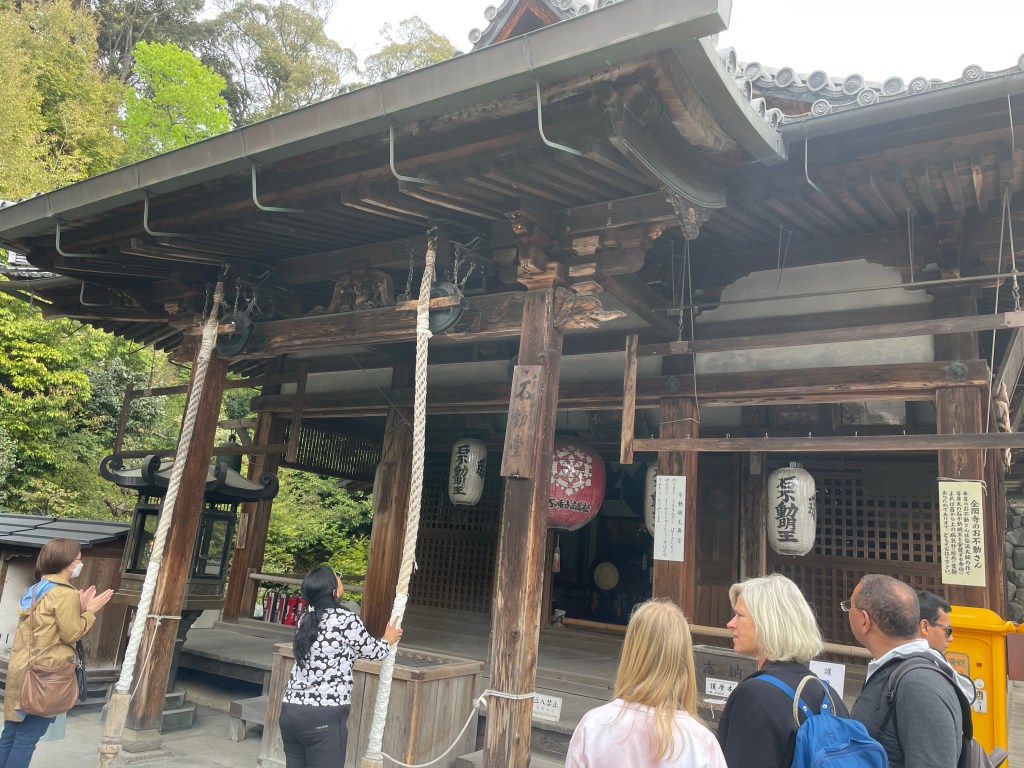
My guess is, the Japanese as a rule don’t think about it, any more than most Westerners think about the rituals they perform. And that’s all they are to most of us on either side of the Pacific; rituals, rather than a real religion. Things to placate Gaia or whoever, and salve our conscience for the less-than-proper things we do as part of our existence. But without real guidance, we don’t know if any of it’s enough, or even right; and so our conscience goes unassuaged after all.
Thankfully, we do have the Word of guidance, but perhaps we haven’t done enough to let others know about it.
***
Interestingly (perhaps ironically), I’m reminded of a story about a Zen master who was requested by a certain man to instruct him in the ways of Zen. However, the would-be pupil spent a great deal of his ostensible lesson time talking about himself and his beliefs. The master, thus thwarted, offered to serve his student tea, and poured until the man’s cup was full, and continued pouring.
“Stop!” the man cried. “Can’t you see my cup is full? Why do you keep pouring?”
The master set the kettle down. “Yes, your cup is full. Likewise, how do you expect me to teach you Zen when you are so full of your own beliefs?”
I wonder if, between Shinto and Buddhism, the average Japanese’s cup is full to overflowing already.
***
Setting philosophy and guessing other people’s motives aside, it’s time for us to make our way back. Now, I didn’t realize this when we set out, but I’m not entirely surprised to find that we don’t return via Shinkansen. If nothing else, timing our arrival at the station to reserve our seats would be a logistical nightmare. So, we’re taking the bus back instead.
What took half an hour by train comes to more than a hundred minutes by bus; but at least our driver didn’t need to take his mandatory break at a local truck stop en route. Well, what can you expect when, even with clear traffic, you’re limited to 80 kmph (compared to over 200 on the Shinkansen)?
Still, we’re back right at six o’clock, just in time to grab dinner and collect my thoughts on the day. So I’ll talk to you soon; until then, keep an eye on us, and wish us luck. We’re going to need it.

 Letters to Rachel
One thought on “Staying Put… or Not”