Dearest Rachel –
So, yesterday we went out on walkabout before our tour; today that’s definitely not going to be possible today, as our tour starts almost as soon as we’re docked and cleared to get off the ship. We will, however, have a good four or five hours before the ship leaves, in order to go about the city, should we so choose.
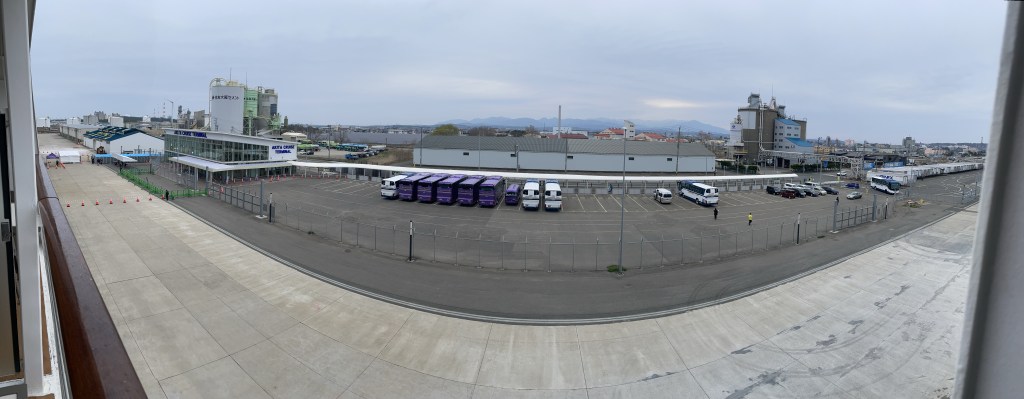

For all the research I had GPT assemble on Akita, there was never any mention of either the dogs (where the breed bearing the city’s name are legendary – maybe not so much as the Shiba Inu, but a strong, respectful and loyal creature that one would be pleased to own, assuming they had the room for such an animal to get sufficient exercise and activity) or the women (who are reputed to have a pale beauty that is almost proverbial in Japan – the ‘Akita bijin’ is a look to be aspired to) of the area.
Then again, it isn’t as if I could acquire one, or take either of them home with us, so maybe that’s just as well. Of course, I’ve since learned about them, so I now know what I’m going to be missing out on at any rate.
***
As we check in at the lounge, Daniel points out that this is more what he expected in terms of assembling for shore excursions (unlike, say, Aomori); everybody all together in a single room, waiting for their group to be summoned. And as it happens, our bus is the first number called, and we’re instructed to head for the gangplank. Unfortunately, nobody seems to be leading us; we’re left to find our way there ourselves. No one seems to know where they’re going.
For my part, I feel like I could use a white stick with a red tip.
Earlier, I’d heard somebody extolling this cruise line as not being the type to ‘herd’ its customers. Personally, considering the mild confusion in everybody trying to make their way to the gangplank, I’m thinking we could do with a little more herding than we are.
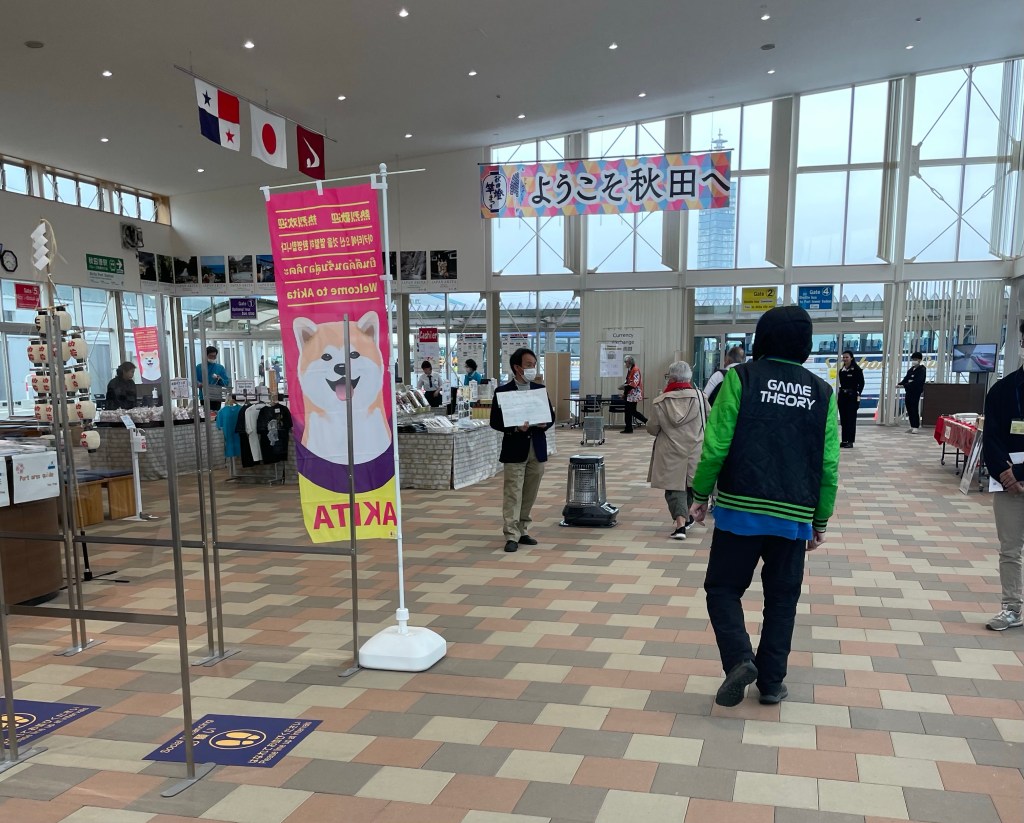

Our guide, one Takeo Masuda, shows us the kanji that make up his name; they translate to ‘old man [of the] high mountain [from a] profitable rice field.’ Given Akita’s claim to fame as a rice-growing area of singular quality, his surname is quite appropriate, but he’s certainly grown into his given name as well. He tells about his pursuit of his own ‘Akita bijin,’ and how it took him over three years to wear her down. But, seeing as how they now have five children and fifteen grandchildren together, the two of them have certainly done their patriotic duty to stave off the declining birth rate of the country.
He talks about something that he refers to as the ‘cherry front,’ as the sakura blossoms flower earlier in the south, and slowly make their way up to the north, not unlike a weather pattern as it slowly traverses the country. It’s been a bit early this year; Tokyo has already had their season, while Aomori’s trees have yet to bloom. Here in Akita, the are just about in flower, but it’s hard to get a picture from a moving bus. Indeed, between that and the weather, this letter is going to be light on photographs; I hope you’re okay with that.
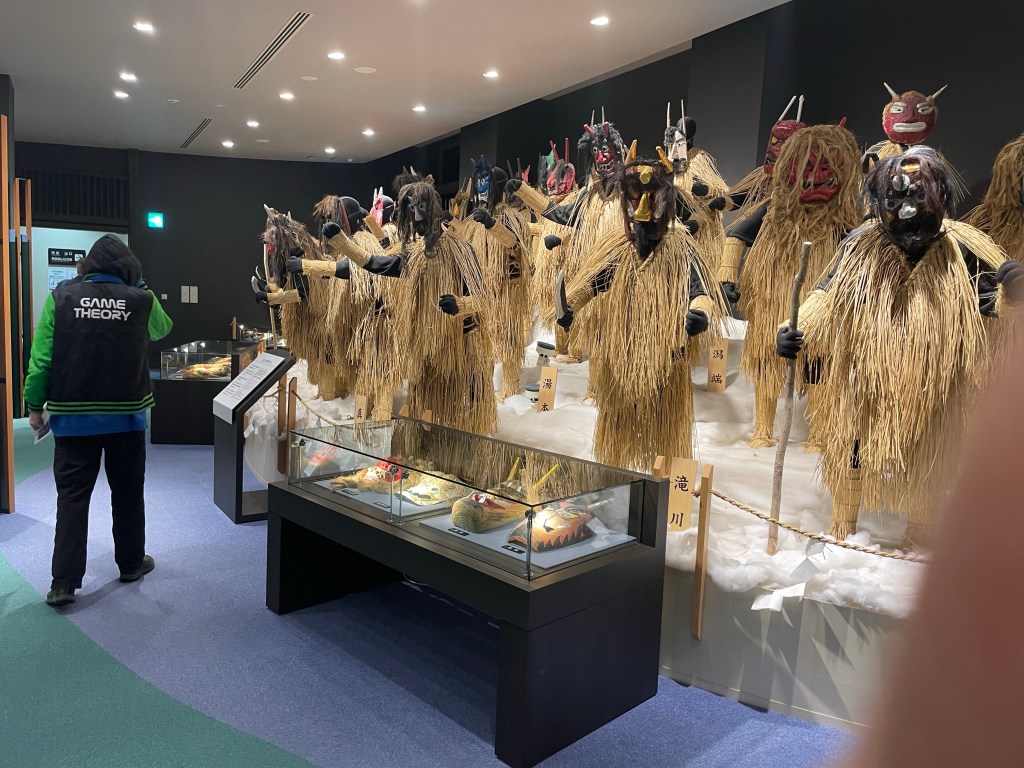
Takao-san describes the Namahage tradition of the Oga peninsula as being just that; a tradition, and little else. It might be rooted in Shinto, but he points out that there is a strong debate as to whether that even counts as a religion, as it lacks a founding figure or scripture. He mentions that, out of a population of about 120 million, Japan has 85 million Buddhists and 80 million Shintoists, so clearly, there’s a lot of overlap (especially when you consider that a number of Japanese appear to be so secular and materialistic as to not be religious in the first place). He describes Shinto as a lifestyle of simply living in harmony with nature; ‘no more, no less.’
He talks about the two primitive tribes that arrived in Japan through the mists of prehistory (no one seems to know when, or from where): the Jomon and the Yayoi. I’m familiar with the former, who he depicts as somewhat more Neanderthal in appearance than their Yayoi counterparts (they are hairier, with a double eyelid; Masuda-san himself claims to be descended from them, based on his own double eyelid). For all that prehistoric Japan is referred to as the Jomon period, it’s interesting to note that the Emperor is apparently of Yayoi ancestry.

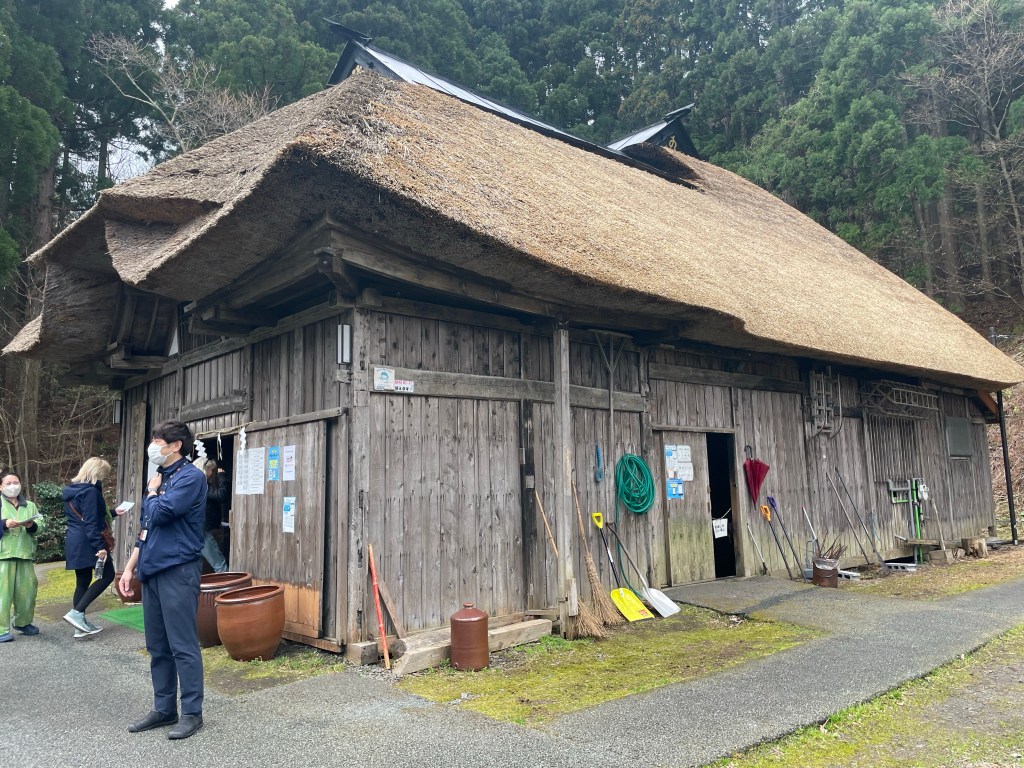
“Make yourself at home,” Masuda-san smiles knowingly, as we sit cross-legged in our stocking feet, having removed our shoes on the way in. To be fair, you would have been able to follow that instruction in a way that most of us couldn’t.
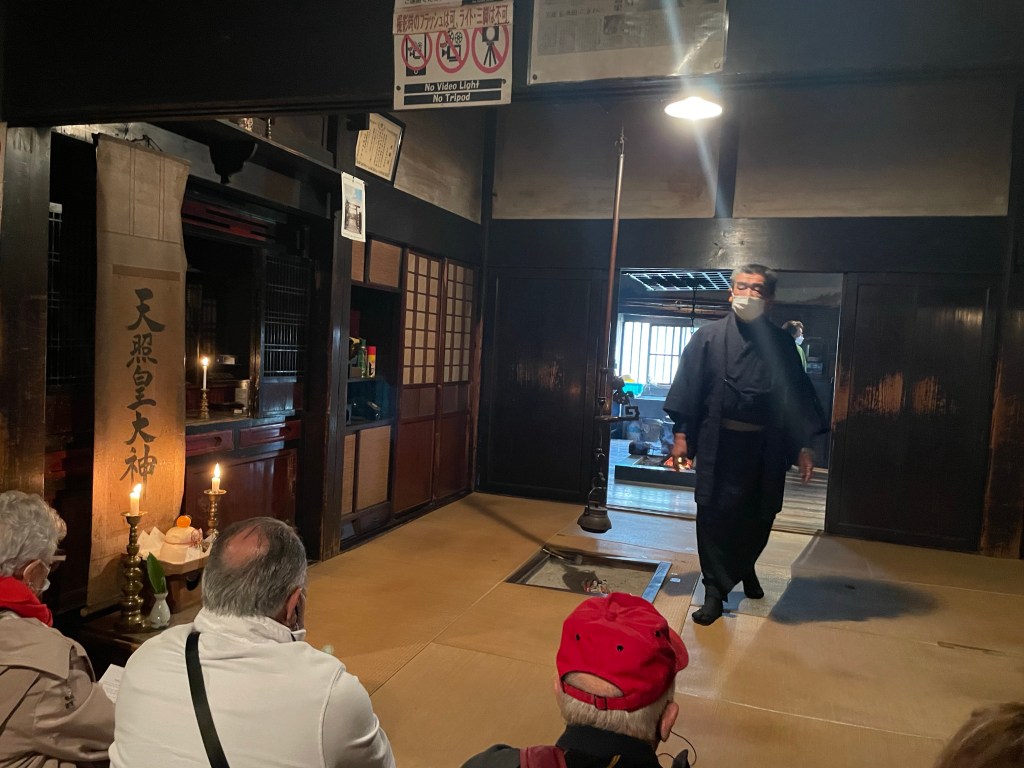

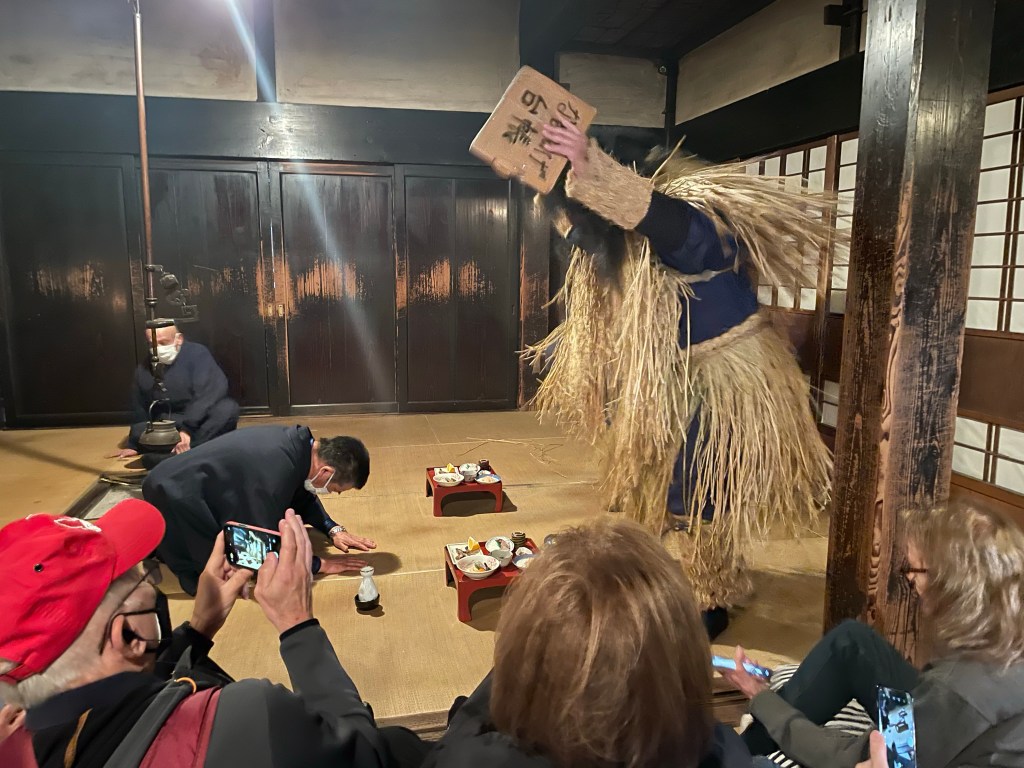
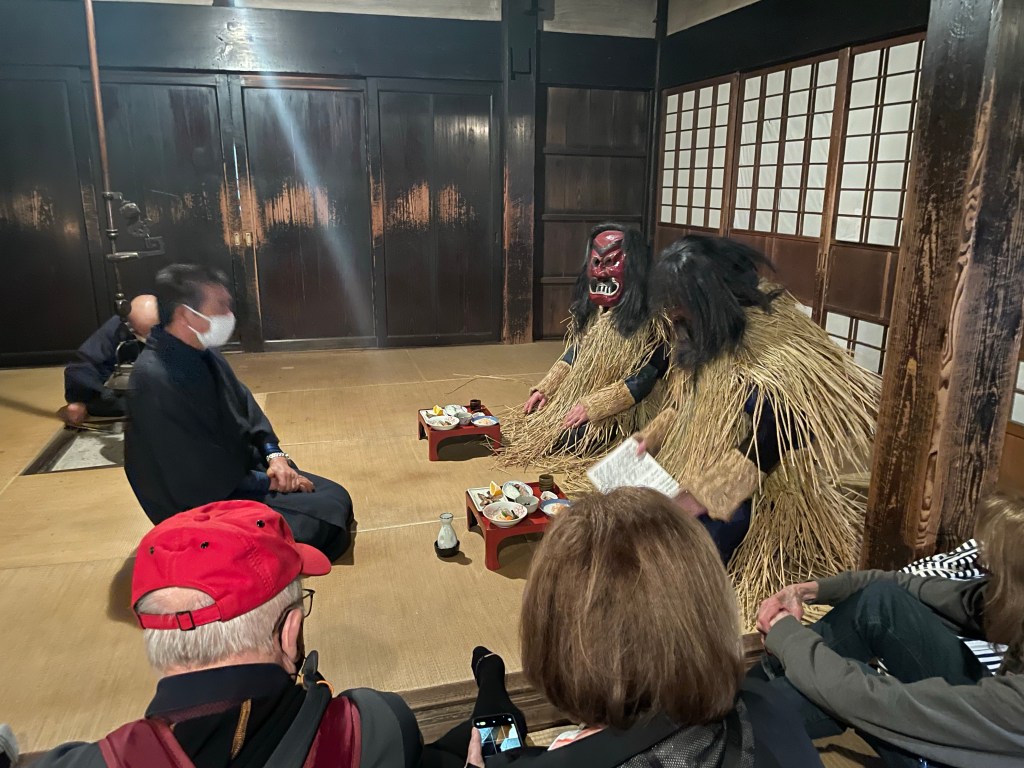
On that last question, since they don’t see the mistress of the house, they press her husband: “She hasn’t run off, has she?” “Oh no, she’s hard at work in the kitchen.” “Oh, good, good.”
One of the Namahage has a notebook including the good and bad deeds of the villagers; the master eventually urges them to put away the notebook and drink some sake.
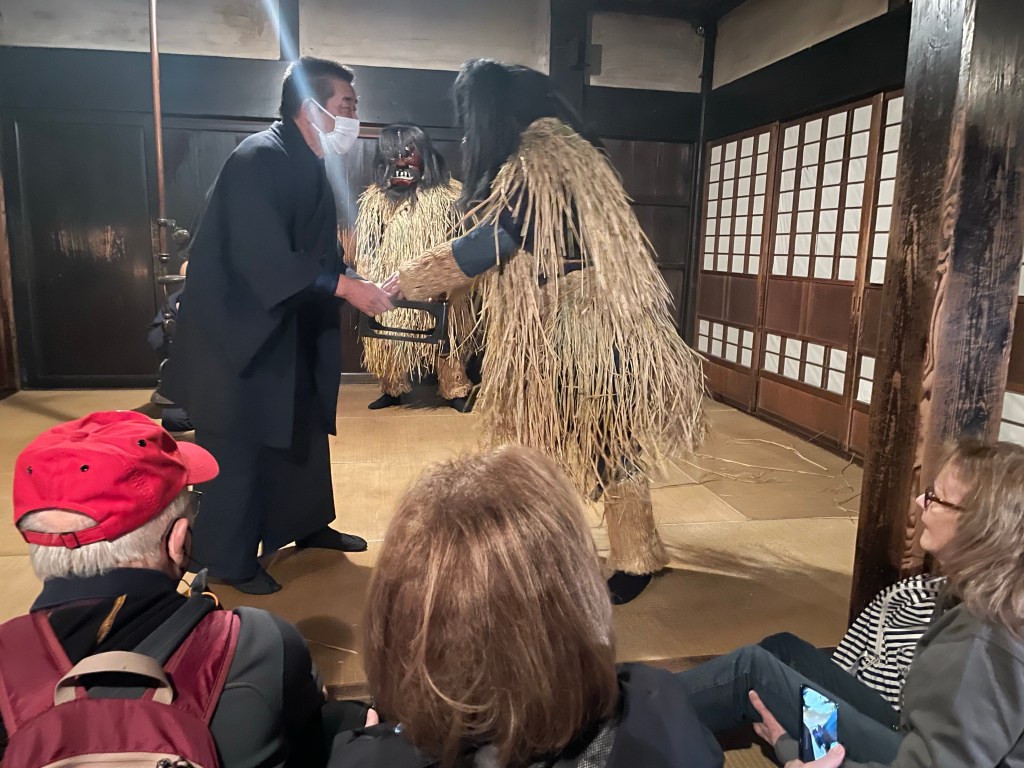
Daniel observes that the whole ritual seems like a combination of a visit from Santa Claus and Krampus. For my own part, given that the Namehage seem to know who is doing their schoolwork (and more to the point, who isn’t), I might guess that one of these benevolent ogres is played by the local schoolmaster. I later find out that it’s the single men of the village who play the role, so it’s not as if this is a parent-teacher conference in disguise. Still, one can’t argue with results; according to Masuda-san, Akita prefecture supposedly ranks as number one in scholastic performance, as determined by the national standardized test scores.
Speaking of working… leave it to when we’re out of the country for something to stop working at home. Daniel lets me know he’s gotten a text from Logan about our refrigerator – yes, the new one. It seems that the freezer is no longer keeping things frozen; he’s tried to salvage what he can, but it’s a bit of a mess, and he doesn’t know what else to do. I forward the information on to Dad; it’s all we can do for now. And with that being said and done, there’s no sense in worrying about it.
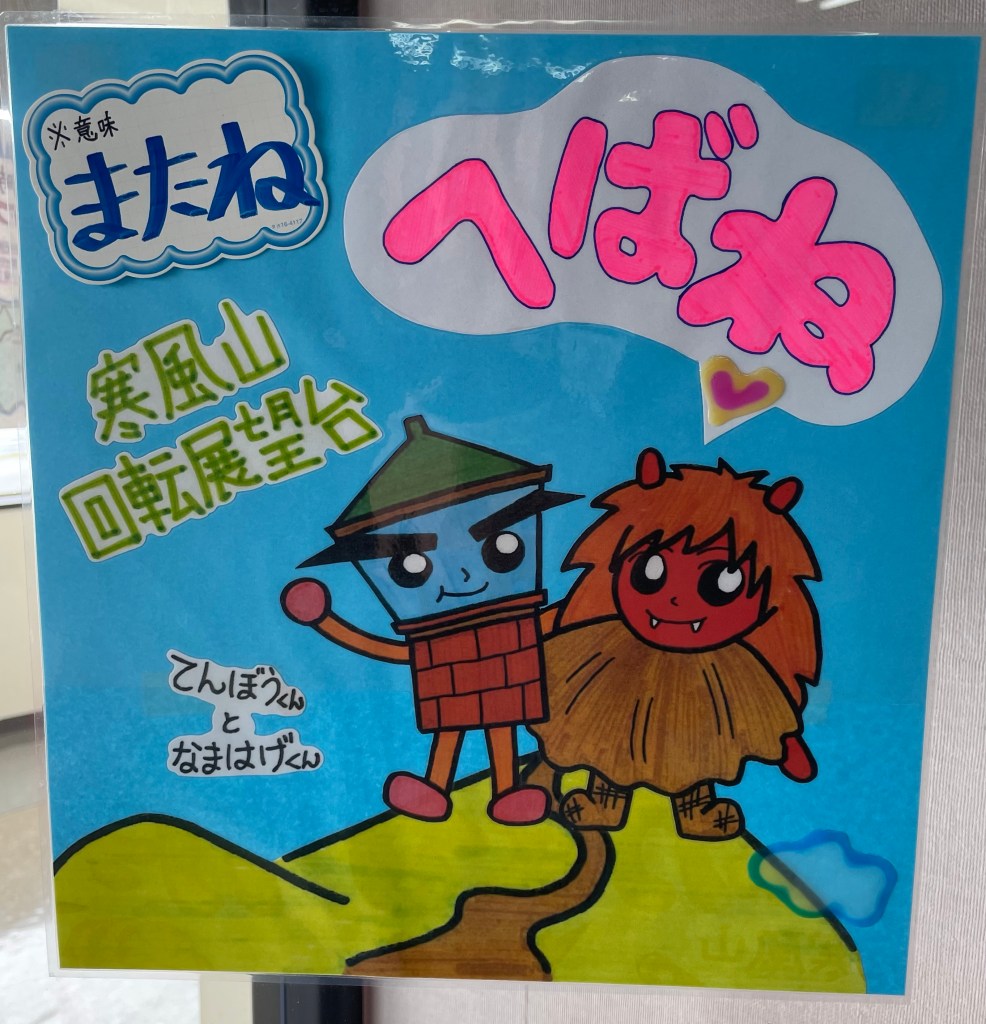
We drive for about twenty winding minutes before arriving at the observatory at the top of a mountain. The excursion spoke of a cable car, but it seems the driver is skilled enough to navigate an entire bus up these roads. We enter, and climb a spiral staircase to the observatory proper.
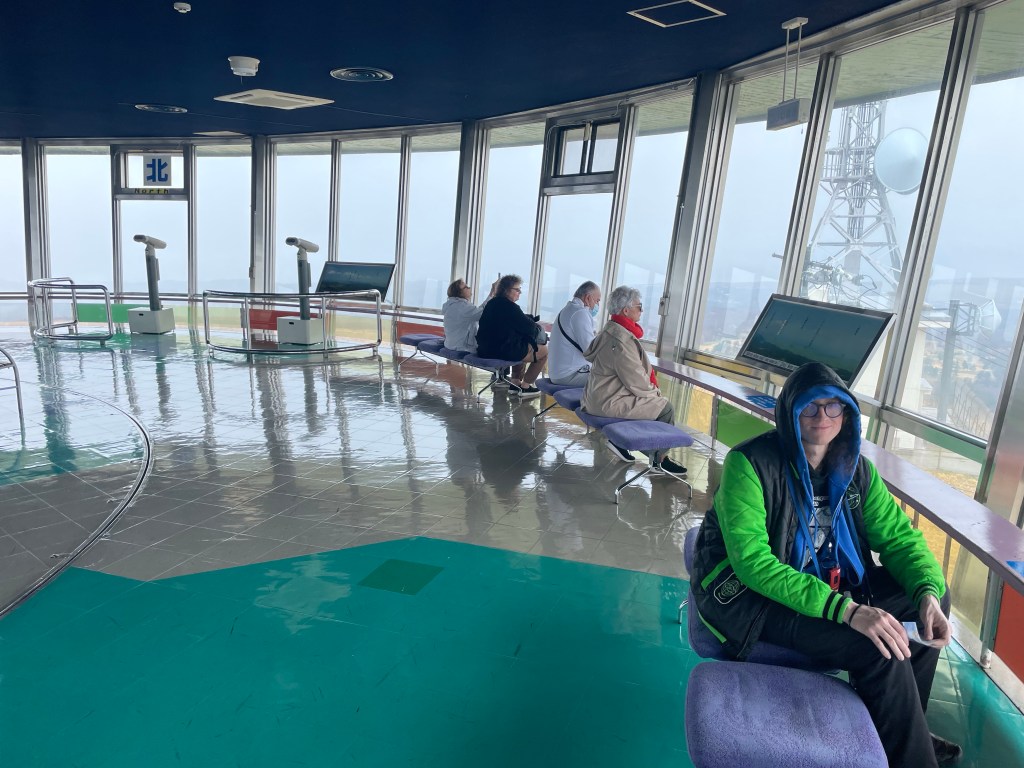

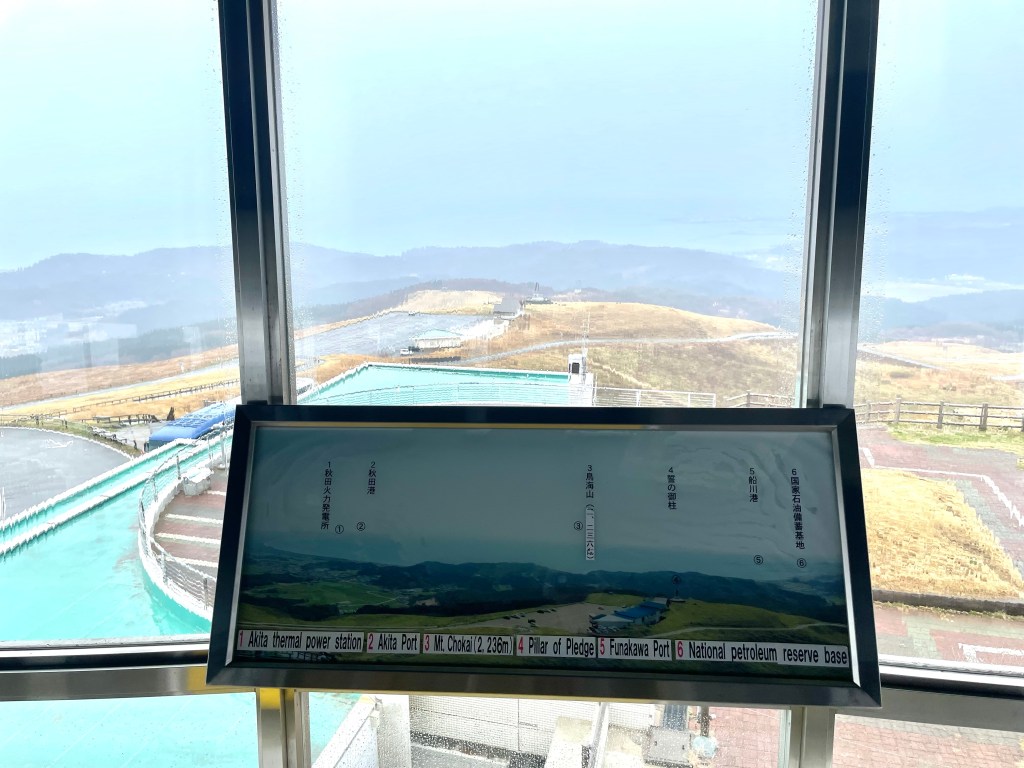


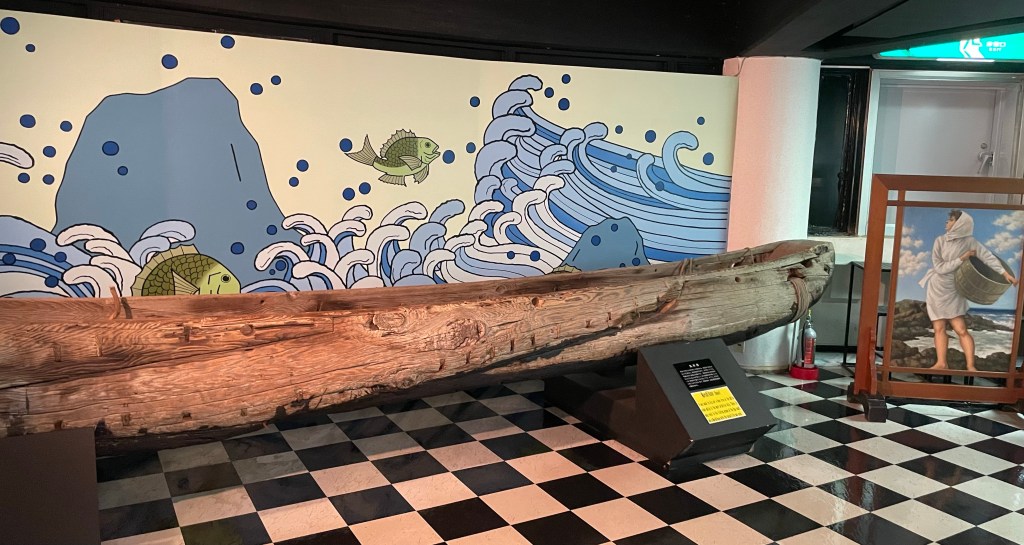
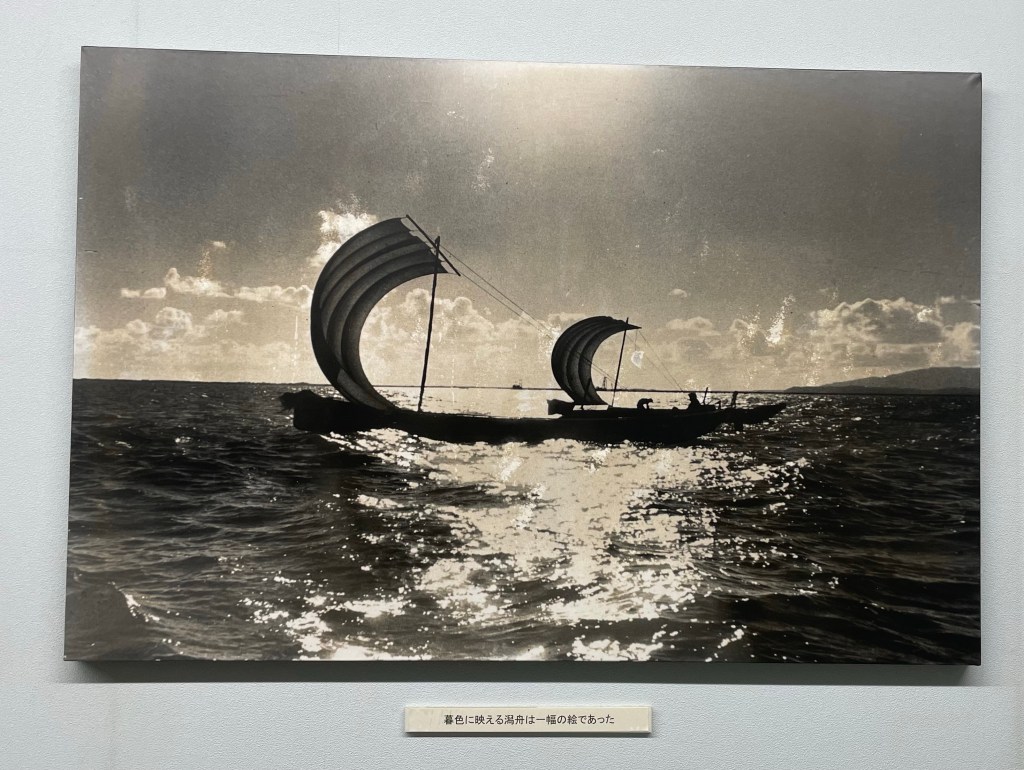
We’re given an hour to wander around, and if we could read any of the displays, this would take that long to go through. As it is, after half that time, we’re wondering what to do with ourselves.

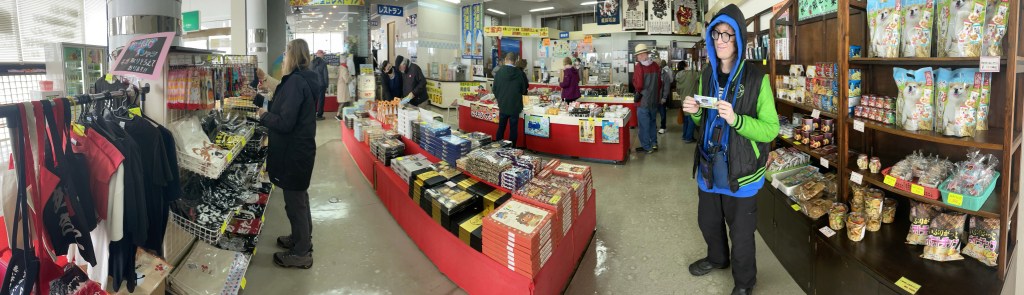
They really are big on edible souvenirs here in Japan. I guess it comes from people not having that much living (and therefore storage) space. It’s not like they want to not own anything, it’s that they don’t have a place to put it, so they just get something to consume instead. It seems to defeat the purpose of a souvenir, though; once you eat it, what’s there to remember?


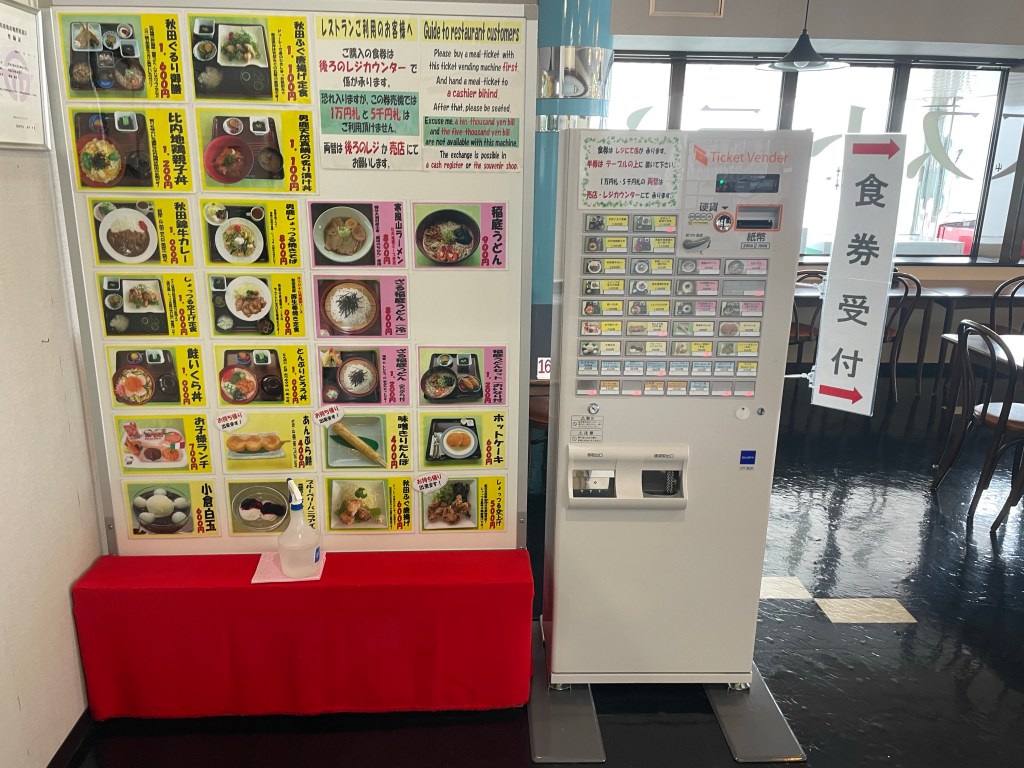
From here, it’s an hour-long ride back to the ship; as the ride progresses, we watch as the rain gets heavier and messier. Daniel leans on my shoulder as through to fall asleep, and I conclude that it would be just as well for us to return and stay put than try to wander about the city (assuming we could even find it) like we did yesterday. There’s no point in fighting the mess that is the weather this afternoon; and it’s not as if we haven’t seen a few sights already. We’ll be fine.
Masuda-san seems to sense this, as he sings a song of farewell that is customary upon partings in Japan (such as graduation ceremonies and the like): it’s Auld Land Syne, with Japanese lyrics. After a verse on his own, he encourages us to join him on the English lyrics. I can’t think of a better way to say goodbye to this place, and I feel good about calling this sufficient for the moment.
We’ll probably never be back here, honey, and that might be a shame, but it’s not like we didn’t bother with the place at all. We slogged through the mess, we learned a few things, we had a good time; it’s time to say we’ve had enough.
So, until I fill you in on tomorrow’s destination, keep an eye on us, honey, and wish us luck. We’re probably still going to need it, regardless.

 Letters to Rachel
2 thoughts on “A Bit of a Mess”