Dearest Rachel –
There’s only so long I can go, just sitting around doing nothing while my feet heal. With about half an hour before I’m supposed to meet the group, I decided to head down, but I’m torn between getting a beverage first from the Diamond Lounge. Just as I get out of the elevator on the fourth floor, I pat my pocket, and realize I’ve left my key card behind.
I guess it’s a good thing that I didn’t try to just leave, but either way, it would’ve been embarrassing. Fortunately, I had been greeted by Louis on my way out of the room, so I knew he was there, and could let me in in order to get my key so that I can leave when the time came.
There is nobody in the lounge but a lone steward, and I request a quick iced tea before heading out. I expect I’ll need the slight caffeine boost for the afternoon.
Under the tent, there is a swarm of people, all talking with each other in their own little knots. They have to be loud, because the wind is whipping at the tent edge, making a flapping noise you have to shout to be heard over. I’m not entirely grateful for having to do so myself, but my voice would be hard-pressed to deal with this for any great length of time.
Eventually, a crew member comes up and shouts out for our excursion name, and we head to the bus that we’re directed to. Everyone gets on before the tour guide climbs in, instructing us all that masks are to be worn indoors – which, needless to say, includes the inside of the bus. It’s a toss-up; it’s nice to be off my feet inside the bus, but having to wear a mask after all this time is a nuisance.
Our guide points out that today is unusually busy for the port; three cruise ships on one day is just barely manageable for the tour companies. Meanwhile, she keeps me rather busy trying to take down everything she’s saying. So you’ll have to forgive me if my notes are a little bit spotty as far as information goes.
In any event, things are considerably better in Curaçao than they have been for the past eighteen or so months, when there has been no business to speak of throughout the pandemic. I mentioned the exports of Curaçao in a previous letter, but its chief industry is still tourism, and it’s been hit hard.
Those comments aside, she begins the tour by discussing the history of Curaçao and the colonial-era houses. While they were built in the Dutch style, Curaçao has no Dutch bricks, nor wood; the houses are built from local rock, primarily limestone and sandstone.
As a result, they have stood for several centuries, and the neighborhood they stand in has been declared a UNESCO world heritage site. This is all well and good for tourism, but it does mean that the buildings can neither be demolished nor expanded upon. As a result, they are no longer used as homes, but are occupied by businesses.
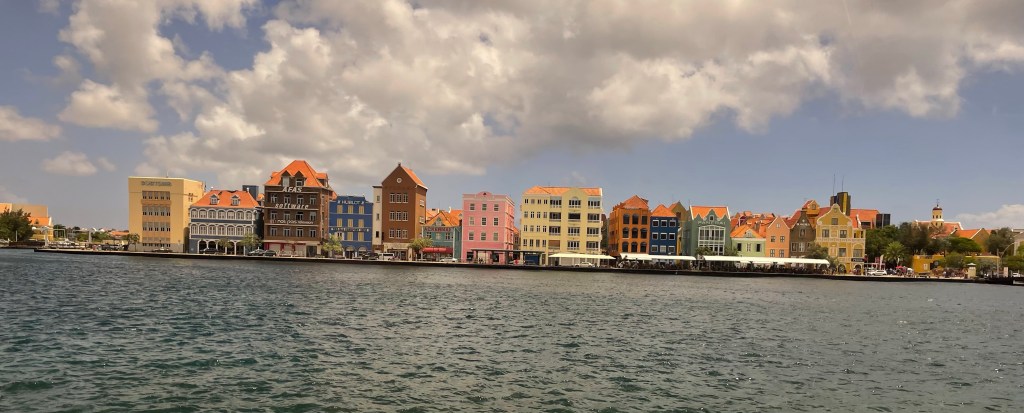
She also tells the story behind the colorful homes of colonial Curaçao, a tale to warm a Chicagoans’ heart for naked political corruption. Apparently, in its early days the houses of Curaçao actually used to be mostly white, but a governor from long ago determined that this was too dull, and one couldn’t tell one house from another. So he decreed that all houses be painted one bright color or another. It wasn’t until after he passed away that the people realized that he owned the main paint industry on the island, and was absolutely making bank on his own order.

The island’s rocky nature also happens to preclude burial in favor of interment. Even in the Jewish cemetery – whose funerary rituals almost insist upon burial – there are hundreds of marble sarcophagi – all with their heads pointed toward Jerusalem, of course.
Our first stop is the museum of history, which apparently used to be a military hospital back in the day, specifically for illnesses such as yellow fever and the like.

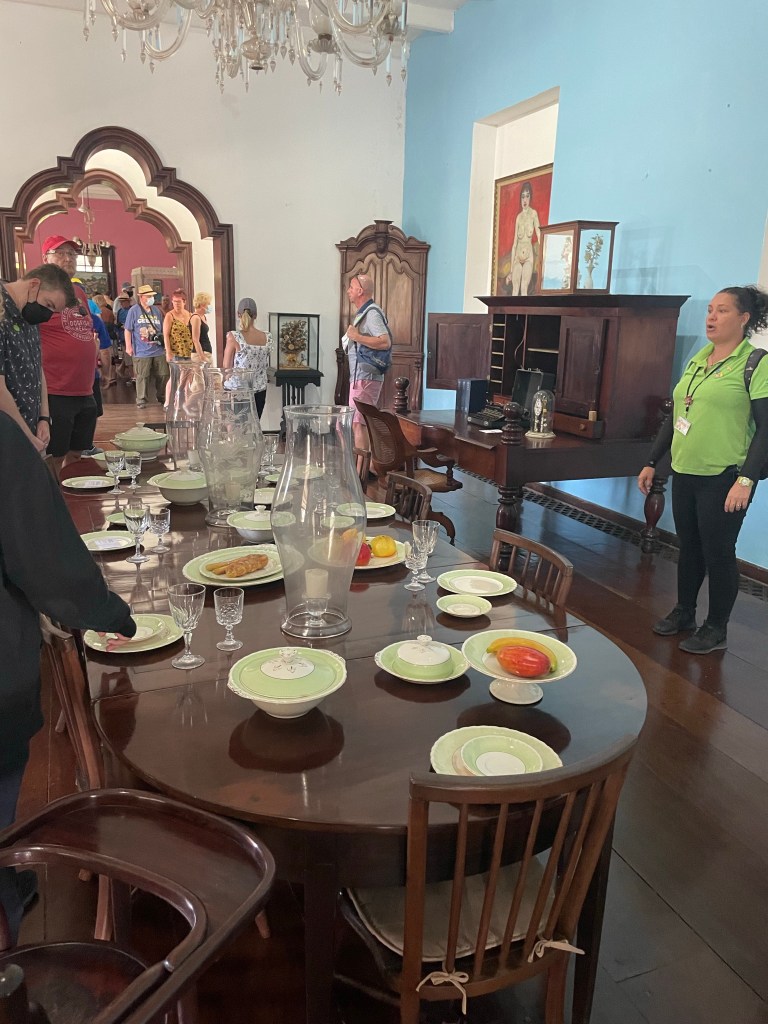


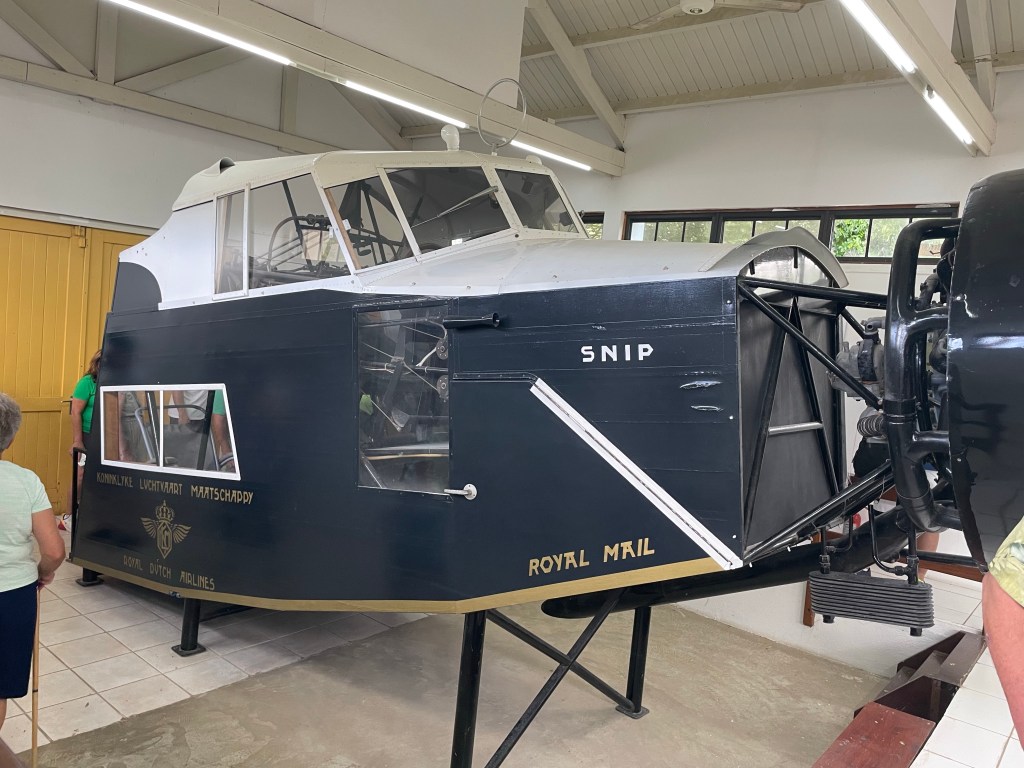
There are a number of other sculptures out here, but apparently there isnt really time to go into them. We are bundled back onto the bus for our next stop – the caves on the north shore
On the way, we spot flamingos feeding in one of the salt pools. They aren’t exactly native to the area; they come by for two or three weeks around this time of year from Bonaire and Venezuela. So I guess we can count ourselves lucky to spot them.
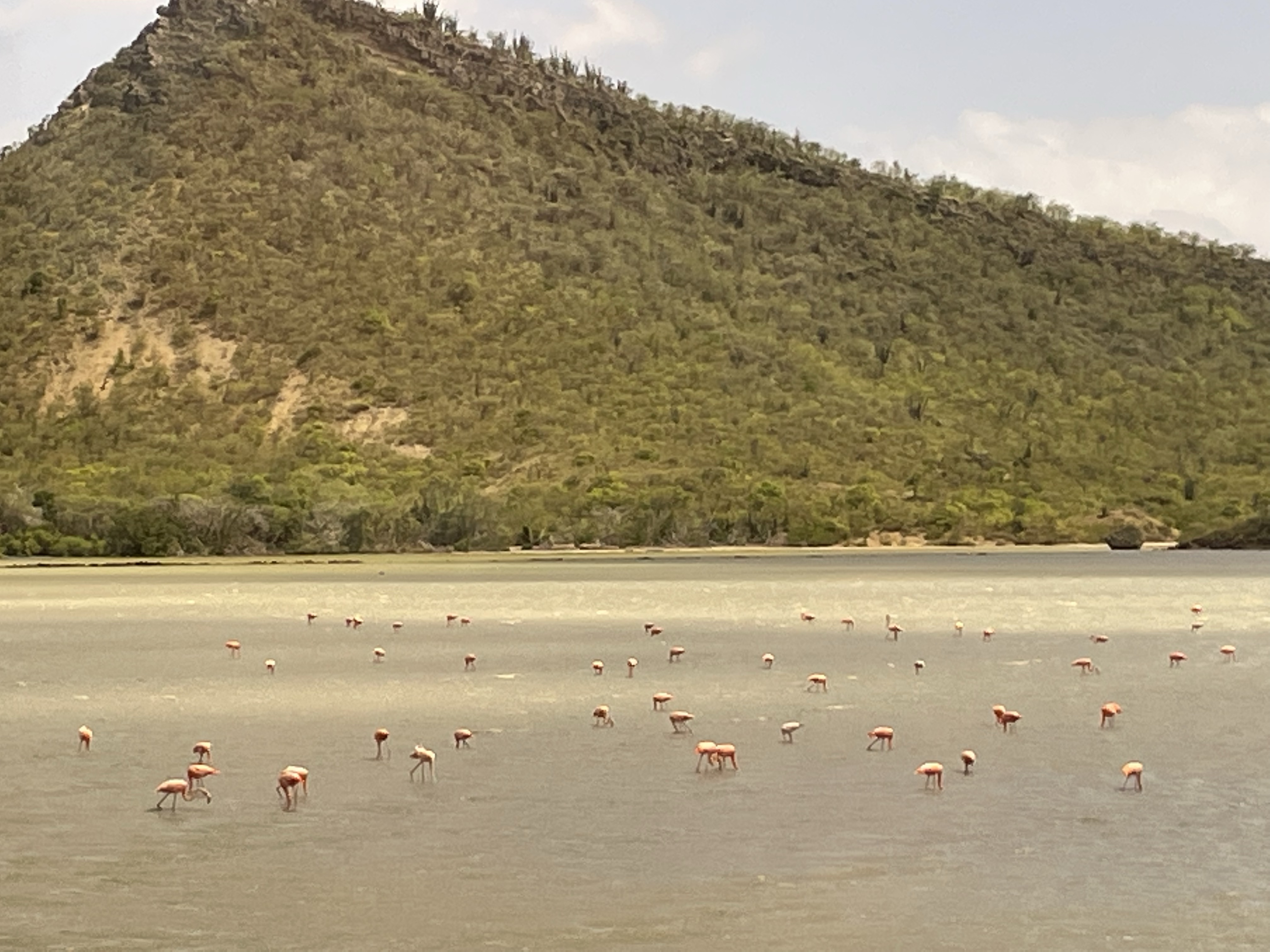
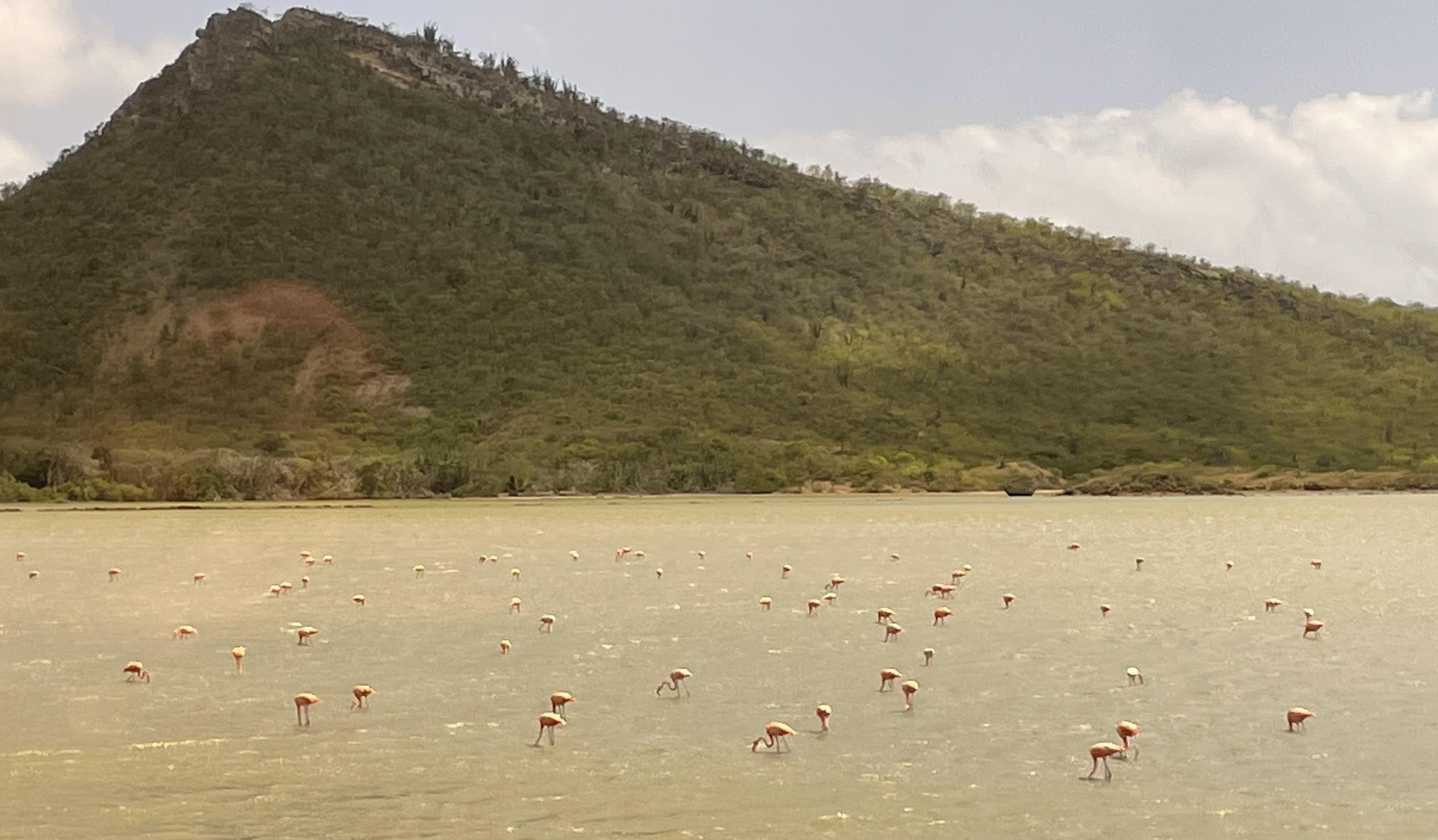

The salt pools were supposedly one of the first major commercial ventures on the island, in the days before refrigeration. Nowadays, there’s more energy expended in getting the fresh water extracted from the sea, rather than the salt. And apparently, the folks on Curaçao have got desalination down to an art form; tap water is eminently drinkable here these days.
Eventually, we make it to the north coast, and the Hato caves, just beyond the international airport (yes, they have one):
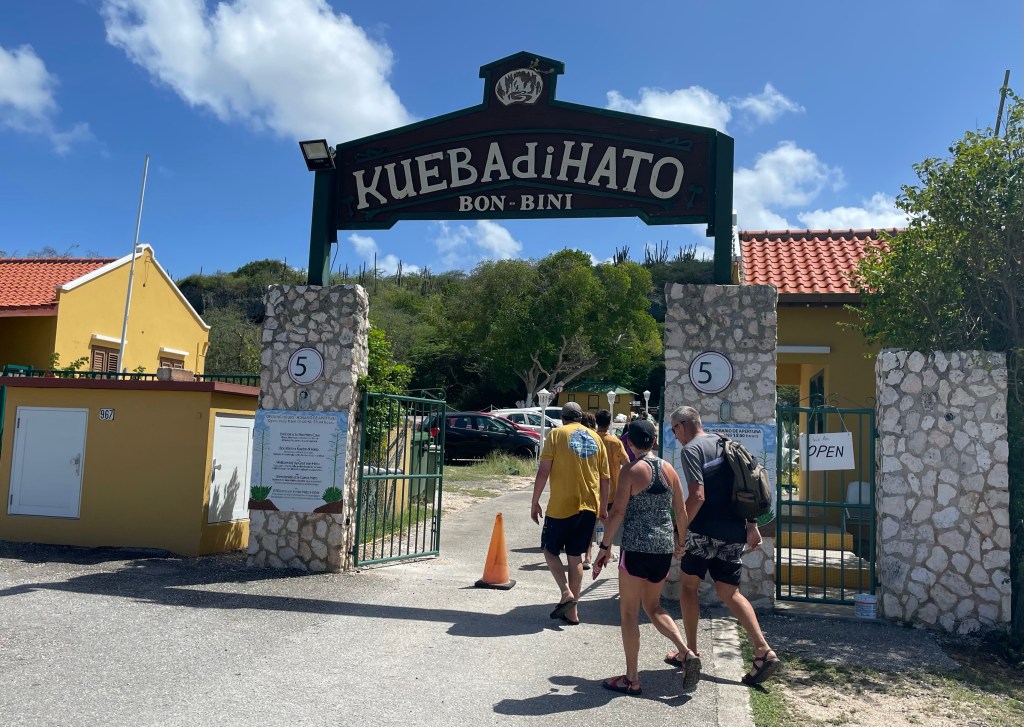
It’s recommended to us that we grab a quick bathroom break before ascending into the cave – and yes, I said ascending; there are about 49 steps carved into the hill? mountain? before we get to the mouth of the cave.
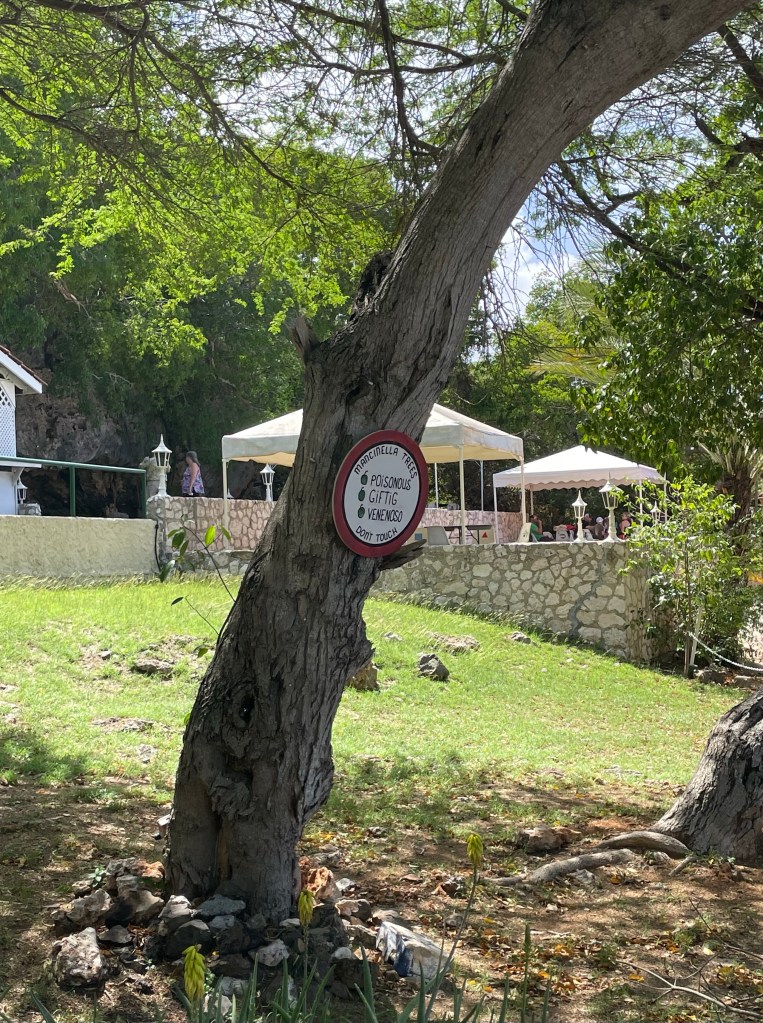
These ‘apples’ are the chief food source of the local iguanas, but they are essentially poisonous to humans, right down to the juice, as I can vouch for.

This is mostly because of the bats, who would be disoriented by the flash and might fly off into the cave wall. And as for what they mean by the ‘final chamber,’ it’s a ‘room’ in which a hole exists that allows daylight to enter from above, thereby exposing it to light that the bats would likely avoid by their very nature. So picture-taking is okay here.


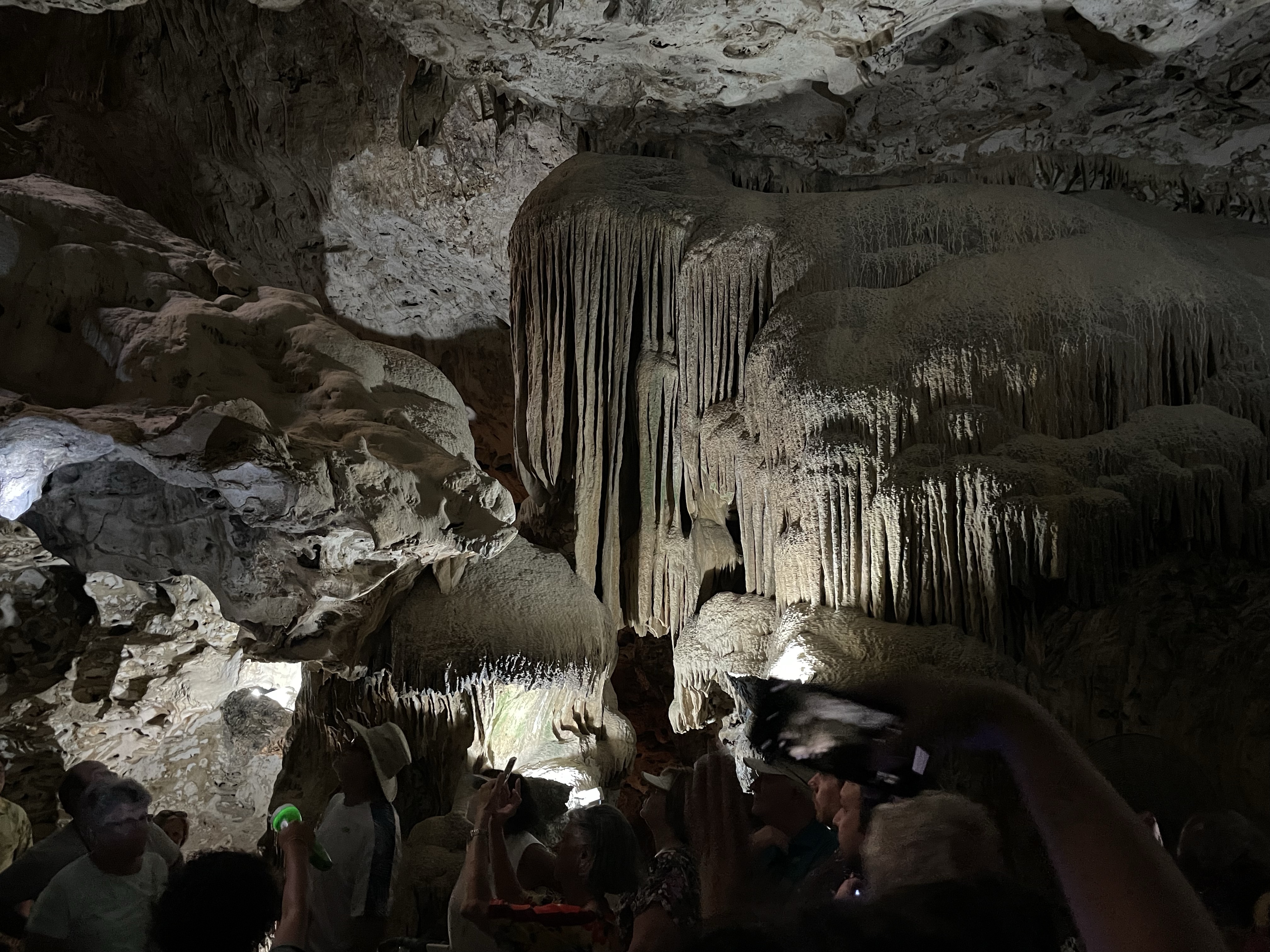
Beyond that is what they refer to as the ‘fantasy’ chamber – rock formations that look like, well… use your imagination. According to the local guide, certain formations are supposed to look like curtains, a sleeping giant and the Madonna and child, among others.


Our final stop of the day is to a distillery, of all places – but then again, it is what certain people think of when they hear the name Curaçao. Never mind that they do more export business in postage stamps; blue curaçao is indeed a unique product of theirs. The oranges that are made into Curaçao liqueur are not strictly native to the island. They are descended from Valencia oranges brought over by the Spanish, but with the discovery that the soil was too rocky and dry, the plants were abandoned to the wild, where they mutated into a distinct variety of its own.
Curiously, only the rind is used in the distillation process; the fruit itself is so bitter, Laura says, that even the goats won’t eat them.

Bottles made of recycled glass these days
Different colors with same flavors
The tour isn’t quite ‘blink and you’ll miss it,’ but it’s over pretty quickly. What few notes I can take down are fairly minimal. First of all, the name ‘blue curaçao’ is neither patented nor trademarked; you legally can’t do that with the name of a country or an island. As a result, there are a lot of imitation curaçaos out there, and the Senior family, who owns Curaçao’s only distillery, the Chobolono, can’t really do much about that but sell their authentic product.
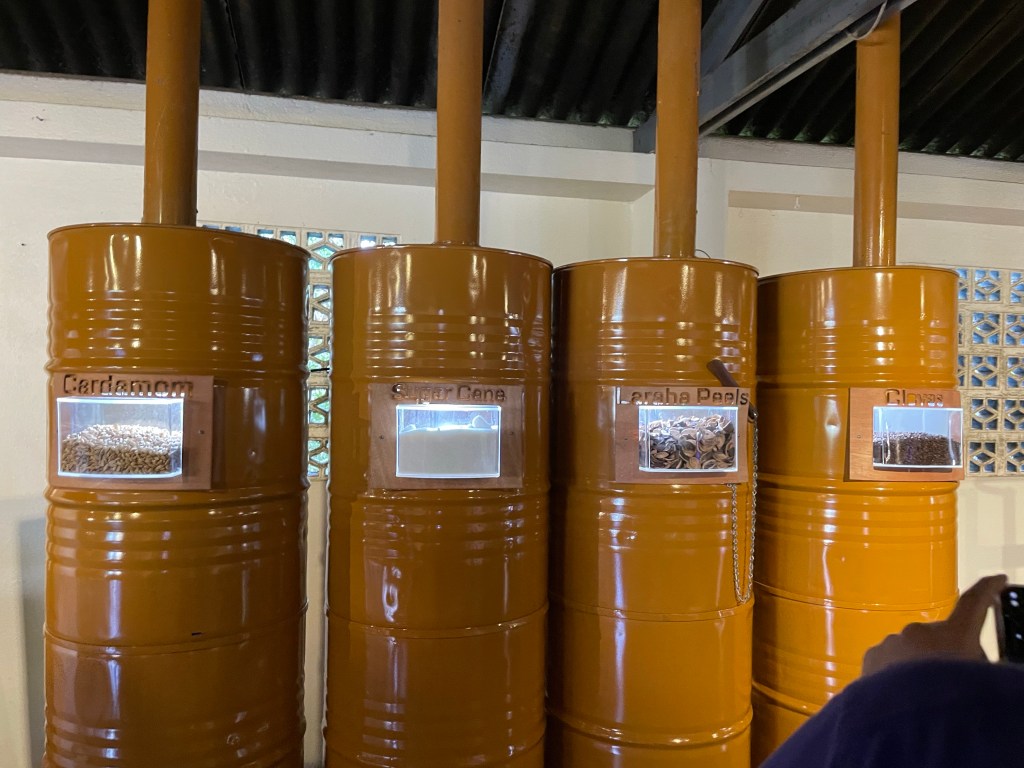


According to one of the other guests on the tour bus, the Chukulati ‘tastes like a Tootsie roll,’ which, if you’re into that, would be interesting. There weren’t all that many comments about the other flavors that I noticed.
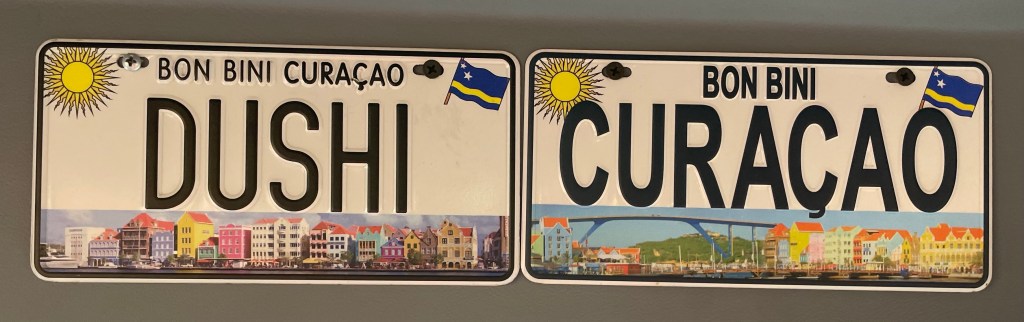
One completely unrelated comment at this point; I’ve been seeing the word ‘dushi’ in both Aruba and Curaçao, and I had to ask our tour guide about it. It seems so common an expression that I wonder if it’s not something along the lines of the Hawaiian term ‘aloha.’
It turns out that it’s a Papiamento term taken from the Spanish ‘dulce,’ meaning ‘sweet’. I’m guessing it’s an attitude about life itself being sweet, given its common usage. I may be wrong, but I think that explanation would pass muster with someone who didn’t know any better.
I think I had a that attitude toward life not too long ago; I wish I could get it back, honey.

 Letters to Rachel